

Key Takeaways
- Sleep cycles through four stages — N1, N2, N3 (deep sleep), and REM — repeating roughly every 90 minutes.
- Deep slow-wave sleep dominates early in the night and drives physical repair and memory consolidation.
- REM sleep, which increases toward morning, supports emotional regulation and creative thinking.
- Cutting sleep short disproportionately reduces REM, which clusters in the final hours of a full night.
- Consistent sleep and wake times are among the most effective ways to preserve healthy sleep architecture.
Sleep Architecture
Sleep architecture refers to the structured pattern of sleep stages your brain cycles through each night. These stages — light sleep, deep sleep, and REM (rapid eye movement) sleep — repeat in predictable cycles, each lasting roughly 90 minutes. The specific sequence and proportion of each stage determine how rested and restored you feel in the morning.
Sleep architecture is measured using polysomnography (PSG), which records brain waves (EEG), eye movements, and muscle activity to identify each stage with precision.
The Four Stages of a Sleep Cycle
Each night, your brain doesn't simply switch off — it moves through a carefully orchestrated sequence of stages. Sleep scientists classify these into four distinct phases, grouped under two broad categories: NREM (non-rapid eye movement) and REM (rapid eye movement) sleep.
The four stages are:
- N1 (Light Sleep): The brief transition between wakefulness and sleep, lasting just one to five minutes. Brain activity slows, muscles relax, and you're easily roused.
- N2 (Stable Light Sleep): The longest single stage across a full night. Heart rate and body temperature drop. The brain produces sleep spindles — short bursts of neural activity that play a role in memory consolidation.
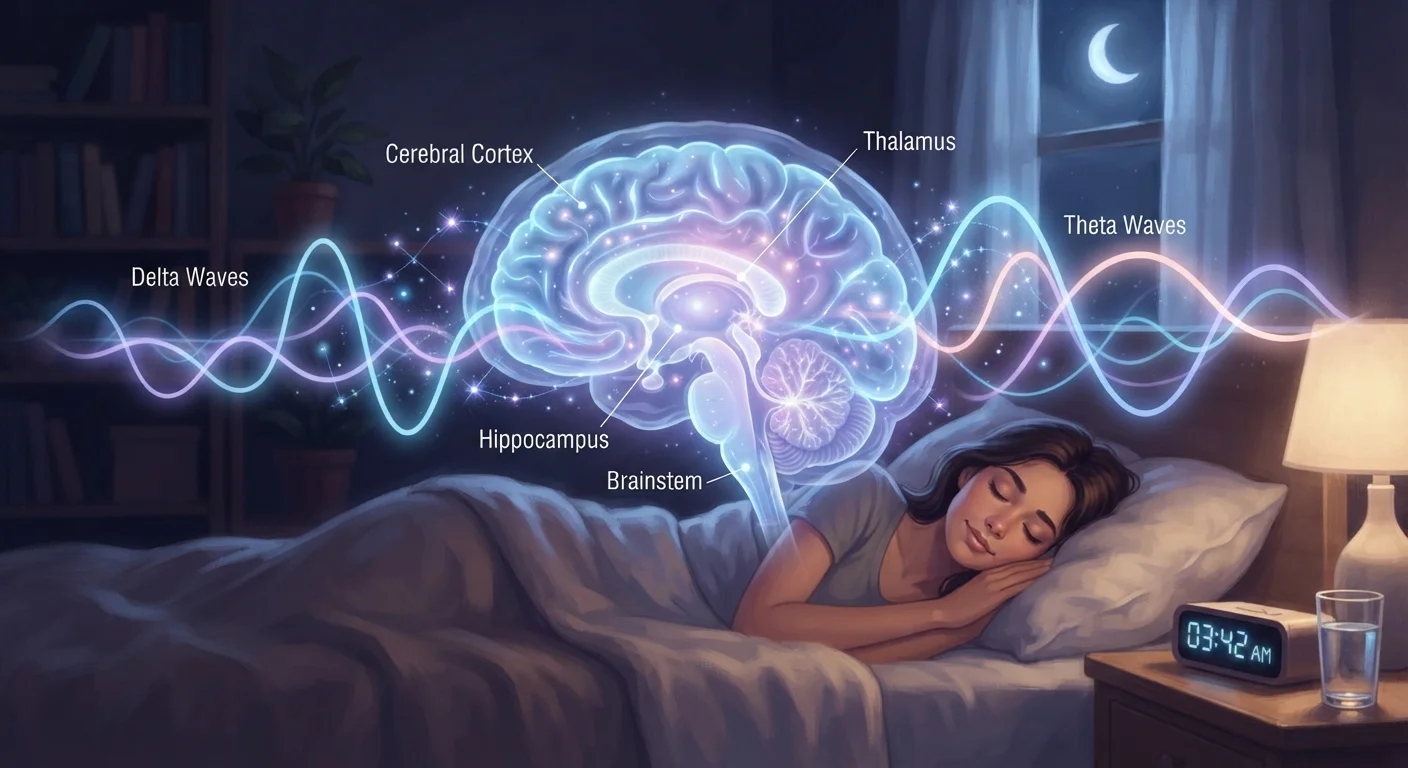
- N3 (Deep or Slow-Wave Sleep): The most physically restorative phase. The brain generates large, slow delta waves. Tissue repair, immune function, and long-term memory storage are all linked to this stage.
- REM Sleep: Brain activity spikes close to waking levels. Most vivid dreaming happens here. REM supports emotional processing, creativity, and procedural memory — skills like learning a new movement pattern.
For a plain-language breakdown of what each stage contributes, see our Sleep Stages Decoded guide.
How the Cycle Shifts Throughout the Night
One critical insight that surprises many people: not all sleep stages are distributed evenly across the night. The timing of each stage changes significantly depending on where you are in your sleep period.
Early in the night, cycles are weighted heavily toward N3 deep sleep. This is when your body does the most intensive physical recovery work — repairing muscle tissue, reinforcing immune responses, and clearing metabolic waste from the brain via the glymphatic system.
Later in the night, deep sleep gives way to longer and longer REM periods. By the final hour or two of a full eight-hour sleep window, almost the entire cycle may be REM. This is why cutting sleep short — even by 60 to 90 minutes — disproportionately reduces REM rather than the earlier stages.
20–25%
Proportion of adult sleep spent in REM
Research from the National Sleep Foundation estimates healthy adults spend roughly one-fifth of their total sleep time in REM each night.
90 min
Average length of a full sleep cycle
Sleep researchers consistently find that one complete NREM-to-REM cycle takes approximately 90 minutes in adults.
4–6
Cycles completed per night in healthy adults
A typical seven-to-nine-hour sleep window accommodates four to six full cycles, according to sleep science literature.
This shift has practical implications. If you consistently wake earlier than your body wants to, or go to bed too late, you're effectively skimming the most mentally restorative stage. For a deeper look at how the brain behaves stage by stage, explore Your Brain While You Sleep.
Everyday Habits That Protect Your Sleep Architecture
Understanding sleep architecture isn't just academic — it points directly to which habits have the biggest impact on how restored you feel. The good news is that the most effective adjustments are also among the most accessible.
Keep a Consistent Schedule
Going to bed and waking at roughly the same time each day — including weekends — reinforces your circadian rhythm, the internal clock that cues your brain when to enter each sleep stage. Irregular schedules fragment this rhythm, making it harder to reach sufficient deep and REM sleep.
Guard the Last Two Hours Before Bed
Alcohol, bright screens, and heavy meals in the final two hours before sleep interfere with the brain's natural transition into NREM stages. Alcohol in particular suppresses REM, fragmenting sleep in the second half of the night even if you feel like you slept long enough.
Manage Caffeine Timing
Caffeine blocks adenosine — the chemical signal that builds sleep pressure across the day. Consuming caffeine too late means it's still active in your system when your brain should be cycling into deep sleep. Most guidelines suggest stopping caffeine intake by early-to-mid afternoon for typical sleep times.
These habits form the core of what researchers call good sleep hygiene. For readers newer to thinking systematically about sleep, our Sleep for Beginners guide offers a solid foundation. Sleep quality also has far-reaching effects on daily functioning — learn more through Sleep & Daily Performance.
This article is for general informational and educational purposes only and is not a substitute for professional medical advice. If you have concerns about your sleep health, consult a qualified healthcare provider.