

Key Takeaways
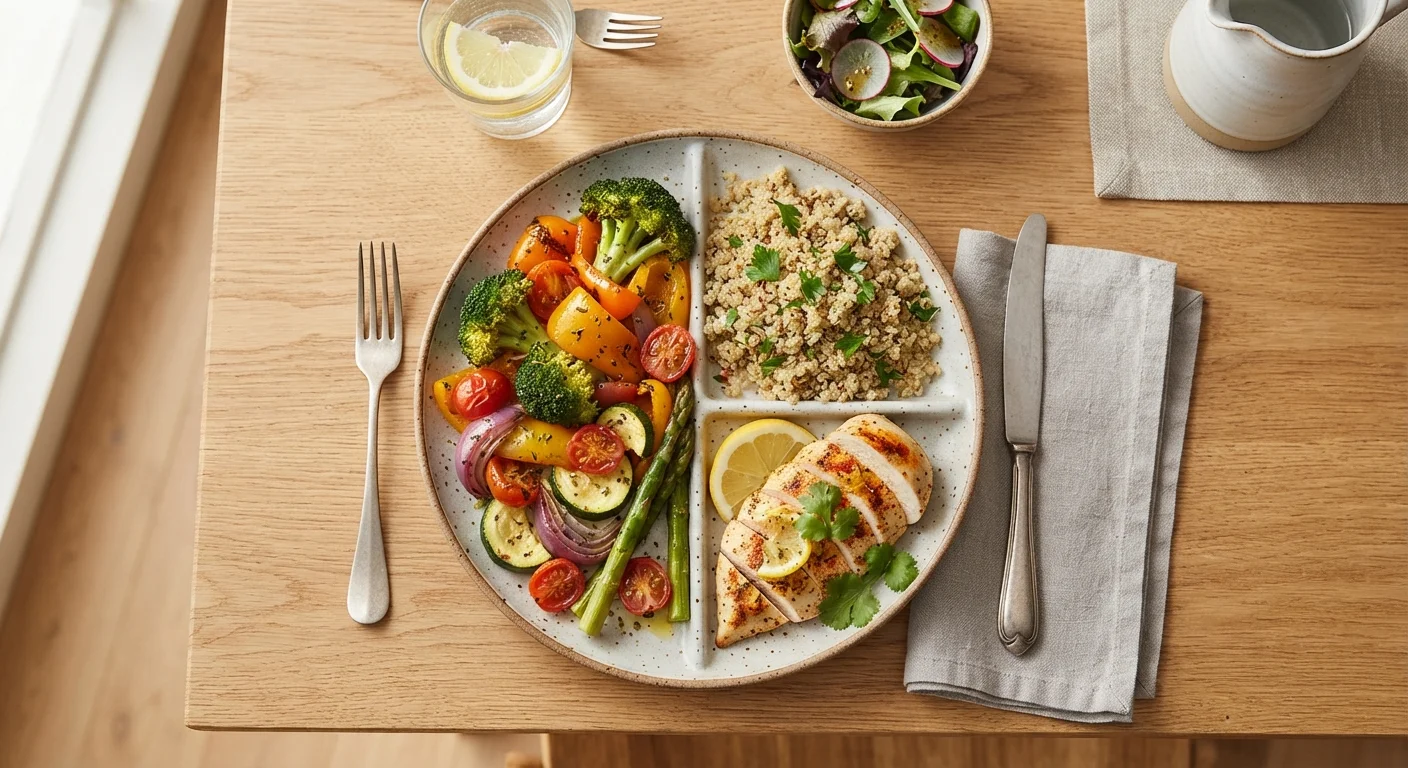
- The plate method divides a standard dinner plate into half vegetables, one-quarter protein, and one-quarter grains.
- Visual portioning reduces the need for calorie counting while still aligning meals with dietary guidelines.
- Choosing whole grains, lean proteins, and a variety of colorful vegetables maximizes nutrient density.
- Small, consistent changes to plate composition are more sustainable than complete diet overhauls.
- Individual calorie and nutrient needs vary; consult a healthcare professional for personalized guidance.
What you will need
Why Plate Proportions Matter
Nutrition science can feel abstract — grams of fiber, milligrams of sodium, percentage of daily values. The plate method translates those numbers into something you can see and act on at every meal. Developed from frameworks like the USDA's MyPlate, this visual approach is grounded in decades of dietary research linking food group balance to reduced risk of chronic disease, better weight management, and improved overall nutrition.
The core idea is straightforward: a standard 9-inch dinner plate is divided into three zones. Half the plate is filled with non-starchy vegetables, one-quarter with a lean or plant-based protein source, and one-quarter with a whole-grain or starchy vegetable. A serving of dairy or a calcium-rich alternative — such as fortified soy milk — rounds out the meal alongside a piece of whole fruit or a glass of water.
This structure works because it naturally limits energy-dense foods without requiring precise measurement. Research published in behavioral nutrition journals consistently shows that environmental cues — like what occupies the largest portion of a plate — significantly influence how much of each food type people actually consume. For a deeper look at how macronutrient distribution varies across popular dietary patterns, see how different dietary patterns divide the plate.
What the Evidence Says About Each Zone
Each section of the balanced plate reflects specific dietary evidence:
- Vegetables (half the plate): Non-starchy vegetables — such as leafy greens, broccoli, peppers, and tomatoes — are high in fiber, vitamins, and phytonutrients while being relatively low in calories. The Dietary Guidelines for Americans recommend 2½ to 3 cups of vegetables daily for most adults, a target many Americans fall well short of. Filling half the plate at lunch and dinner is an efficient way to close that gap.
- Protein (one-quarter): Adequate protein supports muscle maintenance, satiety, and metabolic function. Lean protein choices — fish, poultry, legumes, tofu, eggs — provide essential amino acids with less saturated fat than many red meats. For ideas on distributing protein across meals, practical macronutrient principles offers a useful companion read.
- Whole grains or starchy vegetables (one-quarter): Complex carbohydrates in whole grains — brown rice, quinoa, oats, whole-wheat bread — provide sustained energy and dietary fiber. The fiber in whole grains is associated with improved cardiovascular health and better digestive function compared with refined grain equivalents.
You can also build a more micronutrient-dense version of this plate with targeted ingredient swaps, as outlined in building a micronutrient-rich plate.
Color Variety Is a Practical Nutrient Proxy
Different pigments in vegetables and fruits correspond to different beneficial compounds — carotenoids in orange foods, anthocyanins in purple ones, chlorophyll in dark greens. Aiming for at least three distinct colors across the vegetable half of your plate is a simple, evidence-informed way to broaden your micronutrient intake without memorizing nutrient charts. Think of it as eating the rainbow in practice, not just as a slogan.
Step-by-Step: Building Your Balanced Plate
What you will need
Choose your plate size
Start with a standard 9-inch dinner plate. Research on portion size consistently shows that larger plates lead to larger servings without a corresponding increase in hunger. A 9-inch plate provides a practical visual canvas for the three-zone proportions without requiring any measuring tools.
Fill half the plate with non-starchy vegetables
Aim for a variety of colors — darker greens like spinach or kale, red bell peppers, orange carrots, or purple cabbage. Variety across colors generally reflects a broader range of vitamins, minerals, and antioxidant compounds. Prepare vegetables by steaming, roasting, or eating raw to preserve nutrients; avoid heavy cream sauces that shift the calorie profile significantly.
Add a lean or plant-based protein to one quarter
Choose sources such as grilled chicken or turkey, canned or baked fish, cooked legumes (lentils, black beans, chickpeas), tofu, tempeh, or eggs. A serving size for meat or fish is roughly the size of a deck of cards. Legumes do double duty as both a protein and a fiber source, making them particularly nutrient-dense options.
Place a whole grain or starchy vegetable in the remaining quarter
Options include brown rice, quinoa, barley, whole-wheat pasta, sweet potato, or corn. Check labels on packaged grains: the first ingredient should list a whole grain. Portion this section to roughly the size of your clenched fist as an informal guide when you don't have measuring cups available.
Add a beverage and optional sides
Water is the default best choice for hydration alongside meals. Low-fat or non-fat dairy milk, or a fortified non-dairy alternative, adds calcium and vitamin D. If fruit fits your calorie needs, a small piece alongside the meal helps satisfy a sweet preference with fiber and natural sugars rather than added sugars from desserts.
This article is for general informational and educational purposes only and is not a substitute for personalized medical or nutritional advice. Individual dietary needs vary based on age, health status, activity level, and other factors. Consult a registered dietitian or qualified healthcare professional before making significant changes to your diet, especially if you have a chronic health condition or specific nutritional concerns.
Once the habit feels natural at dinner, apply the same framework to lunch — and over time you may notice it reshapes how you approach grocery shopping and meal planning as well. For a broader look at how incremental changes drive lasting results, explore building sustainable eating habits without overhauling your entire diet.