
Eating Patterns Across Different Dietary Frameworks: Mediterranean, DASH, and Plant-Based Compared

Key Takeaways
- All three patterns emphasize whole foods, vegetables, and minimally processed ingredients over refined products.
- The DASH diet was specifically developed to lower blood pressure, giving it the strongest clinical evidence for that outcome.
- Mediterranean and plant-based patterns both show strong associations with reduced cardiovascular disease risk.
- Plant-based eating requires deliberate planning to avoid gaps in vitamin B12, iron, and omega-3 fatty acids.
- No single framework suits every lifestyle — long-term adherence matters more than theoretical perfection.
- Consult a qualified healthcare professional before making major dietary changes, especially with existing health conditions.
Our Verdict
Mediterranean, DASH, and plant-based diets each carry strong evidence for supporting cardiovascular health and overall wellness, and all three outperform a standard Western diet in multiple research outcomes. The right framework depends on your health goals, food preferences, cultural context, and practical lifestyle factors — not on which pattern scores highest on an abstract ranking.
| Best for | Recommended |
|---|---|
| Those seeking a flexible, culturally rich pattern with broad long-term evidence | Mediterranean |
| Those with hypertension or a specific focus on blood pressure management | DASH |
| Those motivated by environmental concerns or ethical food choices alongside health | Plant-Based |
| Those managing macronutrient balance without a rigid framework | Mediterranean or DASH |
What Each Pattern Actually Looks Like
Understanding these three frameworks starts with seeing what they include, not just what they restrict. Each represents a coherent way of organizing daily food choices rather than a list of forbidden foods.
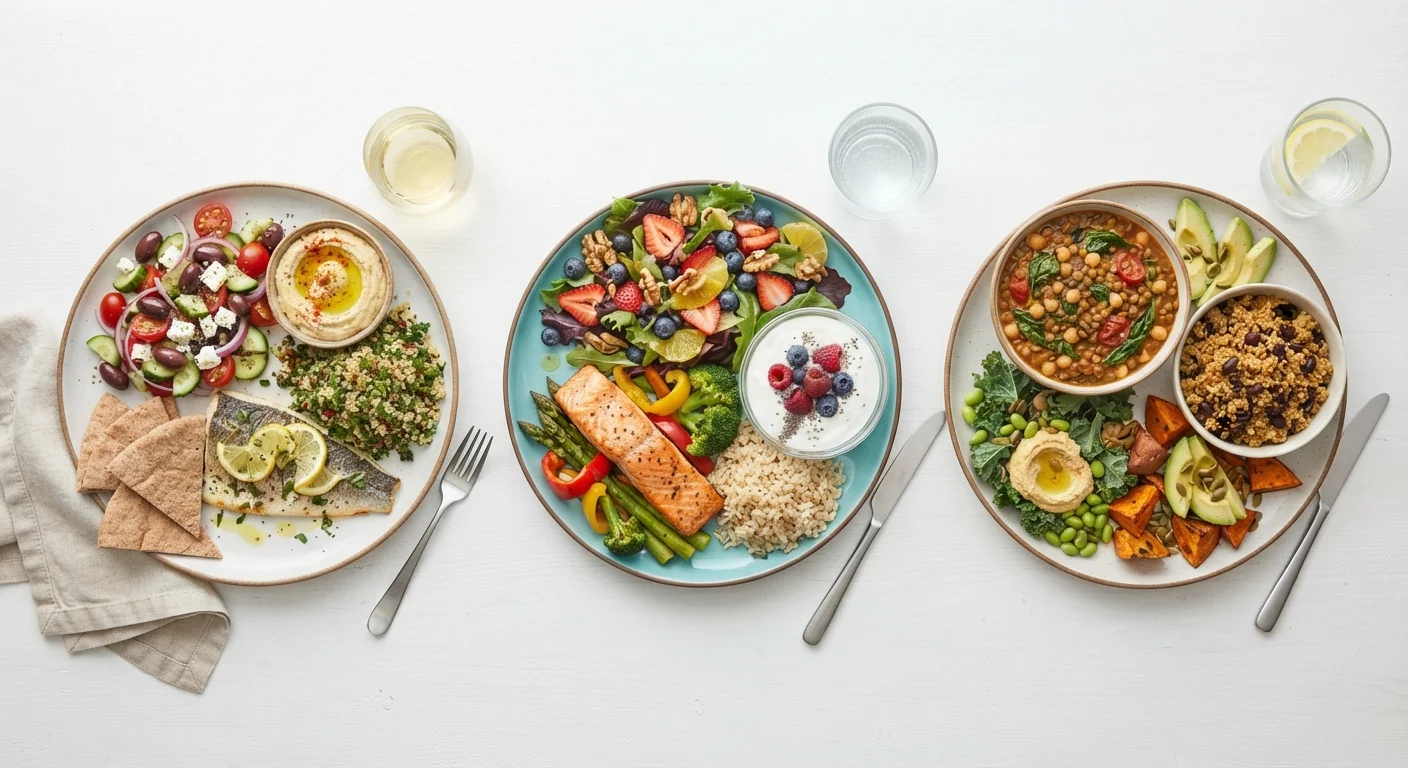
Mediterranean: Rooted in the traditional diets of Southern Europe, this pattern centers vegetables, fruits, whole grains, legumes, nuts, olive oil, and moderate fish consumption. Red meat and sweets appear occasionally rather than daily. Dairy and poultry are consumed in moderation. There is no strict calorie target or rigid meal structure — the emphasis is on overall food quality and dietary proportion. For a deeper look at how macronutrients fit together within this style of eating, see how different dietary patterns divide the plate.
DASH (Dietary Approaches to Stop Hypertension): Developed and tested in clinical trials specifically to address high blood pressure, DASH emphasizes fruits, vegetables, whole grains, and low-fat dairy, while limiting sodium, saturated fat, and added sugars. Unlike Mediterranean eating, DASH provides explicit sodium targets and encourages lean proteins including poultry and fish.
Plant-Based: This term covers a spectrum from flexitarian (mostly plants, some animal foods) to fully vegan (no animal products). The unifying principle is centering minimally processed plant foods — vegetables, fruits, legumes, whole grains, nuts, and seeds — while reducing or eliminating meat, poultry, fish, and dairy. Nutritional completeness requires attention to specific nutrients. Plant-based eaters need to think differently about micronutrients like B12, iron, and omega-3s.
The Evidence Behind Each Pattern
All three frameworks have meaningful research support, though the strength and type of evidence varies.
The Mediterranean diet is among the most extensively studied dietary patterns worldwide. Large observational studies and several randomized controlled trials — including the PREDIMED trial conducted in Spain — have linked it to lower rates of cardiovascular disease, type 2 diabetes, and cognitive decline. Its flexibility likely contributes to strong long-term adherence in research settings.
The DASH diet holds some of the most rigorous clinical evidence of any dietary intervention. Multiple controlled trials demonstrate meaningful reductions in systolic and diastolic blood pressure within weeks of adoption, particularly when sodium intake is also reduced. It was designed explicitly as a therapeutic tool, which means its benefits for blood pressure are more precisely documented than those of the other two patterns.
The plant-based pattern shows strong associations with lower body weight, reduced LDL cholesterol, and improved glycemic markers across both observational and intervention studies. Evidence for all-cause mortality reduction is promising but somewhat more mixed, partly because the category itself is broad. Fully plant-exclusive diets require more active nutritional management than the other two frameworks.
| Mediterranean | DASH | Plant-Based | |
|---|---|---|---|
| Primary health target | Cardiovascular & metabolic health | Blood pressure reduction | Cardiometabolic & weight management |
| Animal foods included? | Yes — fish, poultry, moderate dairy | Yes — lean meats, low-fat dairy | Reduced or eliminated entirely |
| Sodium guidance | Not explicitly specified | Explicit low-sodium targets | No formal target; varies by foods chosen |
| Strength of clinical evidence | Strong — multiple RCTs | Very strong — purpose-designed trials | Moderate to strong; category is broad |
| Nutritional planning needs | Low — balanced by design | Moderate — sodium monitoring | Higher — B12, iron, omega-3s require attention |
| Flexibility for US households | High — no food group excluded | Moderate — sodium limits require effort | Variable — depends on diet's strictness |
All three patterns consistently outperform ultra-processed, high-sodium Western dietary patterns across major cardiometabolic risk markers.
Everyday Practicality and Habit Formation
A dietary framework only delivers value if it can be maintained over time. Evidence consistently shows that long-term adherence — not short-term perfection — drives health outcomes. Building sustainable eating habits without overhauling your entire diet is a more realistic goal than an overnight transformation.
The Mediterranean pattern tends to be relatively easy to adapt to American eating contexts because it doesn't eliminate any major food group. Incorporating olive oil, adding more fish, or building meals around vegetables and beans are achievable shifts for most households without specialized products.
The DASH diet requires more deliberate label reading, particularly for sodium content in packaged, canned, and restaurant foods. For many Americans whose baseline sodium intake significantly exceeds recommended levels, this requires building new shopping and cooking habits, though the structure itself is familiar.
A plant-based approach often involves the steepest learning curve — especially for those accustomed to animal proteins as a meal centerpiece. However, it also offers the greatest alignment with environmental sustainability goals for readers motivated by that consideration. Planning meals around practical macronutrient balance can ease the transition by ensuring protein and fat needs are met through plant sources.
What you eat most of the time shapes outcomes far more than any single meal. Choosing a framework that fits your household, budget, and food culture is therefore as important as the framework's theoretical evidence base. For a different lens on structuring food choices, see what meal timing does and doesn't do for your health.
This article is for general informational and educational purposes only and is not a substitute for personalized medical or dietary advice. Consult a qualified healthcare provider or registered dietitian before making significant changes to your diet, particularly if you have existing health conditions.