

Key Takeaways
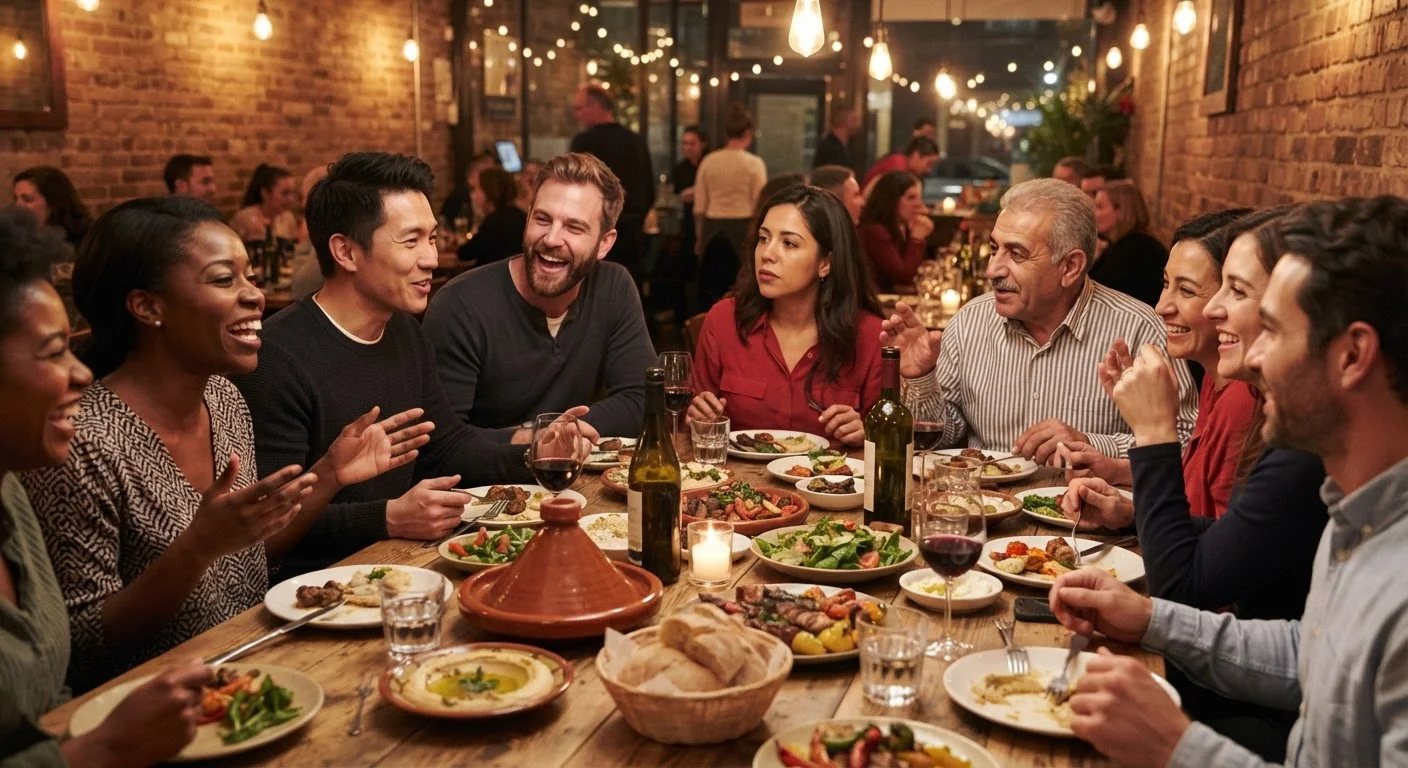
- Eating with others can increase food intake by 40–50% compared to eating alone, a phenomenon researchers call social facilitation.
- Workplace snack culture, family food norms, and peer behavior all serve as powerful environmental cues for eating.
- Awareness of social eating triggers is a first step toward making more intentional food choices.
- Reshaping your immediate social food environment can support healthier habits without requiring dramatic willpower.
- Individual hunger and appetite still matter, but social context often overrides internal signals.
Social Food Environment
A social food environment refers to the people, settings, and cultural norms surrounding your eating occasions. It includes who you eat with, where meals happen, and what behaviors are considered normal or expected in those contexts. Research consistently shows these external cues shape food choices and portion sizes, often without conscious awareness.
Nutrition scientists use the term 'obesogenic environment' to describe social and physical settings that systematically promote overeating or poor dietary quality, independent of individual intent.
The Hidden Influence of Who You Eat With
Most people think of eating as a personal decision — what sounds good, what's available, how hungry they feel. But decades of behavioral nutrition research point to a different reality: the people around you may influence your plate just as powerfully as your appetite does.
A well-replicated finding in this field is social facilitation of eating — the tendency to consume more food when dining with others than when alone. Studies suggest that meals eaten with companions can last longer and include larger portions, with some research indicating intake increases of 40–50% in group settings compared to solo meals. The mechanism isn't fully settled, but leading explanations include extended meal duration, distraction from internal satiety cues, and the unconscious mirroring of others' eating pace and quantity.
This isn't a character flaw or lack of discipline. It reflects how deeply social our relationship with food is. Understanding this dynamic is the starting point for making more deliberate choices, as explained in the habit loop behind eating patterns.
40–50%
Increase in food intake when eating with others
Multiple behavioral nutrition studies have found that social dining occasions significantly increase the amount people eat compared to solo meals.
72%
Of Americans eat at least one meal with others daily
According to USDA survey data on American eating occasions, most daily eating events involve at least one other person present.
2–3x
More candy eaten when bowl is visible vs. stored away
Research by behavioral economist Brian Wansink found that visible food placement significantly increases consumption regardless of hunger level.
Family Norms, Peer Behavior, and Food Culture
Long before adulthood, food preferences and eating behaviors are shaped by family environments. The foods regularly stocked at home, how meals are structured, and the attitudes adults model toward eating all establish patterns that can persist for years. Children raised in households where vegetables appear routinely at dinner, for instance, tend to show greater acceptance of those foods than children without that exposure.
Peer influence continues into adulthood. When coworkers default to ordering pizza during team lunches or a friend group bonds over high-calorie social occasions, those behaviors create an implicit norm. Deviating from that norm — choosing a salad when everyone else orders burgers — can feel socially costly, which is why individual motivation alone often isn't enough to sustain different choices in unchanged environments.
Cultural food traditions also play a meaningful role. Celebrations, holidays, and community rituals frequently center on specific foods, and those associations are reinforced year after year. Recognizing these patterns doesn't mean abandoning them — it means understanding that food choices are rarely made in a social vacuum. If you're examining your own eating habits, it helps to consider how hunger differs from appetite and how social signals can override both.
Workplace and Public Eating Environments
The workplace is one of the most underappreciated food environments in daily life. Break rooms stocked with donuts, communal candy jars on desks, vending machines positioned near high-traffic areas, and catered meetings loaded with processed snacks all quietly shape what employees eat throughout the day.
Behavioral economists call this choice architecture — the idea that how options are arranged and presented influences decisions independent of conscious preference. In practical terms, placing a fruit bowl at eye level in a break room reliably increases fruit consumption without anyone being told to eat differently. The reverse is equally true: visible, accessible, energy-dense foods get eaten more often simply because they're there.
For snacking habits, the workplace environment is especially influential. Frequent low-level snacking driven by boredom, social habit, or food visibility rather than genuine hunger can meaningfully shift total daily intake over time.
Practical Strategies for Navigating Social Food Pressure
Awareness of social food influences opens the door to strategies that work with — rather than against — how human behavior actually operates. A few evidence-informed approaches:
- Eat slowly in social settings. Slowing your pace during group meals gives your body time to register fullness and reduces the chance that you'll unconsciously match a faster-eating companion.
- Reshape your immediate environment. At home, keep less-nutritious foods less visible and place whole foods at eye level. At work, consider what you keep at your desk and what you walk past daily.
- Identify your social eating triggers. Certain gatherings, people, or settings may reliably lead to eating past fullness. Recognizing these patterns gives you choice before the moment arrives.
- Leverage positive social norms. When the people around you make balanced choices, you're more likely to as well. Building relationships around cooking, farmers markets, or shared healthy meals can reinforce better defaults.
These approaches complement the broader goal of building sustainable eating habits — gradual, environment-supported changes tend to outlast pure willpower-based approaches.
This article is for general informational and educational purposes only and is not a substitute for professional medical or nutritional advice. If you have specific health concerns or conditions, consult a qualified healthcare provider.