

Key Takeaways
- Vitamin C does not cure the common cold, though it may modestly reduce symptom duration.
- Most Americans can meet their daily vitamin C needs through ordinary whole foods.
- Megadosing vitamin C carries real risks and offers little proven benefit beyond adequate intake.
- Supplements and food sources of vitamin C are largely equivalent in bioavailability for most people.
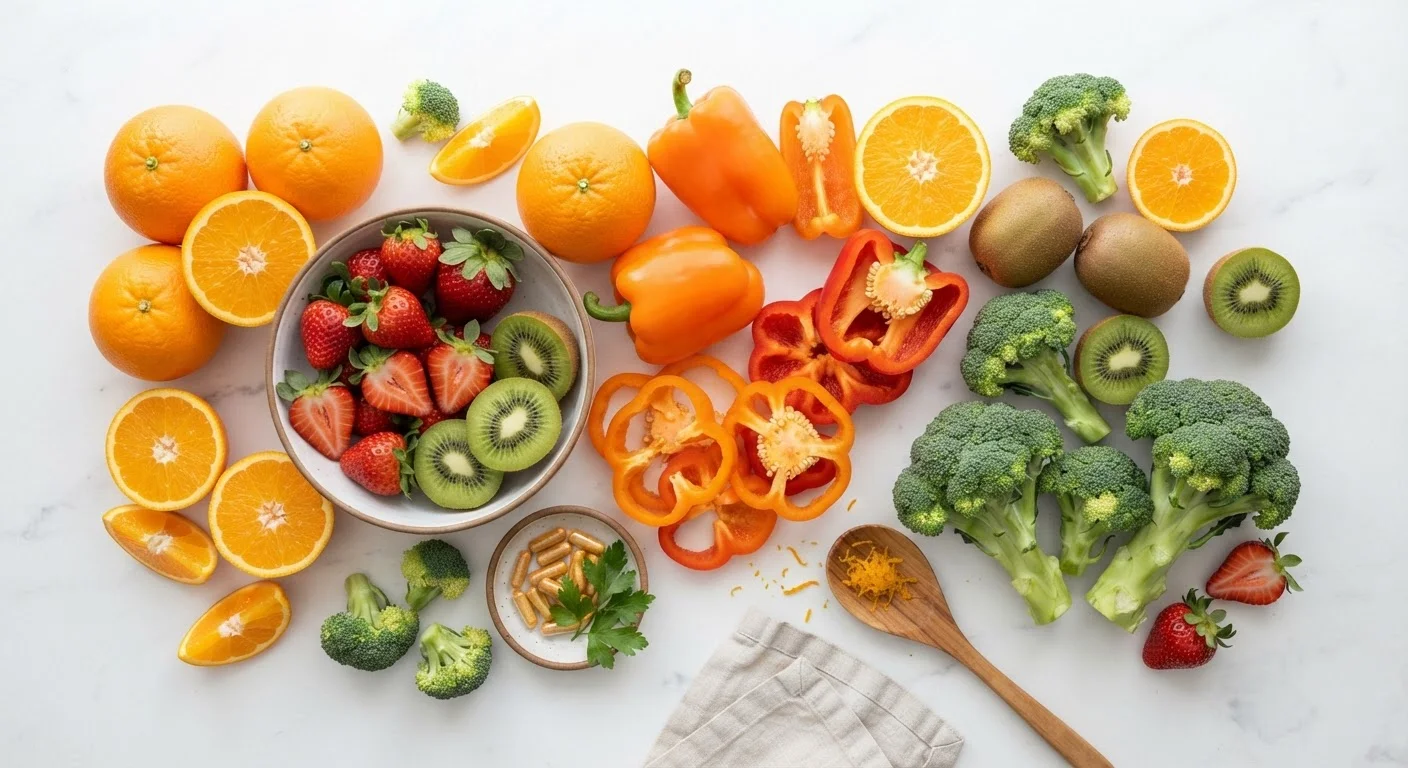
- Bell peppers, strawberries, and broccoli often contain more vitamin C per serving than oranges.
Why Vitamin C Myths Are So Stubborn
Vitamin C — chemically known as ascorbic acid — is one of the most studied nutrients in history, yet popular beliefs about it regularly outpace the evidence. Part of the reason is that early, high-profile research generated excitement that the follow-up science only partially confirmed. The rest is cultural momentum: once a claim takes hold, it is remarkably hard to dislodge.
This article examines some of the most persistent myths, checks them against current nutritional science, and explains what adequate vitamin C intake actually looks like in a practical everyday diet. As with all general nutrition information, this is not a substitute for personalized guidance from a qualified healthcare professional.
For a broader look at how these kinds of persistent misconceptions form across nutrition science, see our piece on metabolism myths that refuse to die.
Myth
Taking large doses of vitamin C will prevent you from catching a cold.
Fact
Research does not support vitamin C supplementation as a reliable way to prevent colds in the general population.
This belief traces largely to Nobel laureate Linus Pauling's influential but later disputed advocacy for high-dose vitamin C in the 1970s. Decades of subsequent trials have consistently shown that supplementing with vitamin C does not significantly reduce the incidence of colds for most people. A widely cited Cochrane review found that regular supplementation may modestly shorten cold duration — by roughly half a day — but does not prevent infection. The exception may be people under extreme physical stress, such as marathon runners or military personnel in sub-arctic conditions, where some preventive effect has been observed. For everyday adults, however, the cold-prevention claim does not hold up.
Myth
More vitamin C is always better — megadosing is harmless and extra protective.
Fact
The body absorbs vitamin C less efficiently as doses increase, and very high intakes carry documented risks including digestive distress and kidney stones.
Vitamin C is water-soluble, meaning excess amounts are excreted rather than stored indefinitely. This leads many people to assume that taking large quantities is consequence-free. In reality, the Tolerable Upper Intake Level (UL) set by health authorities is 2,000 mg per day for adults. Doses well above that threshold are associated with gastrointestinal symptoms such as diarrhea, nausea, and cramping. High intakes may also increase urinary oxalate excretion, which is a known risk factor for kidney stones — a concern especially for individuals already prone to them. Absorption efficiency also drops sharply as dose increases: at 200 mg, absorption is close to complete; at 1,250 mg, it falls to around 33%. Chasing diminishing returns through megadosing adds cost and risk without meaningful benefit for most people.
Myth
Vitamin C from supplements is significantly superior to vitamin C from food.
Fact
Research shows that synthetic ascorbic acid in supplements is chemically identical to the vitamin C found in food and is similarly absorbed by the body.
Supplement marketing sometimes implies that proprietary forms or "natural" extraction processes produce a meaningfully superior product. The available evidence does not support this. Studies comparing bioavailability of synthetic ascorbic acid supplements with vitamin C from whole food sources — such as orange juice or kiwi — have found little to no clinically meaningful difference in absorption or blood level response. Whole foods do provide additional nutrients, fiber, and phytonutrients that supplements do not, which is a genuine reason to favor food sources. But the vitamin C molecule itself works the same way regardless of its origin. Our article on food versus supplement tradeoffs explores this nuance across multiple vitamins.
Myth
Citrus fruits are the best — and really the only — dietary source of vitamin C.
Fact
Many vegetables exceed citrus in vitamin C content per serving, including red bell peppers, broccoli, kiwi, and strawberries.
Oranges and orange juice have become almost synonymous with vitamin C in American culture, but they are far from the most concentrated source. Raw red bell peppers contain roughly twice the vitamin C of an equivalent weight of orange. Strawberries, broccoli, Brussels sprouts, kiwi, and papaya are all excellent sources. This matters practically: people who dislike citrus or are watching fruit sugar intake have abundant alternatives. A varied diet rich in colorful vegetables and fruit will typically provide more than enough vitamin C without relying on any single food. This connects to the broader principles discussed in our article on clean eating misconceptions.
Myth
If you feel run-down or tired, extra vitamin C will help restore your energy.
Fact
Fatigue is not a specific symptom of vitamin C insufficiency in people who are otherwise meeting basic needs, and supplementing will not boost energy in well-nourished individuals.
Severe vitamin C deficiency — a condition called scurvy — does produce fatigue among other serious symptoms, but scurvy is rare in the United States today. For someone already consuming adequate vitamin C through their diet, taking more will not increase energy levels. Persistent fatigue has many potential causes, including iron-deficiency anemia, poor sleep, thyroid dysfunction, and other medical conditions that require proper evaluation. Using vitamin C supplements as a self-treatment for tiredness can delay appropriate care. Anyone experiencing ongoing fatigue should speak with a healthcare professional rather than reaching for supplements as a first response.
Meeting Your Vitamin C Needs Through Food
The Recommended Dietary Allowance (RDA) for vitamin C is 90 mg per day for adult men and 75 mg per day for adult women, according to the National Institutes of Health Office of Dietary Supplements. Smokers are advised to add 35 mg to those figures because smoking accelerates ascorbic acid depletion.
Those amounts are achievable through ordinary eating. A single medium orange provides roughly 70 mg. Half a cup of raw red bell pepper delivers around 95 mg — more than a full day's requirement in one small serving. Strawberries, broccoli, kiwi, tomatoes, and many leafy greens all contribute meaningfully.
95 mg
Vitamin C in half a cup of raw red bell pepper
According to USDA FoodData Central, red bell pepper is one of the most concentrated whole-food sources of vitamin C available.
~50%
Adults meeting vitamin C needs through diet alone
National Health and Nutrition Examination Survey (NHANES) data suggest most American adults consume adequate vitamin C from food without supplementation.
2,000 mg
Tolerable Upper Intake Level for adults daily
The NIH Office of Dietary Supplements sets this threshold above which gastrointestinal side effects and other risks become more likely.
The practical takeaway is that a diet containing several servings of vegetables and fruit each day will, for most people, supply sufficient vitamin C without any supplementation. If you are uncertain whether your current eating pattern meets your needs, a registered dietitian can provide individualized assessment. Questions about whether supplements make sense for your specific situation are explored in depth in our article on when getting a vitamin from a pill actually makes sense.
It is also worth noting that vitamin C is sensitive to heat and prolonged storage. Lightly steaming vegetables rather than boiling them, and eating produce while it is fresh, helps preserve more of the nutrient. This is a practical consideration, not a reason to fear cooked food — cooking also makes many other nutrients more available.
This article is for general informational and educational purposes only and is not a substitute for professional medical or dietary advice. Consult a qualified healthcare provider for guidance specific to your health situation.