

Key Takeaways
- Iron comes in two forms — heme (animal-based) and non-heme (plant-based) — with meaningfully different absorption rates.
- Pairing plant-based iron sources with vitamin C-rich foods can significantly improve how much non-heme iron your body absorbs.
- Coffee, tea, and calcium-rich foods consumed alongside iron-rich meals can reduce absorption.
- Most healthy adults can meet iron needs through a varied, intentional diet without supplementation.
- Certain groups — including women of childbearing age and people avoiding meat — may need closer attention to daily iron intake.
What you will need
Understanding the Two Types of Dietary Iron
Iron in food exists in two distinct forms, and your body handles them very differently. Heme iron is found exclusively in animal products — red meat, poultry, and seafood. It is absorbed efficiently, with the body typically taking in around 15–35% of the heme iron present in a meal. Non-heme iron appears in plant foods like lentils, beans, tofu, spinach, and fortified grains. Absorption is lower — generally 2–20% — and is more sensitive to other factors in the meal.
This distinction matters practically. If your diet skews plant-heavy, you are relying primarily on non-heme iron, which means the context of what you eat alongside those foods becomes especially important. For a deeper look at how plant-forward eating affects multiple micronutrients at once, see how plant-based eaters can approach micronutrients strategically.
Vitamin C Is Your Best Absorption Ally
Research consistently shows that consuming vitamin C alongside non-heme iron can increase its absorption by two to three times compared to eating the iron source alone. This is one of the most evidence-backed dietary pairing strategies in nutrition science. Making it a habit costs nothing and requires no special foods.
The Best Food Sources of Iron
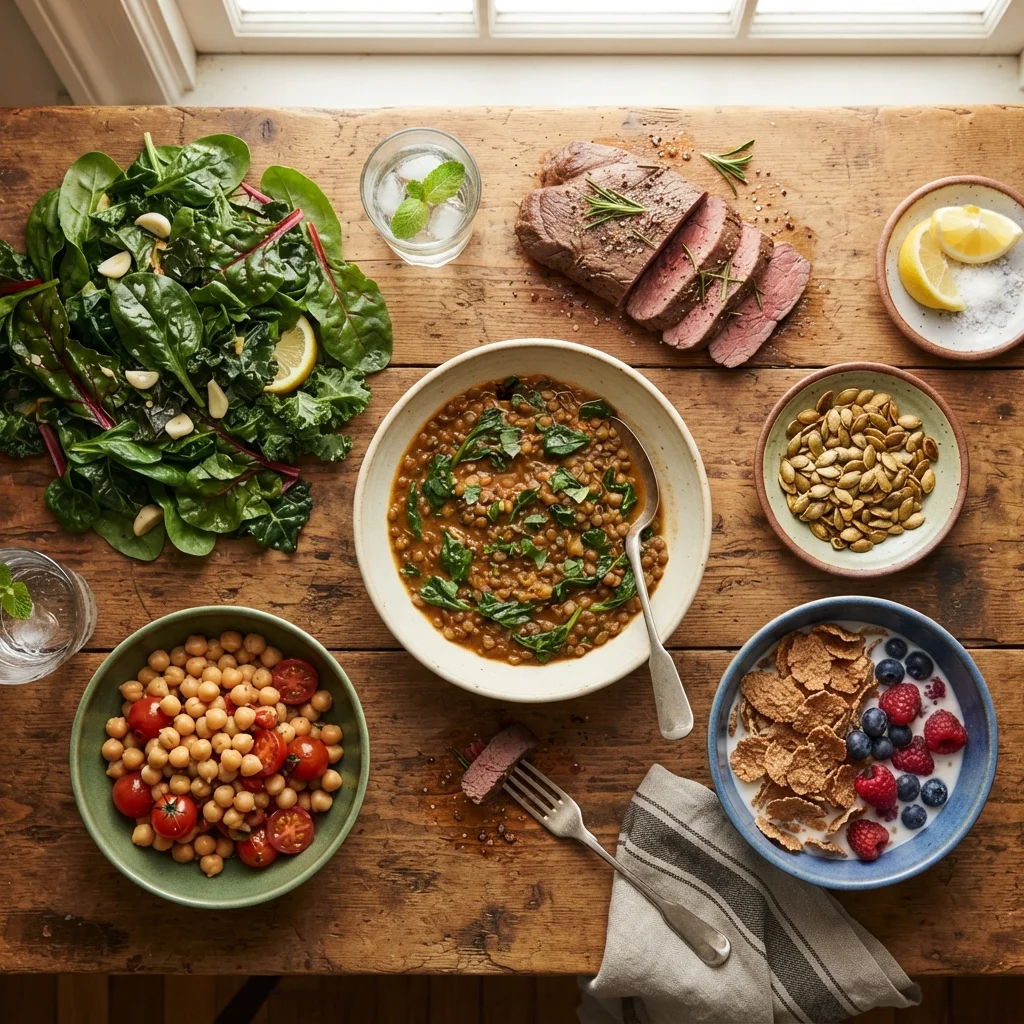
You do not need exotic or expensive foods to cover your iron needs. The following everyday options are among the most useful:
- Lean beef and lamb: Rich in highly absorbable heme iron; a 3-ounce serving of beef provides roughly 2–3 mg.
- Shellfish: Oysters and clams are especially iron-dense — a 3-ounce serving of cooked oysters can contain 8 mg or more.
- Lentils and beans: A cup of cooked lentils delivers approximately 6–7 mg of non-heme iron, making legumes one of the most practical plant sources.
- Tofu: Half a cup of firm tofu provides around 3 mg and adapts easily to many meal formats.
- Pumpkin seeds: An ounce offers about 2.5 mg and works as a convenient snack or topping.
- Fortified cereals: Many ready-to-eat cereals are fortified with 100% of the daily value for iron per serving — check the nutrition facts panel.
- Dark leafy greens: Cooked spinach provides roughly 6 mg per cup, though absorption is lower than from animal sources.
Mixing heme and non-heme sources in the same meal is a practical strategy: the presence of meat proteins appears to enhance non-heme iron absorption, a phenomenon nutrition researchers sometimes call the "meat factor."
How to Improve Iron Absorption at Every Meal
Getting iron into your diet is only part of the equation. How your body absorbs it depends heavily on what else is on the plate. For a broader look at the factors that influence nutrient absorption, overlooked reasons your body may not absorb nutrients as expected is a useful companion read.
Pair non-heme iron sources with vitamin C
Vitamin C (ascorbic acid) converts non-heme iron into a form the intestines absorb more readily. Add a squeeze of lemon juice to cooked lentils, pair a bean-based dish with diced bell pepper or tomato, or serve fortified cereal with a small glass of orange juice. The vitamin C source should be consumed in the same meal — not hours later.
Limit absorption inhibitors around iron-rich meals
Several common foods and beverages reduce non-heme iron absorption when consumed simultaneously. Coffee and tea contain polyphenols that bind iron in the gut; calcium competes with iron for the same absorption pathway. You do not need to eliminate these foods — simply time them away from your main iron sources. Waiting 1–2 hours before or after an iron-rich meal is a workable approach for most people.
Rotate iron-rich foods throughout the week
Rather than concentrating iron intake into a single large meal, distribute sources across several meals daily and across the week. Rotating legumes, seeds, greens, and animal proteins keeps meals varied while delivering consistent iron exposure. A Monday dinner of beef and roasted broccoli, a Wednesday lunch of lentil soup with crusty bread, and a Friday breakfast of fortified oatmeal topped with pumpkin seeds is a straightforward pattern to build on.
Know which groups need extra attention
Daily iron requirements vary by age, sex, and life stage. Women of childbearing age, pregnant individuals, adolescent girls, and people who follow exclusively plant-based diets have higher needs or lower absorption efficiency and should pay particular attention to daily intake patterns. The USDA Dietary Guidelines and the National Institutes of Health Office of Dietary Supplements publish current recommended dietary allowances (RDAs) by group, which serve as a reliable public reference.
Even small, consistent changes to how you build meals can meaningfully shift your iron status over time. See also our guide to building a micronutrient-rich plate without overhauling your diet for a practical framework.
This article is for general informational purposes only and is not a substitute for medical advice. If you suspect iron deficiency or have a health condition affecting nutrient absorption, consult a qualified healthcare provider before making significant dietary changes.