

Key Takeaways
- Water-soluble vitamins like C and B vitamins leach into cooking liquid when vegetables are boiled.
- Steaming and microwaving generally preserve more nutrients than boiling in large amounts of water.
- Some nutrients, like lycopene in tomatoes, actually become more bioavailable after cooking.
- Cutting vegetables before cooking increases surface area and accelerates nutrient loss.
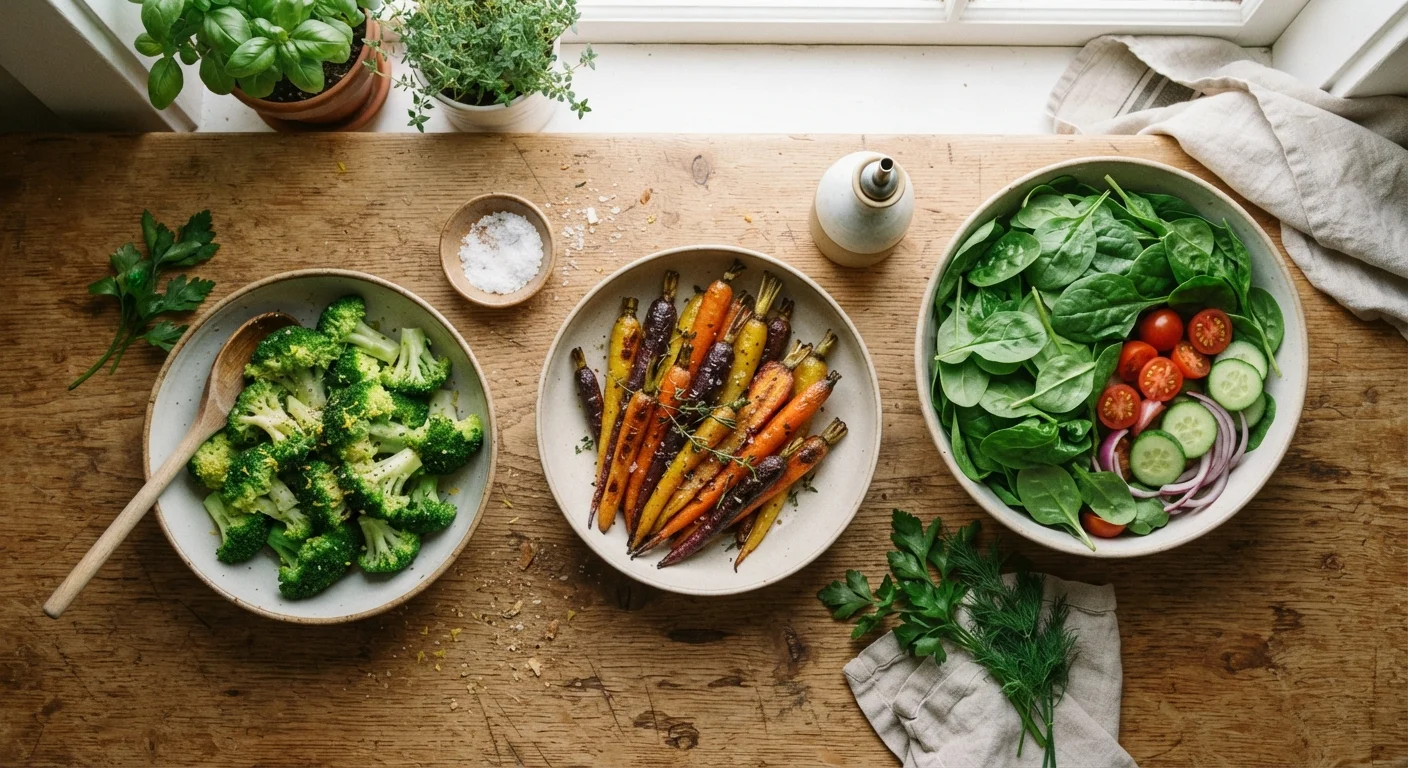
- Eating a variety of raw and cooked vegetables is the most practical strategy for overall nutrient intake.
How Heat and Water Affect Vegetable Nutrients
Not all nutrients behave the same way when exposed to heat, water, or air. Understanding a few basic principles helps you make smarter choices at the stove without overcomplicating your meals.
Water-soluble vitamins — particularly vitamin C and the B vitamins (such as folate and thiamine) — are the most vulnerable. They dissolve readily into cooking water and are also degraded by prolonged heat. Fat-soluble vitamins like A, D, E, and K are more heat-stable and are less likely to leach into water, though excessive cooking time can still reduce them.
Minerals such as potassium and magnesium are relatively heat-stable but will migrate into cooking water if vegetables are submerged and boiled. In that case, using the cooking liquid in soups or sauces is a practical way to recapture some of what was lost.
Nutrient Loss Is Normal — Not a Reason to Avoid Cooking
Some degree of nutrient change occurs with nearly every cooking method. However, cooked vegetables still provide substantial vitamins, minerals, and fiber compared to not eating them at all. The goal is to minimize unnecessary losses, not to achieve perfection. Consistently eating a wide variety of vegetables — prepared in ways you genuinely enjoy — matters more than any single cooking technique.
Cooking Methods Ranked by Nutrient Retention
Research consistently shows that the method you choose — and how long you cook — has a measurable impact on the vitamins and minerals that reach your plate.
Steam vegetables instead of boiling them in large volumes of water.
Steaming exposes vegetables to heat without submerging them, dramatically reducing the leaching of water-soluble vitamins. Studies have found steaming retains significantly more vitamin C in broccoli compared to boiling.
Use the microwave for quick, low-water cooking of most vegetables.
Microwaving uses minimal water and short cook times, both of which favor nutrient retention. Research published in nutritional science literature has consistently ranked microwaving among the better methods for preserving water-soluble vitamins.
Keep roasting times and temperatures moderate.
Dry-heat roasting preserves minerals well and does not cause leaching, but high temperatures over long periods degrade heat-sensitive vitamins. A moderate oven and shorter roasting window strikes a good balance between flavor and nutrition.
Cut vegetables after cooking whenever possible, not before.
Cutting exposes more surface area, accelerating oxidation and nutrient loss — especially vitamin C. Cooking vegetables whole or in larger pieces and cutting afterward minimizes this effect.
Reuse cooking water in soups, broths, or sauces.
Water-soluble vitamins and minerals that leach out during boiling remain in the cooking liquid. Discarding it means losing a meaningful portion of those nutrients.
Quick Wins You Can Apply Today
You don't need to overhaul your cooking routine to improve nutrient retention. A handful of targeted habits can make a meaningful difference across your weekly meals.
The Raw vs. Cooked Debate
A common assumption is that raw vegetables are always nutritionally superior. The evidence is more nuanced. While raw vegetables do retain heat-sensitive vitamins intact, cooking can break down cell walls and increase the bioavailability (the proportion your body can actually absorb) of certain nutrients.
Tomatoes are a well-studied example: cooking increases the bioavailability of lycopene, a carotenoid associated with antioxidant activity. Similarly, cooking carrots and spinach makes their beta-carotene more accessible. Cruciferous vegetables like broccoli, on the other hand, retain more of their glucosinolate compounds — which the body converts to beneficial isothiocyanates — when eaten raw or lightly cooked.
“The evidence suggests that the best diet includes both raw and cooked vegetables, since different preparation methods unlock different nutritional benefits from the same foods.”
— Rui Hai Liu, Professor of Food Science, Cornell University
The practical takeaway is to vary your approach. Include both raw and cooked vegetables in your weekly diet rather than committing entirely to one method. This naturally broadens the range of nutrients your body receives.
This article is for general informational and educational purposes only and is not a substitute for advice from a qualified healthcare professional or registered dietitian. Individual nutritional needs vary; consult a professional for personalized dietary guidance.