

Key Takeaways
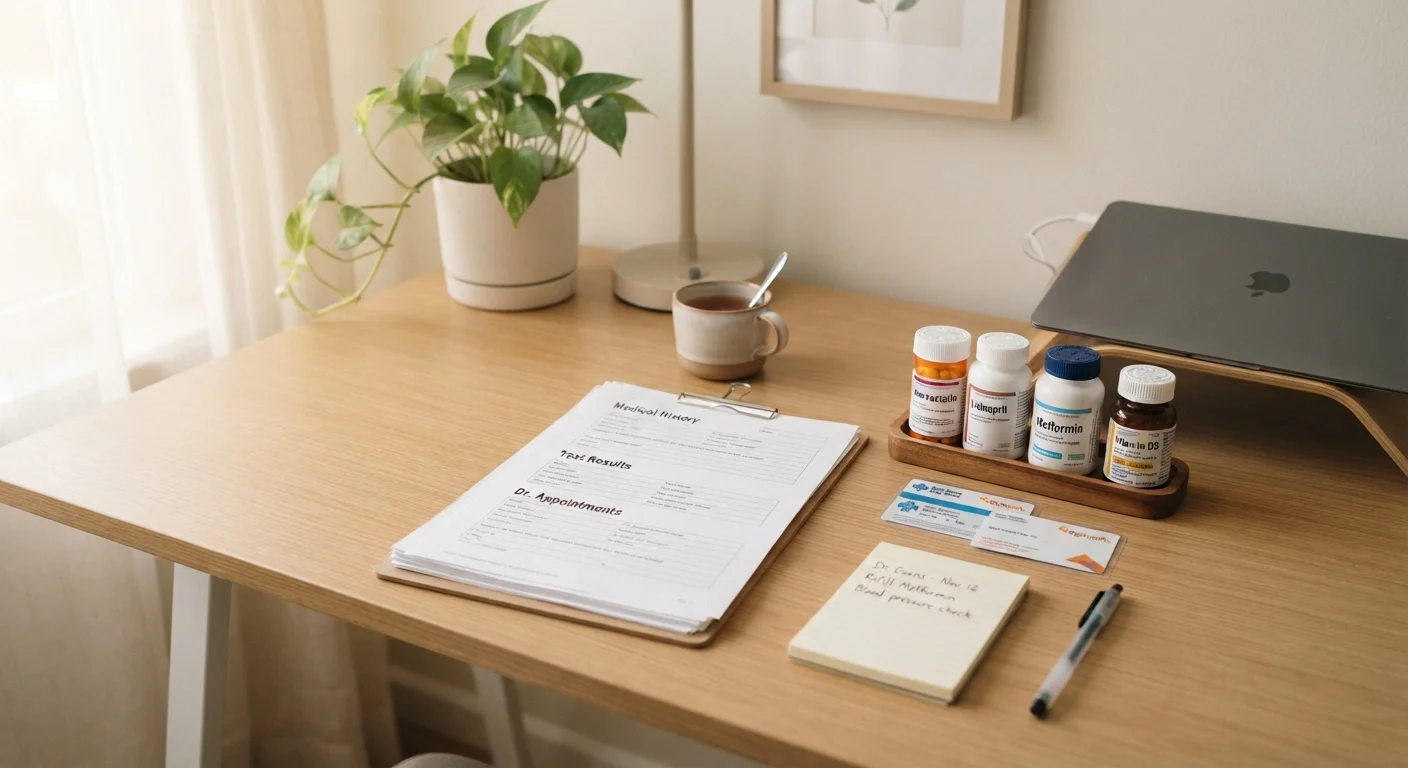
- Organized health records help your provider make faster, more accurate preventive care decisions.
- A current medication list — including supplements — is one of the most critical documents to bring.
- Family medical history, even partial, significantly improves screening recommendations you receive.
- Past lab results and vaccination records prevent duplicate testing and fill care gaps.
- Knowing your insurance details and outstanding referrals reduces administrative delays at your visit.
Summary
24 items · 30–60 minutes
Why Preparation Makes Preventive Care More Effective
A preventive checkup is only as useful as the information you bring to it. When your provider has a complete picture — your medications, your family history, your recent labs — they can tailor screening recommendations to your actual risk profile rather than relying on population averages alone. The difference between a rushed, reactive appointment and a focused, productive one often comes down to what you walked in with.
This room-by-room organizer treats your home the same way a good clinician treats a patient: systematically, starting where health records actually live. Most Americans keep health information scattered across multiple locations — a bathroom cabinet, a kitchen drawer, a phone notes app, an email inbox. This checklist consolidates all of it before your next visit.
For a broader look at maximizing your appointment itself, see how to prepare for a routine checkup to pair with this records organizer. And if you haven't seen a provider in several years, starting preventive care from scratch offers a grounded re-entry point.
Don't Skip Supplements and Herbals
Many people omit vitamins, herbal remedies, and over-the-counter products when listing their medications, but these can interact with prescriptions and affect lab results. Your provider needs the complete picture to assess your health accurately. Bring every bottle if you're unsure what to include.
The Room-by-Room Checklist
Work through each location in your home where health-related documents, medications, or records might be stored. Check off items as you locate, review, and consolidate them into a single folder or binder to bring to your appointment.
Bathroom: Medications and Supplements
Home Office or Kitchen Drawer: Insurance and Administrative Records
Filing Cabinet or Binder: Clinical Records
Anywhere in the Home: Family History Documentation
Phone or Digital Accounts: Health App and Portal Data
Once you have everything gathered, pair this with the daily preventive health habit audit to flag any lifestyle factors — sleep, movement, nutrition — worth discussing with your provider during the visit.
What to Do With Everything You've Gathered
Consolidate all physical documents into a clearly labeled folder. For digital records — patient portal printouts, emailed lab results, telehealth visit summaries — print copies or download them to a single folder on your phone or tablet so you can reference them offline in the exam room.
Before your appointment, write down your top two or three questions or concerns. Providers have limited time, and arriving with a prioritized list ensures your most important issues get addressed first. If your visit involves specific measurements like body composition screening, the body composition assessment preparation checklist outlines additional steps — like hydration and fasting timing — that can affect your results.
Labeled accordion folder or binder
Organizes physical documents by category so records are immediately accessible during your appointment.
Patient portal account
Provides access to digital lab results, visit summaries, vaccination records, and provider notes.
Medication tracking app or written log
Helps maintain an up-to-date, shareable list of all current prescriptions, OTC medications, and supplements.
Printed family health history form
Structures the collection of hereditary conditions, ages of onset, and relevant family diagnoses before your visit.
This article is for general informational and organizational purposes only and does not constitute medical advice. Always consult a qualified healthcare provider for guidance specific to your health needs, symptoms, or medical history.