

Key Takeaways
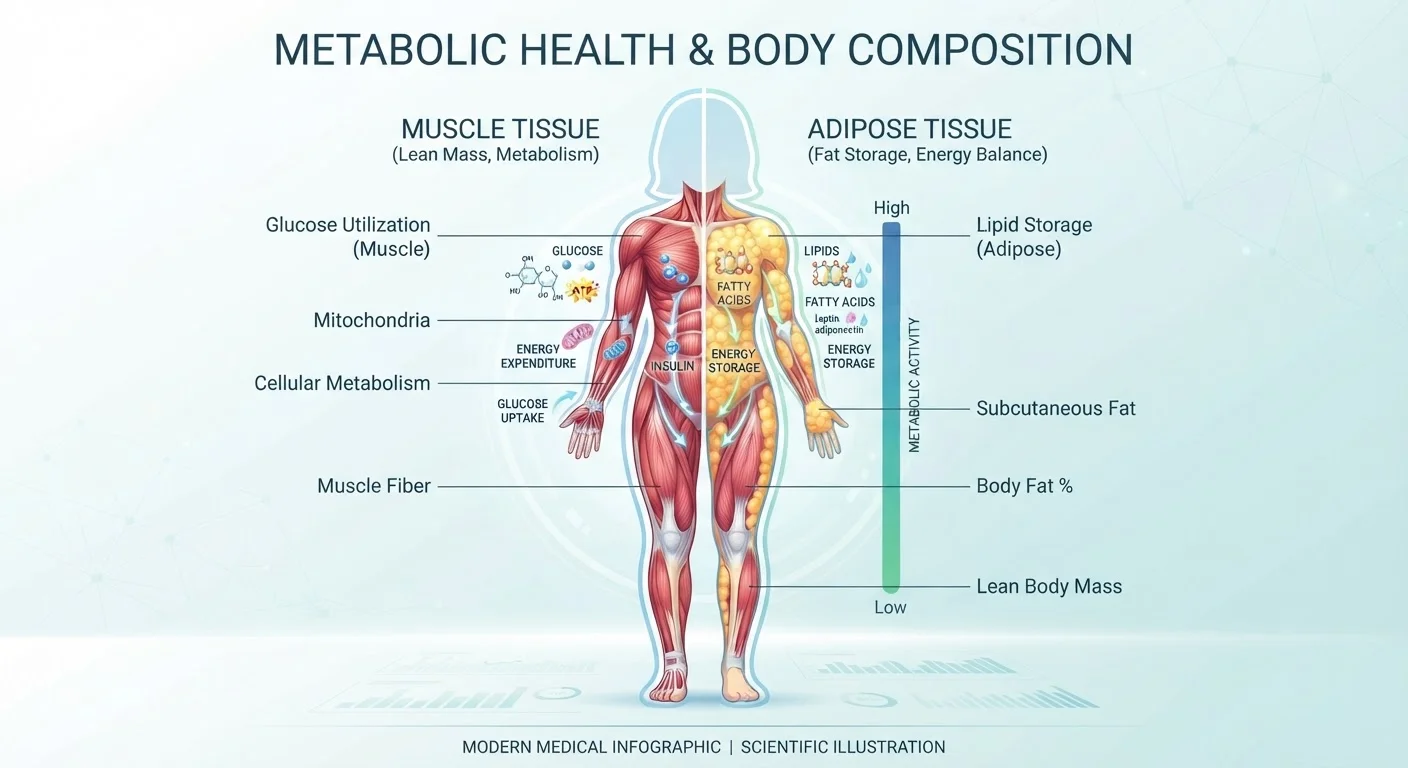
- Body composition - not just total weight - is a stronger predictor of metabolic health outcomes.
- Visceral fat (fat stored around internal organs) is more metabolically harmful than subcutaneous fat.
- Greater skeletal muscle mass is associated with improved insulin sensitivity and glucose regulation.
- Two people with the same BMI can have very different metabolic health profiles.
- Resistance training and protein-adequate diets support lean mass, which benefits metabolism.
Body Composition & Metabolic Health
Body composition refers to the proportions of fat, muscle, bone, and water that make up your total body weight. Metabolic health describes how efficiently your body regulates blood sugar, blood pressure, cholesterol, and related processes. Research consistently shows that these two factors are deeply intertwined - where and how much fat you carry, and how much lean mass you have, significantly influences metabolic function.
Metabolic health is often assessed using a cluster of markers including fasting glucose, triglycerides, HDL cholesterol, blood pressure, and waist circumference - collectively related to metabolic syndrome risk.
Why Body Composition Matters More Than the Scale
Total body weight is a blunt instrument. Two individuals can share the same weight and height - and therefore the same BMI - yet have dramatically different amounts of muscle, fat, and visceral adiposity. Those differences translate directly into divergent metabolic health profiles.
Body composition analysis looks beyond the scale to assess fat mass, skeletal muscle mass, bone density, and water content. Understanding these ratios provides a clearer lens through which to evaluate metabolic risk than weight or BMI alone. For a deeper look at what these metrics reveal and where they fall short, see our guide to body composition data.
~1 in 3
U.S. adults meeting metabolic health criteria
A widely cited analysis of NHANES data estimated that only about one-third of U.S. adults have optimal metabolic health across all five key markers.
~80%
Post-meal glucose disposal occurring in muscle
Research in exercise physiology indicates skeletal muscle accounts for approximately 80% of insulin-stimulated glucose uptake, underscoring its central metabolic role.
5-7%
Body weight loss linked to meaningful metabolic improvement
Clinical research suggests that even modest fat loss in the range of 5-7% of body weight can produce measurable improvements in insulin sensitivity and lipid profiles.
The Role of Fat Distribution in Metabolic Function
Not all body fat is metabolically equivalent. Research distinguishes between two primary types: subcutaneous fat, stored just beneath the skin, and visceral fat, which accumulates around internal organs in the abdominal cavity.
Visceral fat is considerably more metabolically active. It releases inflammatory cytokines and free fatty acids that can impair insulin signaling, raise triglycerides, and contribute to elevated fasting blood glucose. Higher visceral fat load is independently associated with increased risk of type 2 diabetes, cardiovascular disease, and metabolic syndrome - even in individuals whose overall body weight falls within a 'normal' range.
Waist circumference is a practical clinical proxy for visceral fat and is frequently used alongside BMI in metabolic risk screening. Understanding how biological sex influences fat distribution patterns is also relevant here - for more context, see how body composition differs across genders.
Skeletal Muscle: An Underappreciated Metabolic Organ
Skeletal muscle is the largest insulin-sensitive tissue in the body and accounts for the majority of glucose disposal following a meal. A higher proportion of lean muscle mass is associated with better insulin sensitivity, lower fasting glucose, and more favorable lipid profiles.
Muscle tissue also elevates resting metabolic rate - it requires more energy to maintain than fat tissue, meaning individuals with greater lean mass tend to burn more calories at rest. This has practical implications for long-term weight management and metabolic stability. Learn more about how these mechanisms operate in our metabolism basics hub.
Preserving or building muscle mass through resistance training is one of the most evidence-supported strategies for improving metabolic health markers, independent of changes in total body weight. What the research says about strength training and weight management provides a detailed look at this evidence.
Nutrition, Lean Mass, and Metabolic Outcomes
Diet quality and macronutrient composition play a significant role in shaping body composition and, by extension, metabolic health. Adequate dietary protein is particularly important: it supports muscle protein synthesis, helps preserve lean mass during caloric restriction, and has a higher thermic effect than carbohydrates or fat - meaning the body expends more energy digesting it.
Carbohydrate quality and quantity influence blood glucose and insulin dynamics, while dietary fat type affects lipid panels and inflammatory markers. Understanding these interactions is foundational to making sense of body composition changes. Our macronutrients hub covers how carbs, proteins, and fats each contribute to daily energy and body function.
No single nutritional approach guarantees a specific metabolic outcome. Evidence supports individualized strategies guided by a registered dietitian or physician, particularly for those managing existing metabolic conditions.
This article is for general informational purposes only and is not a substitute for personalized medical or nutritional advice. Consult a qualified healthcare professional before making significant changes to your diet or exercise routine.