

Key Takeaways
- Metabolism describes all the chemical reactions that convert food into energy - not just how fast you burn calories.
- Basal metabolic rate accounts for roughly 60-70% of total daily energy expenditure for most people.
- Muscle mass, age, sleep quality, and thyroid function all influence metabolic rate in meaningful ways.
- "Boosting" metabolism through supplements or specific foods has very little scientific support.
- Sustainable habits around movement and nutrition matter far more than short-term metabolic tricks.
- Significant unexplained weight changes may reflect hormonal or metabolic conditions worth discussing with a doctor.
What Metabolism Actually Is
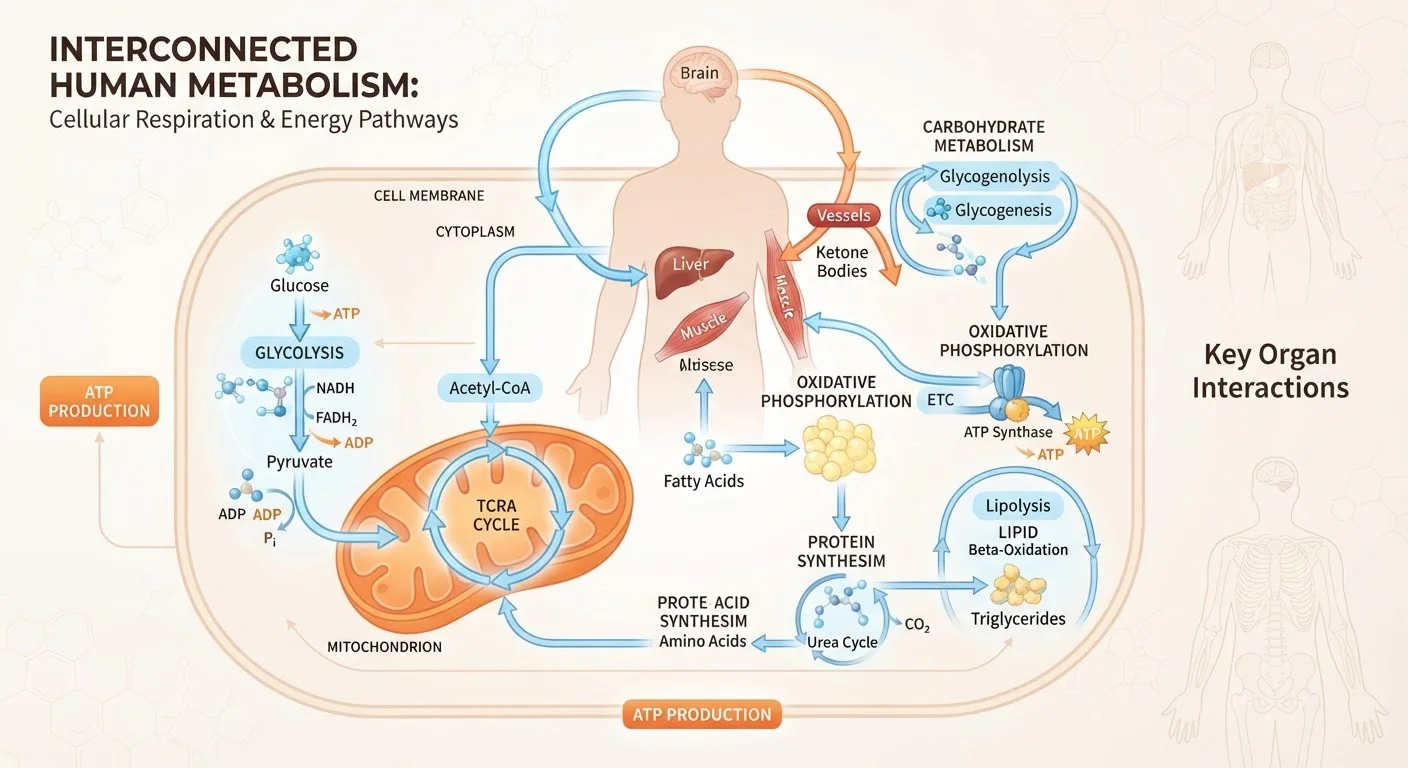
The word metabolism gets used loosely - often as shorthand for how easily someone gains or loses weight. But the clinical reality is more precise and more interesting. Metabolism refers to the complete set of biochemical reactions your body runs continuously to sustain life: breaking down food for energy (catabolism), and using that energy to build and repair tissue (anabolism).
Every breath, heartbeat, cell repair, and muscle contraction depends on these reactions. So when someone says they have a "slow metabolism," they're usually describing one narrow slice of a far larger system - typically their resting energy expenditure, or how many calories their body burns at rest.
If you're newer to these concepts, the Metabolism From the Ground Up guide covers the foundational framework in plain language before diving into specifics.
This article is for general informational purposes and does not constitute medical advice. Consult a qualified healthcare professional for any personal health concerns.
The Components of Metabolic Rate
Total daily energy expenditure (TDEE) - the calories your body uses in a day - breaks down into distinct, measurable parts:
- Basal Metabolic Rate (BMR): The energy needed to keep basic physiological functions running at rest. This accounts for roughly 60-70% of TDEE for most people.
- Thermic Effect of Food (TEF): The energy cost of digesting and absorbing food - typically around 10% of TDEE. Protein has the highest thermic effect of any macronutrient.
- Non-Exercise Activity Thermogenesis (NEAT): Calories burned through everyday movement - walking, fidgeting, standing. Highly variable between individuals, NEAT can differ by hundreds of calories per day.
- Exercise Activity Thermogenesis (EAT): Intentional physical activity. Important, but often a smaller contributor than people assume.
60-70%
Share of daily calories burned at rest (BMR)
Research in exercise physiology consistently places basal metabolic rate as the dominant component of total daily energy expenditure.
~10%
Energy cost of digesting food (TEF)
The thermic effect of food varies by macronutrient - protein generates roughly 20-30% thermic effect, compared to 5-10% for carbohydrates.
500+ kcal
Potential daily difference in NEAT between individuals
Studies by Mayo Clinic researchers found that non-exercise activity thermogenesis can vary by more than 2,000 kJ per day between people of similar size.
Understanding which components are most influential matters - because they each respond differently to lifestyle changes and are not equally controllable.
What Actually Influences Your Metabolism
Several factors shape metabolic rate in ways that are well-supported by research:
Body Composition
Lean muscle mass is metabolically active tissue - it burns more calories at rest than fat tissue does. People with greater muscle mass generally have higher BMRs. This is one reason resistance training is often recommended in the context of body composition goals.
Age
BMR tends to decline gradually with age, partly due to loss of muscle mass (a process called sarcopenia) and partly due to hormonal shifts. However, research suggests these changes are more modest than commonly believed - and much of the age-related slowdown can be offset through resistance training and adequate protein intake.
Hormones
Thyroid hormones are among the most direct regulators of metabolic rate. Both hypothyroidism (underactive thyroid) and hyperthyroidism (overactive thyroid) significantly affect energy expenditure. Insulin, cortisol, and sex hormones also play roles, which is why metabolic disruption often accompanies conditions like polycystic ovary syndrome or chronic stress.
Sleep
Poor or insufficient sleep disrupts hormones that regulate hunger (leptin and ghrelin) and can reduce insulin sensitivity - indirectly affecting how efficiently the body processes and stores energy.
Don't underestimate NEAT - small increases in daily movement (taking stairs, walking during calls, standing periodically) compound meaningfully over weeks and months.
Research suggests NEAT is one of the most variable and potentially modifiable components of daily energy expenditure, making it a high-leverage target for people with sedentary jobs.
If you're in a caloric deficit and weight loss has stalled for several weeks, consider whether muscle loss may be a contributing factor - and ensure protein intake is sufficient to support muscle retention.
Adaptive thermogenesis and muscle loss can both reduce BMR during prolonged restriction; prioritizing protein and resistance training helps preserve metabolically active tissue.
Gut Microbiome
An emerging area of research suggests the gut microbiome influences how efficiently energy is extracted from food. While the science is still developing, it adds nuance to the idea that two people eating identically may not experience identical metabolic effects. See Your Microbiome, Explained for a solid grounding in the current evidence.
Common Metabolism Myths, Corrected
Misinformation about metabolism is pervasive. Here are the most common myths and what the evidence actually shows:
Myth: Eating small, frequent meals speeds up metabolism
Meal frequency does not meaningfully affect total daily energy expenditure when total calorie and macronutrient intake is held constant. The research is fairly consistent on this point. Meal timing preferences should be guided by what helps an individual maintain consistent, balanced intake - not by unfounded metabolic claims.
Myth: Certain "superfoods" or spices boost metabolism significantly
Substances like capsaicin (from chili peppers) or caffeine do produce small, short-lived increases in thermogenesis. The effects are too modest and too transient to produce meaningful changes in body weight or composition over time.
Myth: Metabolism is fixed and determined entirely by genetics
Genetics influence metabolic rate, but they don't fully determine it. Lifestyle factors - particularly physical activity level, sleep quality, and muscle mass - play substantial, modifiable roles.
Myth: Starvation mode means cutting calories will backfire
Significant caloric restriction does trigger adaptive thermogenesis - the body reduces energy expenditure somewhat in response to sustained deficits. But this effect is real and measurable, not catastrophic or permanent. It's one reason very low-calorie approaches tend to be less effective long-term, not evidence that eating less is counterproductive. See Metabolism Misreadings for more on how these attributions go wrong.
Metabolism and Body Composition
Metabolism and body composition are deeply connected. A higher proportion of lean muscle mass elevates resting metabolic rate, which is why resistance training is one of the few evidence-supported strategies for meaningfully influencing BMR over time.
Conversely, significant fat loss achieved through caloric restriction alone - without preserving muscle - can lead to a reduction in BMR that makes further weight management more difficult. This is one reason clinical guidelines increasingly emphasize protein adequacy and resistance training alongside dietary approaches to weight management.
Body composition also shapes how the body responds to insulin and manages blood glucose - factors that connect metabolic health to long-term disease risk beyond weight alone.
What You Can Realistically Do
Metabolism is not something you can hack with teas, timing tricks, or short-term protocols. But it is genuinely responsive to consistent, evidence-based habits:
- Build and maintain muscle mass through regular resistance training - even two sessions per week confers measurable metabolic benefit.
- Prioritize adequate protein intake, which supports muscle preservation, has the highest thermic effect of the macronutrients, and supports satiety.
- Protect sleep quality - seven to nine hours for most adults is the range associated with optimal hormonal function and metabolic health.
- Stay active throughout the day - NEAT contributes meaningfully to total energy expenditure and is often more modifiable than structured exercise time.
- Build sustainable eating habits over time. The Grounded Introduction to Building Healthier Eating Habits is a practical starting point.
If you're experiencing unexplained weight changes, persistent fatigue, or other symptoms that suggest your metabolism may be affected by an underlying condition, speak with a healthcare provider. Thyroid disorders, hormonal imbalances, and other medical factors are treatable - and attributing all of it to a vague concept of "slow metabolism" can delay appropriate care.
This article provides general health information for educational purposes only and is not a substitute for professional medical advice, diagnosis, or treatment. Always consult a qualified healthcare provider with questions about your health.