

Key Takeaways
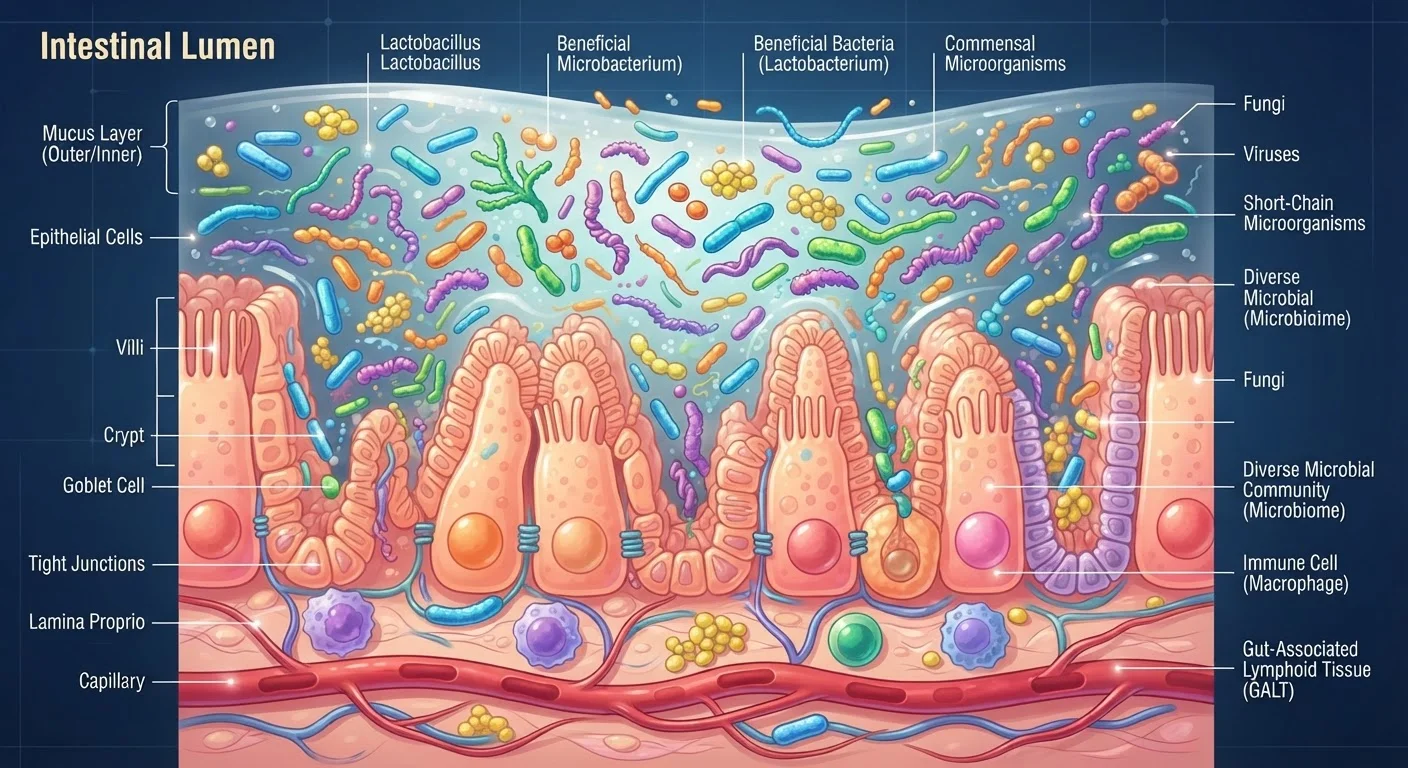
- Your microbiome is a vast community of trillions of microorganisms that live in and on your body.
- The gut microbiome is the largest and most researched community, influencing digestion, immunity, and even mood.
- Diet, sleep, stress, and antibiotic use are among the biggest factors shaping microbial balance.
- A diverse microbiome is generally associated with better health outcomes across multiple body systems.
- Everyday lifestyle choices — especially what you eat — can meaningfully support or undermine microbial health.
Start here
What Is the Microbiome?
Next
What Does the Microbiome Actually Do?
Then
What Shapes Your Microbial Community?
Watch out for
What Disrupts Microbial Balance?
Apply it
Everyday Habits That Support a Healthy Microbiome
What Is the Microbiome?
The term microbiome refers to the trillions of microorganisms — bacteria, viruses, fungi, and archaea — that live in and on the human body, along with their collective genetic material. Estimates suggest the number of microbial cells in and on an average adult is roughly comparable to the number of human cells, making us as much microbial as we are human in a very literal sense.
This isn't a recent discovery, but the tools to study it in depth are relatively new. Advances in DNA sequencing since the early 2000s have allowed researchers to identify and catalog microbial communities without needing to culture them in a lab — a major leap forward given that many gut microbes can't survive outside the body.
Microbiome
The full community of microorganisms — and their genes — that live in and on a specific environment, such as the human body.
Gut microbiota
The specific collection of microorganisms inhabiting the gastrointestinal tract, particularly the large intestine.
Dysbiosis
An imbalance in the normal composition of microbial communities, often associated with reduced diversity or an overgrowth of harmful species.
Short-chain fatty acids
Compounds produced when gut bacteria ferment dietary fiber; they help nourish gut lining cells and support immune regulation.
Gut-brain axis
The two-way communication network between the gut and the brain, involving nerves, hormones, and immune signals — including signals from gut microbes.
Microbial diversity
The variety of different microbial species present in a community. Greater diversity is generally associated with a more resilient and functional microbiome.
This article is for general informational purposes only and is not a substitute for professional medical advice.
Where Does It Live?
Microorganisms colonize nearly every surface of the body that contacts the outside world. The major microbial communities include:
- Gut (gastrointestinal tract): The largest and most studied community, concentrated particularly in the large intestine.
- Oral cavity: The mouth harbors hundreds of species that influence dental health and digestion.
- Skin: Different regions of skin support distinct microbial ecosystems shaped by moisture, pH, and exposure.
- Lungs and airways: Once thought sterile, the respiratory tract hosts its own low-density microbial community.
- Urogenital tract: Vaginal microbiomes, for example, play a well-documented role in reproductive and immune health.
When researchers and clinicians refer to "the microbiome" in everyday health conversations, they almost always mean the gut microbiome — the ecosystem with the most documented influence on systemic health.
What Does the Microbiome Actually Do?
The gut microbiome is far more than a digestive aid. Its functions span multiple body systems:
- Digestion and nutrient absorption: Gut microbes help break down dietary fiber into short-chain fatty acids that fuel colon cells and reduce inflammation. They also synthesize certain B vitamins and vitamin K. For more on how micronutrients interact with gut function, see the micronutrient map.
- Immune regulation: Roughly 70–80% of immune tissue is located in or around the gut. Gut microbes continuously interact with immune cells, helping calibrate responses so the immune system distinguishes threats from harmless substances.
- Metabolism: Emerging research links microbial activity to how the body processes energy. Gut microbiome composition appears to influence metabolic efficiency in ways scientists are still mapping. This connects directly to topics explored in our complete picture of metabolism.
- The gut-brain axis: Gut microbes produce neurotransmitter precursors — including serotonin — and communicate with the brain via the vagus nerve, influencing mood, cognition, and stress response.
What Shapes Your Microbial Community?
Your microbiome is not fixed. It shifts continuously across your lifetime in response to:
- Early life exposures: Mode of birth (vaginal vs. cesarean), breastfeeding, and early environment establish the foundational microbiome during infancy.
- Diet: Arguably the most powerful ongoing influence. Fiber variety, fermented foods, and plant diversity are consistently associated with richer microbial ecosystems.
- Geography and environment: Populations in different regions carry distinct microbial profiles shaped by local diet, hygiene, and environmental exposure.
- Age: Microbial composition shifts across decades, with changes linked to aging-associated health transitions.
- Genetics: Genetic factors influence which species colonize your gut, though diet appears to exert greater modifiable influence than genes alone.
Research is also exploring how the microbiome may relate to weight regulation and appetite signaling.
What Disrupts Microbial Balance?
Dysbiosis — an imbalance in microbial communities — is associated with a range of health concerns, though establishing direct cause and effect remains challenging for researchers. Common disruptors include:
When Antibiotics Are Necessary
Antibiotics save lives and should be taken exactly as prescribed when medically indicated. If you've recently completed a course, focus on fiber-rich and fermented foods in the weeks that follow — this supports the conditions in which beneficial bacteria can recover. Talk to your doctor if you have questions about your specific situation.
- Antibiotics: Broad-spectrum antibiotics reduce diversity broadly, eliminating beneficial species alongside pathogens. Recovery is usually possible but takes time.
- Highly processed diets: Low-fiber, high-sugar, and ultra-processed dietary patterns correlate with reduced microbial diversity in population studies.
- Chronic stress: The stress response alters gut motility and immune signaling in ways that can affect microbial composition.
- Poor sleep: Emerging evidence links disrupted circadian rhythms to microbial shifts, though more research is needed.
Persistent dysbiosis has been linked to chronic inflammation and immune dysregulation. If you have ongoing digestive symptoms, consult a qualified healthcare professional.
Everyday Habits That Support a Healthy Microbiome
While no lifestyle prescription guarantees a perfect microbiome — individual variation is significant — the following evidence-informed habits are consistently associated with greater microbial diversity and balance:
- Eat a wide variety of plants: Aim for diverse vegetables, legumes, whole grains, nuts, and fruits. Different plant fibers feed different microbial species.
- Include fermented foods: Yogurt, kefir, kimchi, sauerkraut, and similar foods introduce live cultures that may support microbial health.
- Limit ultra-processed foods: High consumption is linked to reduced diversity in multiple large observational studies.
- Protect sleep: Consistent, quality sleep supports circadian alignment, which influences microbial rhythms.
- Manage stress: Chronic psychological stress affects the gut-brain axis; evidence-based practices like mindfulness and regular physical activity may help buffer this.
- Use antibiotics only as prescribed: Never take antibiotics without medical guidance, and complete prescribed courses fully.
For a broader look at how body composition and metabolic health connect to gut function, see our hub on body composition.
This content is for general health education only. Always consult a qualified healthcare professional before making significant changes to your diet, supplement use, or health routine.