
The Micronutrient Map: A Plain-Language Guide to Every Major Vitamin and Mineral

| Total recognized vitamins | 13 essential vitamins (National Institutes of Health, Office of Dietary Supplements) |
| Essential dietary minerals | ~16 minerals recognized as essential (Institute of Medicine Dietary Reference Intakes framework) |
| Fat-soluble vitamins | A, D, E, K |
| Water-soluble vitamins | C, B1, B2, B3, B5, B6, B7, B9, B12 |
| Most common U.S. micronutrient shortfalls | Vitamin D, calcium, potassium, and dietary fiber (2020–2025 USDA Dietary Guidelines for Americans) |
| Best overall strategy | Dietary variety across all food groups (USDA Dietary Guidelines for Americans) |
What Micronutrients Are and Why They Matter
Micronutrients are the vitamins and minerals your body needs in relatively small amounts to carry out thousands of biochemical functions — from converting food into energy to building bone, clotting blood, and supporting immune response. Unlike macronutrients (carbohydrates, proteins, and fats, covered in our balanced plate guide), micronutrients provide no calories. What they do provide is irreplaceable structural and regulatory support.
Most Americans can meet their micronutrient needs through food alone, but certain life stages, dietary patterns, or health conditions can create gaps. Understanding what each nutrient does and where to find it is the first step toward closing those gaps without guesswork. For a deeper look at the fundamental differences between vitamins and minerals as categories, see our vitamins vs. minerals explainer.
| Total recognized vitamins | 13 essential vitamins (National Institutes of Health, Office of Dietary Supplements) |
| Essential dietary minerals | ~16 minerals recognized as essential (Institute of Medicine Dietary Reference Intakes framework) |
| Fat-soluble vitamins | A, D, E, K |
| Water-soluble vitamins | C, B1, B2, B3, B5, B6, B7, B9, B12 |
| Most common U.S. micronutrient shortfalls | Vitamin D, calcium, potassium, and dietary fiber (2020–2025 USDA Dietary Guidelines for Americans) |
| Best overall strategy | Dietary variety across all food groups (USDA Dietary Guidelines for Americans) |
The Major Vitamins: Functions and Food Sources
Vitamins are organic compounds divided into two groups based on how the body stores and uses them.
Fat-Soluble Vitamins (A, D, E, K)
These dissolve in fat, are stored in body tissue, and can accumulate over time. Because they persist in the body, both deficiency and excessive supplementation carry risks.
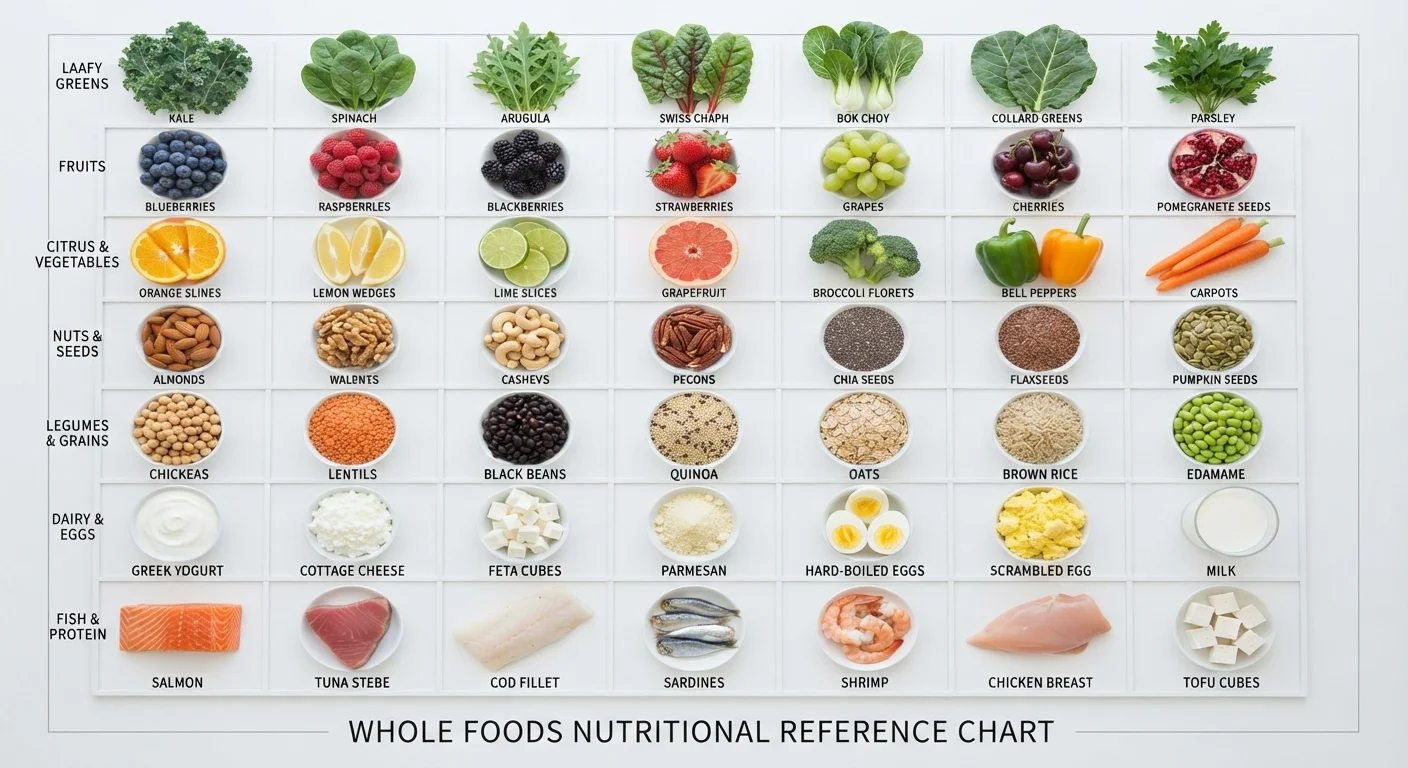
- Vitamin A — Supports vision (especially in low light), immune function, and cell growth. Found in liver, dairy, eggs, and as provitamin A (beta-carotene) in orange and dark-green vegetables like carrots and spinach.
- Vitamin D — Essential for calcium absorption, bone mineralization, and immune regulation. Synthesized in skin exposed to UVB sunlight; dietary sources include fatty fish, fortified milk, and egg yolks.
- Vitamin E — Acts as an antioxidant protecting cell membranes. Found in nuts, seeds, vegetable oils, and wheat germ.
- Vitamin K — Required for blood clotting and bone metabolism. Vitamin K1 comes primarily from leafy greens; K2 is found in fermented foods and some animal products.
Water-Soluble Vitamins (C and the B Vitamins)
These are not stored in significant amounts, so regular dietary intake matters. Excess is generally excreted in urine, though very high supplemental doses of some B vitamins can still cause harm.
- Vitamin C — Supports collagen synthesis, immune function, and acts as an antioxidant. Abundant in citrus fruits, bell peppers, strawberries, and broccoli.
- B1 (Thiamin) — Converts carbohydrates to energy; supports nerve function. Found in whole grains, pork, and legumes.
- B2 (Riboflavin) — Involved in energy metabolism and cellular function. Sources include dairy, lean meats, eggs, and fortified cereals.
- B3 (Niacin) — Supports energy production and DNA repair. Found in poultry, fish, peanuts, and whole grains.
- B5 (Pantothenic Acid) — Necessary for synthesizing coenzyme A, central to metabolism. Widespread in meat, legumes, whole grains, and vegetables.
- B6 (Pyridoxine) — Involved in amino acid metabolism and neurotransmitter synthesis. Found in poultry, fish, potatoes, and bananas.
- B7 (Biotin) — Supports fat and carbohydrate metabolism. Found in eggs, nuts, seeds, and salmon.
- B9 (Folate) — Critical for DNA synthesis and cell division; especially important during pregnancy. Found in dark leafy greens, legumes, and fortified grains.
- B12 (Cobalamin) — Required for nerve function and red blood cell formation. Found almost exclusively in animal products; people following plant-based diets are advised to consult a healthcare provider about supplementation.
Micronutrient
A vitamin or mineral required by the body in small amounts to support essential physiological processes. Micronutrients do not provide calories but are indispensable for health.
Fat-Soluble Vitamin
Vitamins A, D, E, and K, which dissolve in dietary fat and are stored in body tissues. Because they accumulate, both deficiency and excess supplementation can cause problems.
Water-Soluble Vitamin
Vitamins C and the B-complex group, which dissolve in water and are generally not stored in the body. Regular dietary intake is needed to maintain adequate levels.
Macromineral
A mineral the body needs in relatively larger amounts, including calcium, phosphorus, magnesium, potassium, sodium, chloride, and sulfur.
Trace Mineral
A mineral required in very small quantities — such as iron, zinc, iodine, and selenium — but still essential for normal body function.
Percent Daily Value (%DV)
A reference figure on U.S. Nutrition Facts labels showing how much of a nutrient one serving contributes toward general daily recommendations for adults. A %DV of 20% or more is considered high for that nutrient.
Heme Iron
A form of iron found in animal-based foods (meat, poultry, seafood) that is absorbed more readily by the body than non-heme iron from plant sources.
Provitamin A (Beta-Carotene)
A plant pigment that the body can convert into vitamin A. Found in orange and yellow vegetables and dark leafy greens, it serves as a dietary precursor to the active form of vitamin A.
The Major Minerals: Functions and Food Sources
Minerals are inorganic elements that the body cannot synthesize. They are categorized by the amounts the body needs.
Macrominerals (needed in larger amounts)
- Calcium — Builds and maintains bone and teeth; supports muscle contraction and nerve signaling. Found in dairy, fortified plant milks, leafy greens, and canned fish with bones.
- Phosphorus — Works with calcium in bone formation; involved in energy storage (ATP). Found in meat, dairy, nuts, and legumes.
- Magnesium — Participates in over 300 enzymatic reactions, including protein synthesis and blood glucose regulation. Found in nuts, seeds, whole grains, and leafy greens.
- Potassium — Regulates fluid balance, muscle contractions, and nerve signals; associated with healthy blood pressure. Found in bananas, potatoes, beans, and dairy.
- Sodium — Maintains fluid balance and supports nerve and muscle function. Widely present in the food supply; most Americans consume more than recommended amounts.
- Chloride & Sulfur — Chloride works with sodium in fluid balance; sulfur is a component of certain amino acids and vitamins.
Trace Minerals (needed in smaller amounts)
- Iron — Carries oxygen in hemoglobin. Heme iron (from meat) is absorbed more efficiently than non-heme iron (from plants). Legumes, fortified cereals, and red meat are common sources.
- Zinc — Supports immune function, wound healing, and protein synthesis. Found in oysters, red meat, poultry, beans, and nuts.
- Iodine — Essential for thyroid hormone production. Found in iodized salt, seafood, and dairy.
- Selenium — Acts as an antioxidant; supports thyroid function. Found in Brazil nuts, seafood, and whole grains.
- Copper — Involved in iron metabolism and connective tissue formation. Found in shellfish, nuts, seeds, and whole grains.
- Manganese — Supports bone formation and antioxidant defense. Found in whole grains, nuts, and leafy vegetables.
- Fluoride — Strengthens tooth enamel and bones. Found in fluoridated water and some teas.
- Chromium — Thought to enhance insulin action. Found in broccoli, grape juice, and whole grains.
For practical strategies on fitting more of these nutrients into everyday meals, see our guide on building a micronutrient-rich plate.
Putting It Into Practice
No single food supplies every micronutrient, which is why dietary diversity is the cornerstone of sound nutrition advice. A practical goal is to fill half your plate with vegetables and fruit, include whole grains and lean proteins, and vary your choices across the week. When you read packaged foods, the Percent Daily Value (%DV) on a U.S. Nutrition Facts panel can help you gauge how much of a given nutrient a serving contributes — our nutrition label walkthrough explains exactly how to use it.
Certain populations face higher risks of specific deficiencies — including pregnant individuals (folate, iron), older adults (vitamin D, B12), and people following exclusively plant-based diets (B12, iron, zinc, iodine). If you fall into one of these groups, or suspect a deficiency, consult a registered dietitian or your healthcare provider before reaching for supplements. Blood testing is the only reliable way to confirm a deficiency, and supplementing without guidance can sometimes interfere with the absorption of other nutrients or — in the case of fat-soluble vitamins — accumulate to harmful levels.
Micronutrient needs also intersect with broader dietary goals. Understanding how fats in your diet affect nutrient absorption, for example, is one reason fat-soluble vitamins are better absorbed with a meal containing some dietary fat — our plain-language fat reference covers the key fat types and their roles. A diverse, whole-food diet remains the most evidence-supported strategy for meeting your micronutrient needs across all life stages.
This article is for general informational and educational purposes only and is not a substitute for personalized medical or nutritional advice. Consult a qualified healthcare professional for guidance specific to your health needs.