

Key Takeaways
- Vitamins are organic compounds; minerals are inorganic elements found in soil and water.
- Both are classified as micronutrients — needed in small amounts but essential for survival.
- Vitamins can be destroyed by heat, light, or air; minerals are chemically stable in food.
- Whole foods provide both nutrient groups in forms the body is best equipped to absorb.
- Fat-soluble vitamins accumulate in the body; water-soluble ones are excreted more readily.
- Most healthy adults can meet micronutrient needs through a varied, balanced diet.
Option A
Vitamins
Organic compounds that drive biochemical reactions.
Best for: Supporting energy metabolism, immune defense, vision, and tissue repair through carbon-based molecular activity.
Option B
Minerals
Inorganic elements that form structures and regulate body fluids.
Best for: Building bones and teeth, transmitting nerve signals, and maintaining fluid and pH balance throughout the body.
If you want to understand how your body converts food into usable energy
Vitamins
B vitamins are central to the metabolic pathways that extract energy from carbohydrates, fats, and proteins, making them the key micronutrient group for this function.
If your primary concern is bone density and structural body health
Minerals
Calcium, phosphorus, and magnesium are literally built into bone tissue, making adequate mineral intake foundational for skeletal strength across all life stages.
If you want to support immune function and antioxidant defense
Vitamins
Vitamins C, E, and A each play distinct roles in immune response and protecting cells from oxidative damage, making them especially relevant for immune health goals.
If you are focused on heart rhythm, muscle contraction, or nerve signaling
Minerals
Electrolyte minerals — potassium, sodium, magnesium, and calcium — regulate the electrical signals that drive muscle and nerve function throughout the body.
What Sets Vitamins and Minerals Apart
Vitamins and minerals are both classified as micronutrients — nutrients your body requires in relatively small quantities but cannot produce in sufficient amounts on its own. Despite that shared status, they are fundamentally different in structure and how they function inside the body.
Vitamins are organic compounds, meaning they contain carbon and are made by living organisms — plants, animals, or bacteria. Because of this organic structure, vitamins can be altered or degraded by heat, light, oxygen, and cooking methods. For example, vitamin C in a freshly cut bell pepper begins to break down once it's exposed to air. This fragility is why preparation and storage choices can meaningfully affect the vitamin content of your meals.
Minerals are inorganic elements — they originate in the earth's crust and enter the food supply through soil and water absorbed by plants or consumed by animals. Iron, calcium, potassium, and zinc are minerals. Because they are elements on the periodic table, they cannot be broken down or destroyed by cooking. A mineral is the same molecule whether it's in raw spinach or cooked spinach; what changes is the plant's cell structure, which can affect how readily the mineral is released during digestion.
For a deeper look at how these two groups compare nutrient by nutrient, see our plain-language micronutrient reference guide.
| Criterion | Vitamins | Minerals |
|---|---|---|
| Chemical nature | Organic (contain carbon) | Inorganic (elemental) |
| Origin | Produced by living organisms | Derived from soil and water |
| Stability in cooking | Can degrade with heat, light, air | Chemically stable; not destroyed by heat |
| Solubility types | Fat-soluble and water-soluble | No solubility classification |
| Storage in the body | Fat-soluble stored in liver/fat; water-soluble excreted | Stored in bone, muscle, and fluids |
| Primary roles | Enzyme cofactors, vision, immunity, blood clotting | Bone structure, nerve signals, fluid balance |
| Key examples | Vitamins A, C, D, E, K, B-complex | Calcium, iron, potassium, magnesium, zinc |
| Deficiency risk | Often linked to limited food variety or absorption issues | Linked to low intake, poor soil, or absorption competition |
How Each Group Functions in the Body
Understanding what each group does clarifies why both are non-negotiable in a healthy diet.
Vitamins: Catalysts and Cofactors
Most vitamins act as coenzymes or cofactors — molecules that partner with enzymes to trigger or speed up biochemical reactions. The eight B vitamins, for instance, are deeply embedded in energy metabolism: they help cells break down carbohydrates, fats, and proteins into usable fuel. Vitamin K activates proteins involved in blood clotting. Vitamin A is essential for producing rhodopsin, the pigment that enables low-light vision.
It's also worth knowing that vitamins split into two categories based on solubility. Fat-soluble vitamins (A, D, E, and K) are stored in body fat and the liver, which means they accumulate over time. Water-soluble vitamins (C and the B vitamins) dissolve in water and are generally excreted through urine when consumed in excess. This distinction has real dietary implications — our companion article on fat-soluble vs. water-soluble vitamins explains exactly how it shapes what you eat.
Minerals: Builders and Regulators
Minerals serve two broad roles. Structural minerals — calcium, phosphorus, and magnesium — become physical components of bones and teeth. Electrolyte and trace minerals regulate fluid balance, nerve impulse transmission, and enzyme activity. Potassium and sodium, for example, work together to maintain the electrical gradient across cell membranes that makes nerve signaling and muscle contraction possible. Trace minerals like iron, zinc, and selenium are needed in far smaller amounts but remain critical; zinc, selenium, and other trace minerals can cause real health consequences when intake falls short.
Vitamins and minerals also interact with each other. A well-known example: vitamin D is required for the intestinal absorption of calcium. Without adequate vitamin D, even a calcium-rich diet may not translate into sufficient bone mineral density. Learn more in our article on why vitamin D and calcium are so closely linked.
Meeting Your Needs Through Everyday Food
For most healthy adults, a varied diet built around whole foods provides both vitamins and minerals in the amounts the body needs. The USDA Dietary Guidelines consistently emphasize food-first strategies: vegetables, fruits, whole grains, legumes, lean proteins, and dairy or fortified plant-based alternatives together cover a broad micronutrient spectrum.
13
Essential vitamins recognized by nutrition science
The USDA and most health authorities identify 13 vitamins the human body requires from dietary sources.
~20
Minerals considered essential or likely essential
Nutrition researchers generally identify roughly 16–20 minerals as essential or conditionally essential for human health.
~90%
U.S. adults falling short on potassium
USDA dietary survey data consistently shows potassium as one of the most widespread mineral shortfalls in the American diet.
Practical priorities include:
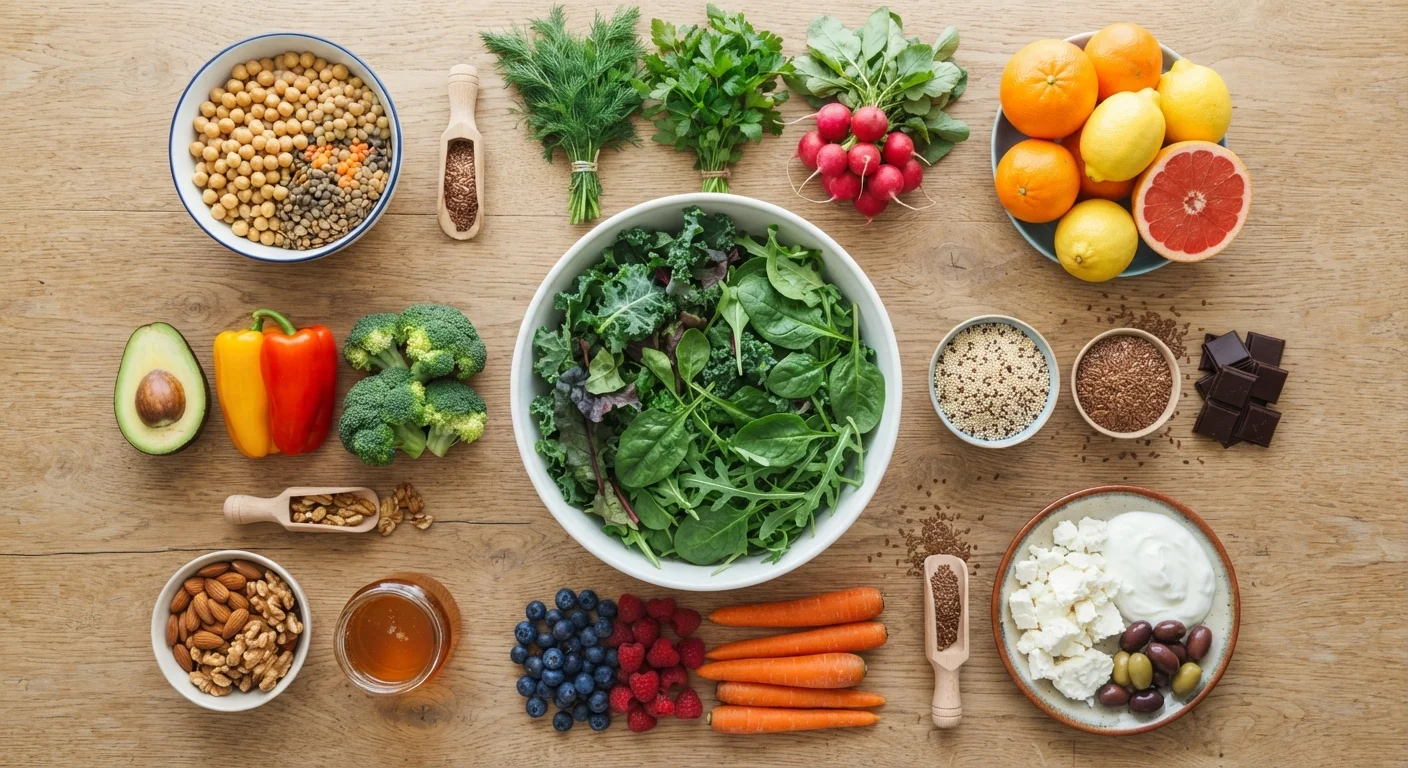
- Leafy greens (spinach, kale, collards) deliver vitamins A, C, K, and folate alongside iron and calcium.
- Legumes and whole grains are reliable sources of B vitamins, magnesium, iron, and zinc.
- Dairy and fortified alternatives provide calcium, phosphorus, and often vitamin D.
- Citrus and berries are concentrated sources of vitamin C, which also enhances iron absorption from plant foods when eaten together.
- Nuts and seeds supply vitamin E, magnesium, selenium, and zinc.
Cooking method matters more for vitamins than for minerals. Steaming or microwaving vegetables preserves more water-soluble vitamins than boiling in large amounts of water. For minerals, absorption is influenced more by what else is in the meal — for example, oxalates in spinach can reduce calcium absorption, while vitamin C boosts iron uptake from plant sources.
If you're curious how vitamins and minerals fit into the broader picture of what your body needs daily, it helps to contrast them with the macronutrients — carbohydrates, proteins, and fats — which supply the bulk energy that micronutrients then help the body process and use.
This article is for general informational and educational purposes only and is not a substitute for professional medical or dietary advice. Consult a qualified healthcare provider before making changes to your diet, especially if you have a health condition or are pregnant, nursing, or caring for young children.