
Fat-Soluble vs. Water-Soluble Vitamins: Why the Difference Changes How You Eat

Key Takeaways
- Fat-soluble vitamins (A, D, E, K) are stored in the body and require dietary fat for absorption.
- Water-soluble vitamins (B vitamins, vitamin C) must be replenished regularly through food.
- Eating fat-soluble vitamin-rich foods alongside healthy fats improves how much your body absorbs.
- Because fat-soluble vitamins accumulate, very high doses from supplements can reach harmful levels.
- A varied, whole-food diet is the most reliable way to meet your needs for both vitamin types.
Fat-Soluble vs. Water-Soluble Vitamins
Vitamins are classified into two groups based on how they dissolve in the body. Fat-soluble vitamins (A, D, E, and K) require dietary fat to be absorbed and are stored in body fat and the liver. Water-soluble vitamins (the B vitamins and vitamin C) dissolve directly in water, are absorbed quickly, and are not stored in significant amounts — meaning your body flushes out what it doesn't use.
Solubility determines transport mechanisms: fat-soluble vitamins travel via chylomicrons through the lymphatic system, while water-soluble vitamins are absorbed directly into the bloodstream through intestinal cells.
Why Solubility Is More Than a Chemistry Lesson
When nutrition labels list vitamins, they don't always explain what your body does with them after you swallow. The single most important factor shaping that process is solubility — whether a vitamin dissolves in fat or in water. This difference determines how the vitamin gets absorbed, whether your body stores it, and what happens when you eat too little or too much of it.
Understanding this distinction helps you make smarter everyday food choices — like knowing when to drizzle olive oil over a spinach salad, or why a daily glass of orange juice matters more than it might seem. For a broader look at how vitamins fit alongside minerals, see what makes each vitamin and mineral group essential.
Fat-Soluble Vitamins: Stored, Powerful, and Dependent on Dietary Fat
Vitamins A, D, E, and K dissolve in fat, which means your body needs fat present in the digestive tract to absorb them. Once absorbed, they travel through the lymphatic system and are deposited in the liver and fatty tissues, where they can remain for days, weeks, or even months.
This storage capacity is a double-edged feature. On the positive side, you don't need to eat these vitamins every day — your reserves can cover short-term dietary gaps. On the other hand, because they accumulate, consistently taking very high doses through supplements can push levels into a range that causes harm. This risk is especially documented with vitamins A and D.
Pair Fat-Soluble Foods with Healthy Fat
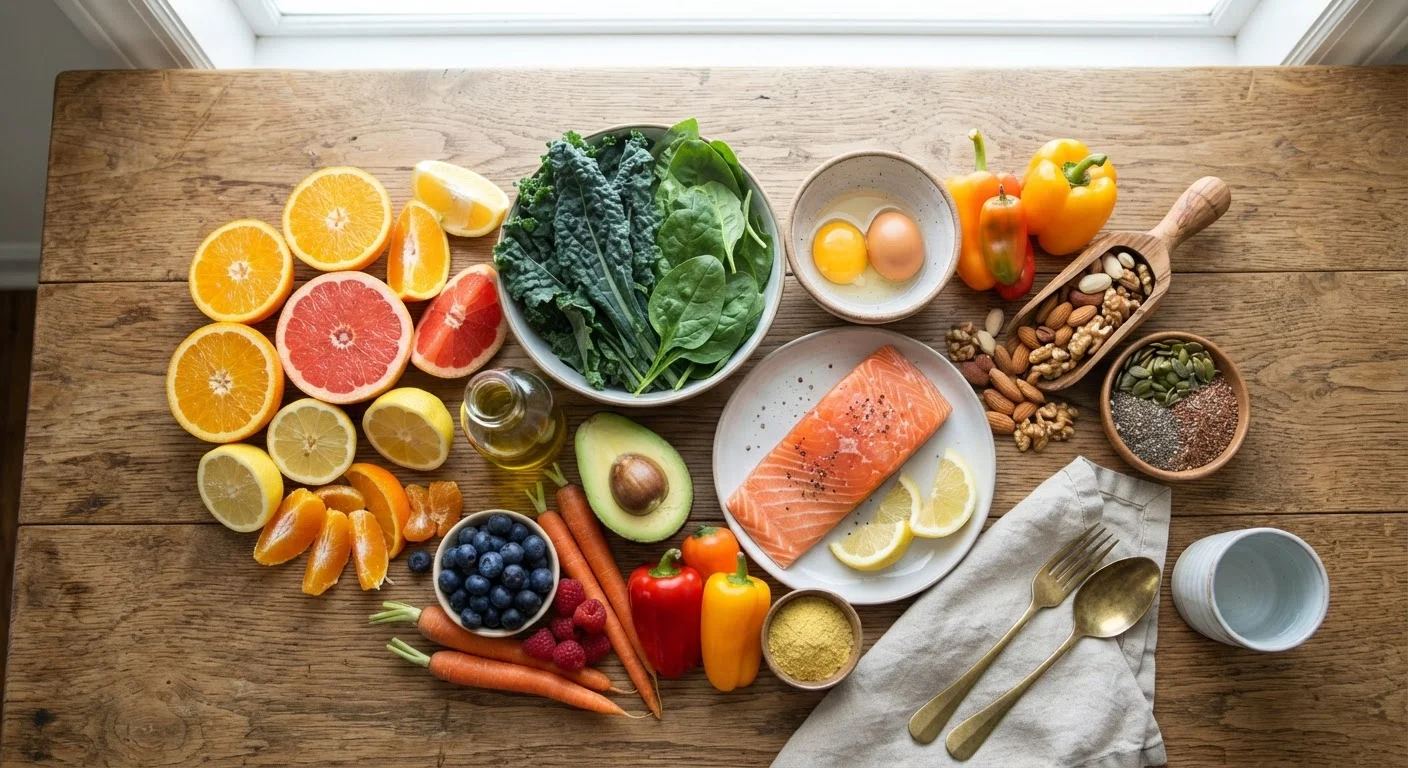
Even a small amount of fat at the same meal can substantially improve absorption of vitamins A, D, E, and K. Practical pairings include drizzling olive oil on roasted vegetables, adding sliced avocado to a salad, or eating eggs alongside leafy greens. You don't need a high-fat meal — just enough fat to trigger the absorption process.
Good food sources of fat-soluble vitamins include:
- Vitamin A: liver, dairy, eggs, orange and yellow vegetables
- Vitamin D: fatty fish, fortified milk, egg yolks
- Vitamin E: nuts, seeds, vegetable oils, wheat germ
- Vitamin K: leafy greens like kale, spinach, and broccoli
To maximize absorption, pair these foods with a source of healthy fat. A salad topped with walnuts or avocado is a practical example. For context on the fats that support this process best, see types of dietary fat explained.
Water-Soluble Vitamins: Replenish Daily, Excrete the Excess
The eight B vitamins (thiamin, riboflavin, niacin, B6, folate, B12, biotin, and pantothenic acid) and vitamin C dissolve in water. They are absorbed directly through the intestinal lining into the bloodstream and generally circulate without requiring fat for transport.
Because the kidneys filter and excrete water-soluble vitamins that aren't immediately needed, they are rarely stored in meaningful quantities. This means your body depends on a regular dietary supply. Missing these vitamins consistently — even for a few weeks — can lead to deficiency symptoms.
~40%
U.S. adults deficient or insufficient in vitamin D
Data from the National Health and Nutrition Examination Survey (NHANES) estimates that a significant share of American adults have suboptimal vitamin D levels, partly due to limited sun exposure and dietary intake.
1 in 6
Older U.S. adults with vitamin B12 deficiency
Research published in nutrition epidemiology literature estimates roughly 1 in 6 older adults in the U.S. have insufficient B12 levels, often related to reduced absorption with age rather than low intake alone.
The good news is that a varied diet rich in whole foods reliably delivers these vitamins. Citrus fruits, berries, and bell peppers supply vitamin C. Whole grains, legumes, leafy greens, meat, and dairy provide the B vitamins. One notable exception is vitamin B12, which is found almost exclusively in animal products — a consideration for people following plant-based diets, who may benefit from fortified foods or supplementation under a healthcare provider's guidance.
If you're weighing whether to fill gaps with a pill, when supplements genuinely make sense walks through the tradeoffs clearly.
Putting It Into Practice at Every Meal
Knowing which vitamins fall into which category gives you simple, actionable leverage at mealtime. A few practical principles:
- Don't eat fat-soluble vitamin sources dry. Raw carrots or a kale salad without any fat is an underperforming meal nutritionally. Add a small amount of oil, nuts, seeds, or avocado to unlock the vitamins inside.
- Eat water-soluble vitamin sources consistently. Because these vitamins aren't stored, skipping fruits, vegetables, and whole grains repeatedly over days creates real gaps. Daily variety matters more than perfection at any single meal.
- Be cautious with high-dose fat-soluble supplements. Unlike vitamin C excess, which is simply excreted, surplus vitamin A or D accumulates. Always talk with a healthcare professional before adding fat-soluble vitamin supplements to your routine.
These aren't dramatic rules — they're small habits that compound over time. Most people who eat a reasonably varied diet will cover their vitamin needs without tracking every micronutrient.
This article is for general informational purposes only and is not a substitute for professional medical or dietary advice. If you have questions about your specific nutritional needs or health conditions, please consult a qualified healthcare provider.