

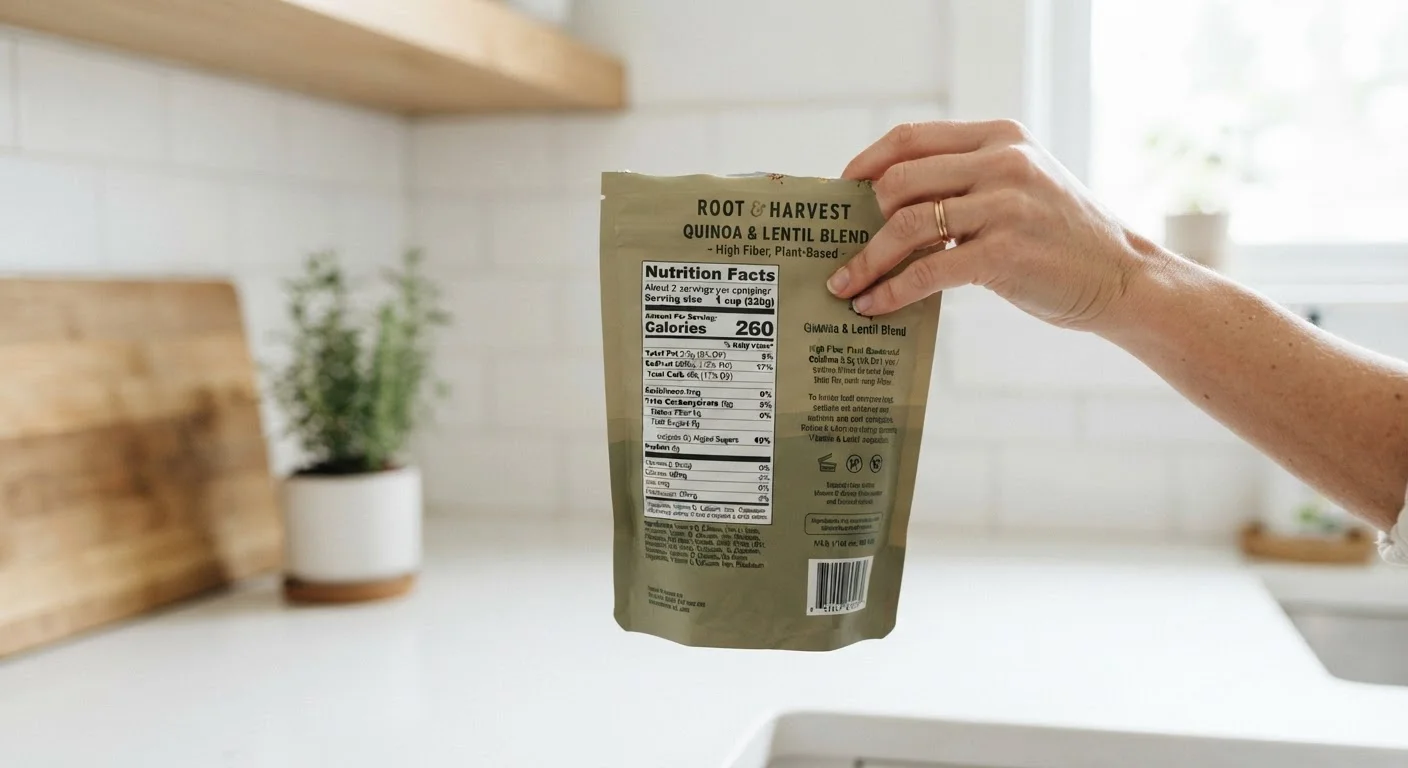
Key Takeaways
- Serving size is the foundation of the entire label — all other numbers scale from it.
- The % Daily Value column quickly signals whether a nutrient amount is high or low.
- Added sugars and saturated fat are the two nutrients most Americans benefit from monitoring closely.
- Nutrition labels reflect a standardized 2,000-calorie reference diet, not your personal needs.
- Ingredient lists complement the numbers by revealing what's actually in the food.
What you will need
Why the Label Exists and What It Actually Covers
The U.S. Nutrition Facts panel is a federally standardized disclosure required by the FDA on most packaged foods. Its purpose is simple: give consumers consistent, comparable data so they can make informed choices without relying on marketing claims on the front of the package. Understanding the panel's structure makes the difference between using it as a tool and being overwhelmed by it.
The label is divided into three logical zones: serving information at the top, a nutrient breakdown in the middle, and a % Daily Value (%DV) reference running down the right side. Reading it in that order — top to bottom — prevents the most common source of confusion.
For a deeper look at how the macronutrient numbers on the panel are actually calculated, see where macronutrient numbers come from.
Front-of-Package Claims Don't Replace the Panel
Terms like 'natural,' 'multigrain,' or 'low-fat' are marketing descriptors with varying regulatory definitions — some are tightly defined, others are not. Always cross-check any front-of-package claim against the actual Nutrition Facts panel and ingredient list for an accurate picture.
Step-by-Step: Reading Each Section of the Panel
Work through the panel in the order below. Each step builds on the one before it, so skipping ahead often leads to misreading the numbers.
Check the Serving Size First
The serving size is printed at the very top and is the single most important number on the label. Every calorie count and nutrient gram that follows applies to that serving amount — not the whole package. The FDA updated label rules so serving sizes now reflect amounts people realistically eat, but packages often contain two or more servings.
Before reading anything else, ask: how much of this package will I actually consume? If you plan to eat the whole container and it lists two servings, double every number on the panel.
Read the Calorie Count in Context
Calories measure the total energy one serving provides. The FDA's general reference points — roughly 100 calories per serving as moderate, 400 or more as high — can orient you, but calories alone don't indicate nutritional quality. A 200-calorie serving of nuts and a 200-calorie serving of cookies deliver very different nutritional profiles.
Use the calorie figure to understand the energy density of a food, not to judge whether it's inherently good or bad.
Scan the Nutrients to Limit
The middle section lists nutrients in order of public health priority. Pay particular attention to:
- Saturated fat: Linked to LDL cholesterol levels when consumed in excess. Dietary guidelines suggest keeping it below 10% of daily calories.
- Sodium: Most Americans consume well above recommended levels; high intake is associated with elevated blood pressure in susceptible individuals.
- Added sugars: Distinguished from naturally occurring sugars (as in fruit or milk) and listed separately since 2020. The Dietary Guidelines for Americans suggest limiting added sugars to less than 10% of daily calorie intake.
Note the Nutrients to Prioritize
Below the nutrients to limit, the panel lists nutrients many Americans under-consume: dietary fiber, vitamin D, calcium, iron, and potassium. A higher %DV for these is a positive sign. Fiber supports digestive health and satiety; vitamin D and calcium contribute to bone health; potassium plays a role in healthy blood pressure.
Use the % Daily Value Column as a Quick Guide
The %DV column translates grams and milligrams into a meaningful reference scale. The FDA's rule of thumb: 5% DV or less is low for a nutrient; 20% DV or more is high. Use this to quickly compare products without doing math. For nutrients you want to limit, lower %DV is better. For beneficial nutrients, higher is better.
Remember this scale is anchored to a 2,000-calorie daily reference — it's a comparison tool, not a personal prescription.
Glance at the Ingredient List
The ingredient list appears below the Nutrition Facts panel and is ordered by weight — the ingredient present in the largest amount appears first. A short ingredient list isn't automatically superior, but it can signal less processing. Look for whole foods (e.g., oats, almonds, olive oil) near the top and be aware of multiple names for added sugars (e.g., high-fructose corn syrup, dextrose, cane syrup) scattered through the list.
This article is for general informational purposes only and is not medical or dietary advice. Individual nutritional needs vary. Consult a registered dietitian or qualified healthcare provider for personalized guidance.
Putting It All Together in Your Daily Routine
Label reading is most useful as a habit of comparison rather than a one-time calculation. When choosing between two similar products, scan the %DV column for saturated fat, sodium, and added sugars — lower is generally preferable for those three. For fiber, vitamins, and minerals, higher %DV is a positive signal.
Keep in mind that the %DV figures are benchmarked against a 2,000-calorie reference diet established by the FDA. Your personal calorie and nutrient needs depend on age, sex, activity level, and health status — factors a nutrition label cannot account for. For context on how macronutrients fit into your overall daily eating pattern, building a balanced plate offers practical guidance without rigid tracking.
The micronutrients listed near the bottom of the panel — vitamin D, calcium, iron, and potassium — were specifically chosen because Americans tend to fall short of them. For a broader reference on vitamins and minerals and what they do in the body, the Micronutrient Map is a useful companion resource.
If weight management is part of your goal, reading a nutrition label for weight-conscious eating explains how to apply label data specifically in that context.