

Key Takeaways
- Serving size is the most important starting point - all other numbers scale from it.
- Calories tell you energy density, but nutrient quality matters just as much for weight management.
- Percent Daily Values help you benchmark nutrients relative to general dietary guidelines.
- Fiber, protein, and added sugars are the three numbers most relevant to satiety and weight goals.
- No single number on a label defines a food as 'good' or 'bad' - context always matters.
What you will need
Why Nutrition Labels Matter for Weight-Conscious Eating
Nutrition labels exist to give consumers objective, standardized information about what they're eating. For anyone thinking carefully about weight management, labels are one of the most accessible and cost-free tools available - no app, subscription, or special equipment required.
That said, label literacy is a genuine skill. The U.S. Nutrition Facts panel packs a lot of data into a small space, and without knowing how to read it, it's easy to focus on the wrong numbers or misinterpret what you're seeing. For a broader primer on the panel itself, see how each section of a Nutrition Facts panel is structured.
This guide takes a weight-management-specific lens to the label - walking through what to look at, in what order, and why it matters for your goals. It's general health education, not a personal dietary prescription. Individual needs vary, and a registered dietitian can help you apply this information to your specific situation.
What you will need
Step-by-Step: Reading the Label with Weight Goals in Mind
Follow these steps each time you pick up a packaged food you're evaluating. With practice, the process takes under a minute.
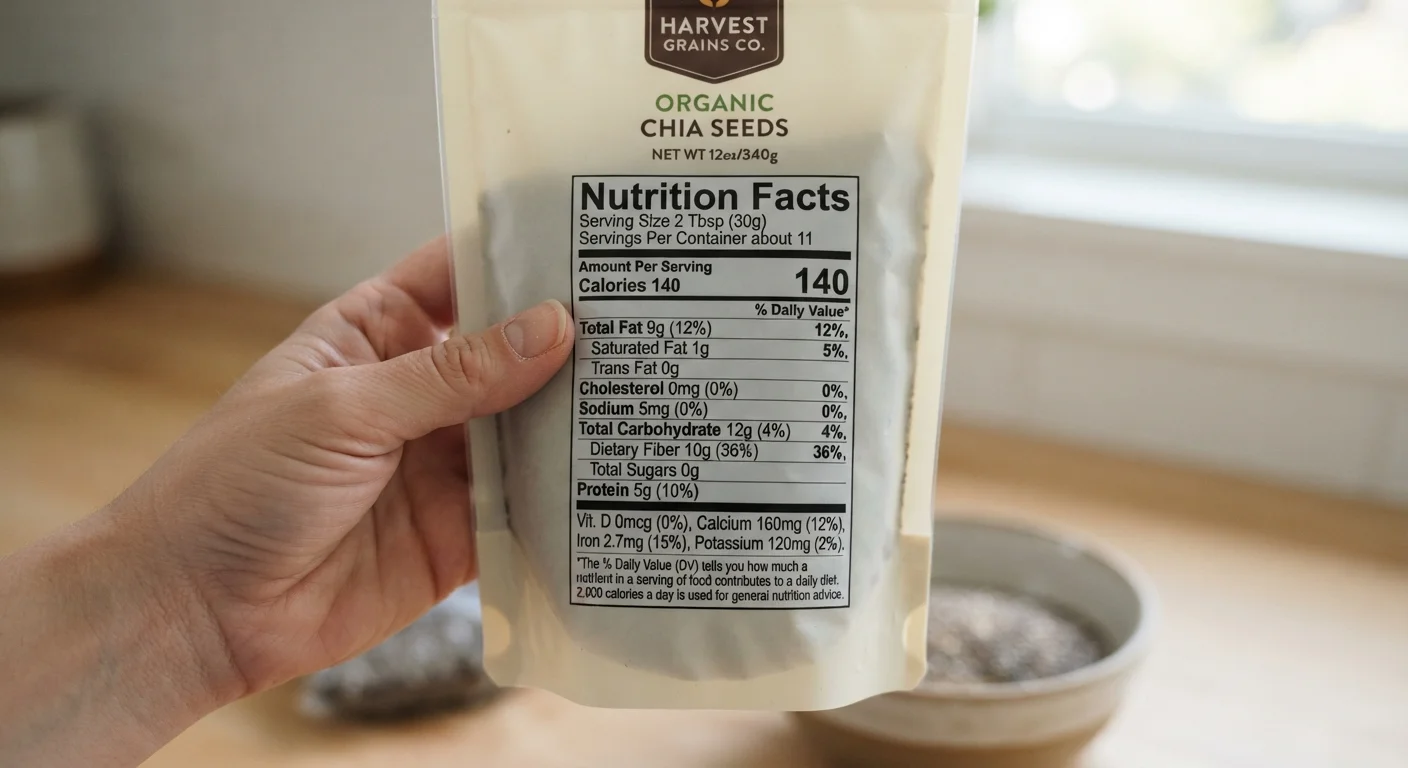
Find the Serving Size First
Every number on the label - calories, fat, sodium, everything - is calculated per serving, not per package. Serving sizes are standardized by the FDA based on amounts people typically consume, but a single package often contains two, three, or more servings.
Before reading anything else, check:
- The serving size (e.g., "2/3 cup" or "1 piece")
- The servings per container
If you'll eat the whole package, multiply every number by the total servings listed.
Check the Calories Per Serving
Calories measure the energy a serving provides. For weight-conscious eating, calorie density - how many calories per gram or per serving - is a useful signal, but it's not the whole story.
A 200-calorie serving of nuts delivers far more satiety and micronutrients than a 200-calorie serving of a refined snack food. Use calories as one data point, not the only one. For a deeper look at how macronutrient grams translate into calories, see how macronutrient numbers are calculated on food labels.
Look at Protein and Fiber for Satiety Signals
These two nutrients are among the most relevant for weight management because of their role in fullness:
- Protein is the most satiating macronutrient gram-for-gram and supports muscle maintenance during periods of weight change.
- Dietary fiber slows digestion, stabilizes blood sugar response, and contributes to lasting fullness. Most Americans fall well short of fiber recommendations.
A food that delivers meaningful protein and fiber relative to its calorie count is generally a better choice for sustained energy and appetite regulation.
Check Added Sugars Separately from Total Sugars
Since 2020, U.S. labels are required to list added sugars as a distinct line beneath total sugars. This distinction matters: naturally occurring sugars in whole fruit or plain dairy come packaged with fiber, protein, and micronutrients. Added sugars - syrups, sweeteners, concentrates added during processing - contribute calories with little nutritional benefit.
A high added-sugar content in a food that doesn't taste particularly sweet (like a salad dressing or pasta sauce) is worth noting, especially if you're eating it frequently.
Use the % Daily Value as a Benchmark, Not a Rule
The % Daily Value (%DV) tells you how much one serving contributes to a standard 2,000-calorie daily diet. Use these general benchmarks:
- 5% DV or less = low in that nutrient
- 20% DV or more = high in that nutrient
For nutrients you want to limit - like saturated fat and sodium - aim for lower %DVs. For nutrients you want more of - like fiber, calcium, and vitamin D - higher %DVs are favorable. Your actual daily calorie needs may differ from 2,000, so treat %DV as a relative guide rather than a precise target. Learn which micronutrients matter most to round out your label-reading with nutrient awareness.
Scan the Ingredients List for Ingredient Quality
The ingredients list is ordered by weight - the first ingredients are present in the largest amounts. This list can reveal things the numbers don't: degree of processing, the presence of multiple added sweeteners under different names, or whether whole food ingredients lead the formula.
A short ingredients list with recognizable whole-food items generally signals a less processed product, though this isn't an absolute rule. Context matters: some highly processed foods have a short ingredients list, and some nutritious foods have longer ones.
Putting the Label in Broader Context
Reading a label well is one piece of a larger nutritional picture. A few important caveats worth keeping in mind:
- Labels don't capture everything. Processing level, ingredient quality, and how a food fits your overall pattern of eating aren't fully reflected in the numbers. A food with a modest calorie count can still be highly processed and low in nutrients.
- Weight management is multifactorial. Energy balance, sleep, stress, movement, and metabolic factors all interact. Labels inform one input - food choices - but are not a complete weight-management strategy on their own. Foundational weight management concepts can help frame this bigger picture.
- Tracking has trade-offs. For some people, closely monitoring label numbers is empowering and effective. For others, it can contribute to stress or preoccupation with food. Mindful eating and calorie tracking each offer distinct advantages - knowing which approach fits your needs matters.
Focus on Patterns, Not Individual Foods
No single food makes or breaks a healthy diet. Label reading is most valuable when used consistently across many choices over time, rather than as a pass/fail test for individual items. Aim to build an overall eating pattern that's nutrient-dense and sustainable - and explore strategies for sustainable, balanced eating to support that goal.
To make label reading part of your routine before you even get home, build label-checking into your grocery shopping habits so better choices happen at the point of decision.
This article is for informational purposes only and does not constitute medical or dietary advice. Consult a qualified healthcare professional or registered dietitian for guidance tailored to your individual health needs.