

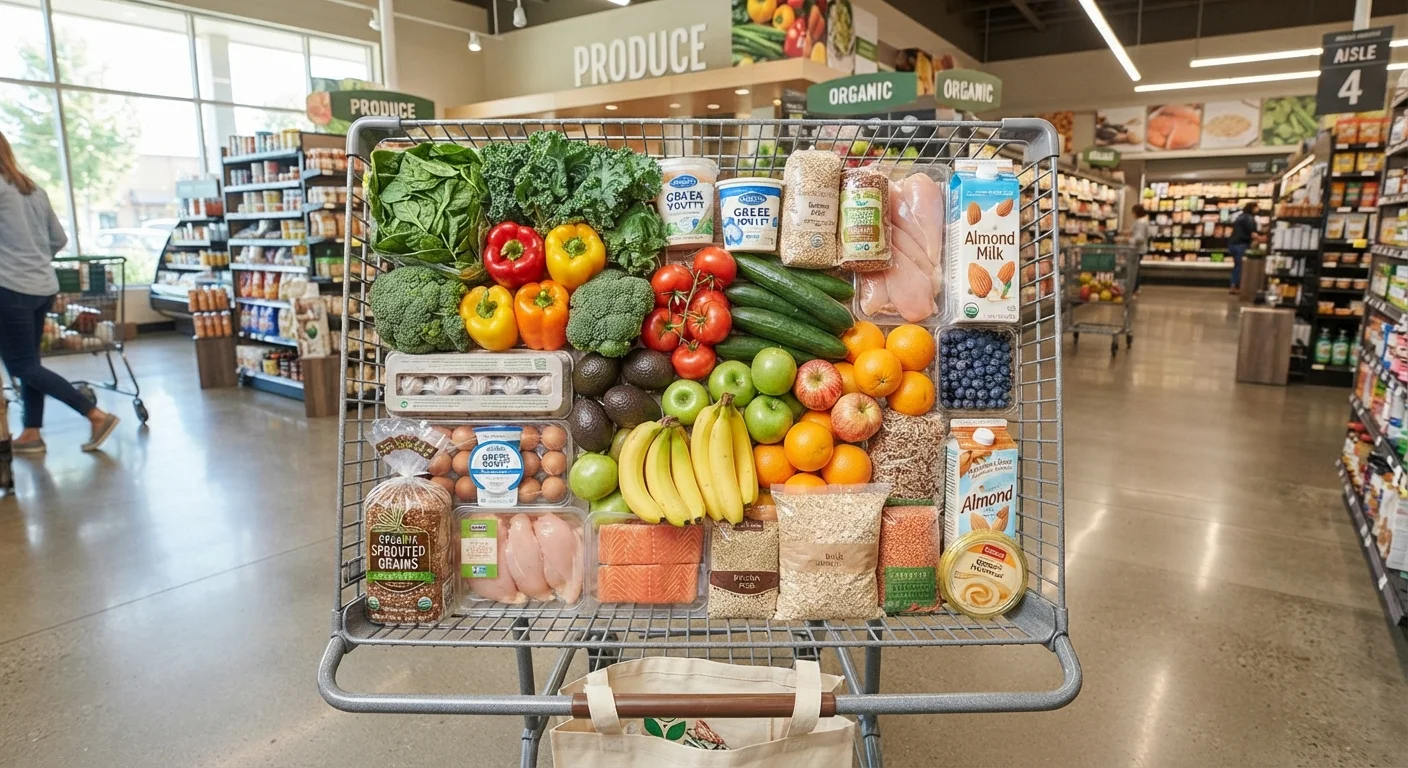
Key Takeaways
- Shopping with a category-organized list significantly reduces impulse purchases of less nutritious foods.
- Navigating the store perimeter first puts whole, minimally processed foods in your cart early.
- Reading nutrition labels strategically—focusing on serving size and ingredient order—improves food choices.
- Batch-buying versatile staples like legumes, whole grains, and frozen vegetables saves time and supports variety.
- Small, consistent changes to your shopping habits compound into lasting dietary improvements over time.
Why the Grocery Store Is Where Healthy Eating Really Begins
Most nutrition advice focuses on what happens at the dinner table, but the decisions that shape your week's eating are largely made in the grocery store. What you bring home is what you eat — and what you don't bring home, you can't fall back on during a tired Tuesday evening.
Research in behavioral nutrition consistently shows that the food environment is one of the strongest predictors of dietary choices. By structuring your shopping trip deliberately, you use that environment to your advantage rather than against you. This isn't about willpower — it's about setting up conditions that make nutritious choices the easier default. For a broader look at how small behavioral shifts build lasting habits, see our introduction to building healthier eating habits.
Core Strategies for a More Nutritious Cart
The following practices are grounded in evidence from nutrition and behavioral science. Each one targets a specific point in the shopping process where choices are made.
Build your shopping list by food category, not by recipe
Organizing your list around categories — produce, proteins, whole grains, dairy or alternatives — helps you survey nutritional variety at a glance before you even enter the store. It also makes the trip faster and reduces aimless browsing in processed-food aisles.
Shop the store perimeter first before moving to center aisles
Most grocery stores place fresh produce, proteins, and dairy along the outer edges, while highly processed packaged foods occupy center aisles. Filling your cart at the perimeter first — both physically and mentally — gives whole foods priority and leaves less room and budget for impulse items.
Stock versatile frozen and canned vegetables as a nutritional safety net
Frozen and low-sodium canned vegetables retain most of their nutritional value and prevent the 'nothing healthy in the house' scenario mid-week. They bridge the gap between fresh produce shopping trips without compromising nutrition.
Set a rough produce-to-packaged ratio before you shop
Having an intentional mental benchmark — for instance, aiming for roughly half your cart to contain whole or minimally processed foods — creates a simple decision rule that doesn't require evaluating every item individually. Research in behavioral economics supports that default rules reduce decision fatigue.
Buy a new whole food or plant-based ingredient each week
Dietary diversity supports broader nutrient intake, including fiber, vitamins, and phytonutrients associated with gut health. Introducing one unfamiliar ingredient weekly builds variety gradually without overwhelming your cooking routine. This also supports the gut-friendly eating patterns that benefit immune function.
Quick Actions You Can Take on Your Next Trip
You don't need a complete shopping overhaul to see results. Even one or two of these actions, applied consistently, can meaningfully shift what ends up on your plate across the week.
If you're looking to extend these habits beyond the store, our guide on building sustainable eating habits offers a complementary framework for gradual, lasting dietary change.
Making Label Reading a Routine Part of Shopping
Nutrition labels carry more useful information than most shoppers use. Two areas deserve the most attention: serving size and the ingredient list. Serving size anchors every other number on the label — a product may appear low in sodium until you notice the serving is two tablespoons, not the quarter-cup you'd realistically use.
The ingredient list is organized by weight, with the most abundant ingredients listed first. A whole grain listed first signals a genuinely whole-grain product; sugar listed second or third in a breakfast cereal tells a different story. For a deeper walkthrough of what each panel section means, see our nutrition label reading guide.
A Note on Nutrition Label Percent Daily Values
The % Daily Value (%DV) on U.S. nutrition labels is based on a general 2,000-calorie reference diet, which may not match your individual needs. These figures are useful as a rough guide for comparing products — 5% DV or less is generally considered low for a nutrient; 20% DV or more is considered high. Individual calorie and nutrient needs vary considerably based on age, sex, activity level, and health status. A registered dietitian can help you interpret labels in the context of your specific goals.
Building label literacy gradually — focusing on one or two elements per trip — is more sustainable than trying to evaluate every number at once.
This article is for general informational and educational purposes only and is not a substitute for personalized advice from a qualified healthcare professional or registered dietitian.