

Key Takeaways
- The gut microbiome influences metabolism, appetite hormones, and fat storage - not just digestion.
- Greater microbial diversity is generally associated with healthier metabolic function, though causality is still being studied.
- Diet - especially fiber intake - is one of the most evidence-supported ways to support microbiome diversity.
- Probiotic supplements show promise but are not a proven weight-loss tool in healthy adults.
- Gut-microbiome research is fast-moving; many findings are preliminary and should not be overstated.
- Always consult a healthcare provider before making significant changes to diet or supplementation.
Gut Microbiome & Weight Regulation
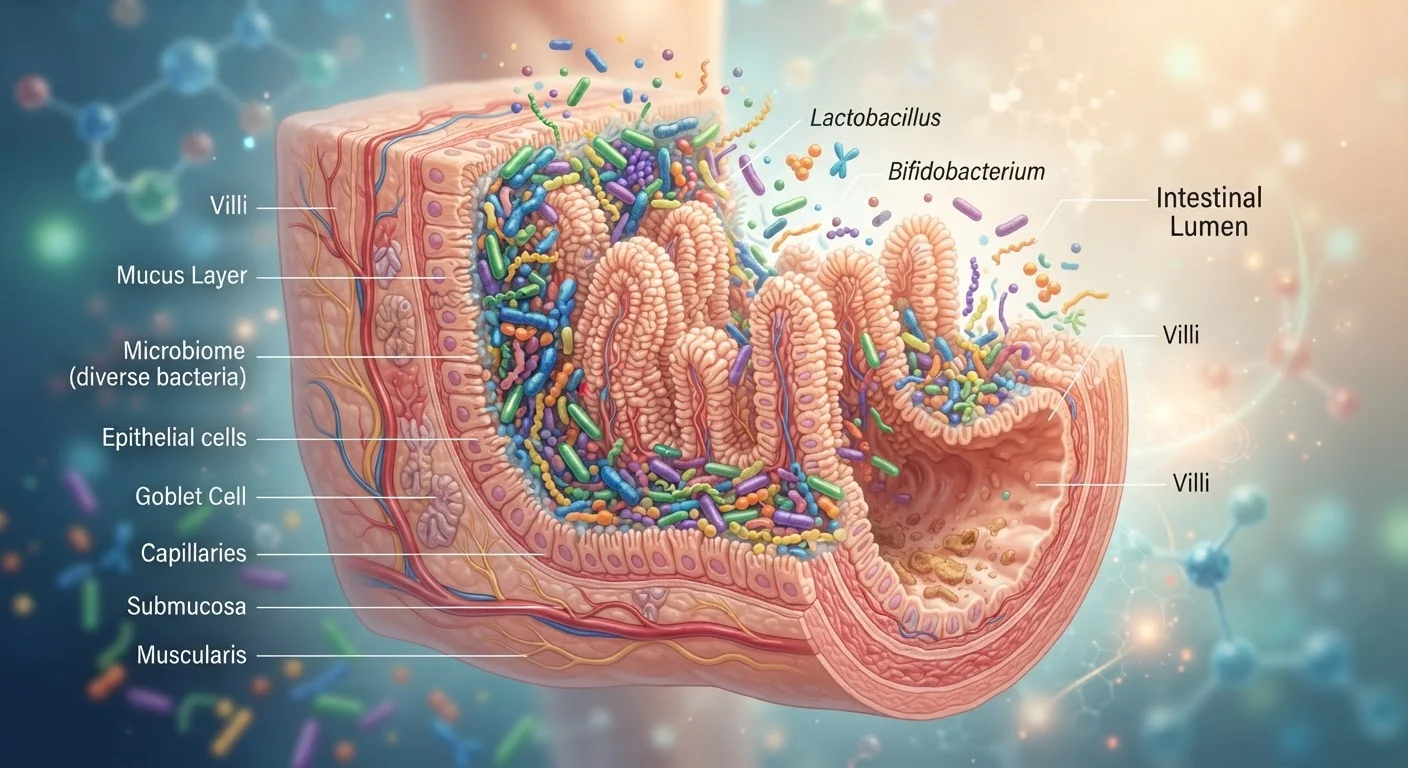
The gut microbiome refers to the trillions of bacteria, fungi, and other microorganisms living in your digestive tract. Research increasingly shows these microorganisms influence how your body extracts energy from food, regulates appetite hormones, and stores fat. Weight regulation, in this context, means the biological processes that help maintain or shift body weight over time.
Gut bacteria produce short-chain fatty acids (SCFAs) such as butyrate, acetate, and propionate - metabolites that interact with hormone-secreting gut cells and may influence insulin sensitivity and energy homeostasis.
How the Gut Microbiome Affects Metabolism
Your gut is home to roughly 38 trillion microbial cells - a community so metabolically active that researchers sometimes describe it as a 'forgotten organ.' These microorganisms do far more than aid digestion. They help determine how many calories you extract from food, influence how fat is stored, and interact with the hormones that regulate hunger and fullness.
One key mechanism involves short-chain fatty acids (SCFAs), produced when gut bacteria ferment dietary fiber. SCFAs like butyrate and propionate signal the release of appetite-regulating hormones such as peptide YY and GLP-1, which promote a sense of fullness. They also support the health of the intestinal lining - relevant because a compromised gut barrier is associated with low-grade systemic inflammation, itself linked to metabolic dysfunction. For a deeper look at how the gut influences the body's broader defenses, see how chronic inflammation starts in the gut.
Gut bacteria also influence bile acid metabolism and insulin sensitivity - two factors central to how the body handles blood sugar and stores energy. These pathways explain why researchers studying metabolism basics are paying close attention to the microbiome's role.
Microbiome Diversity and Body Weight: What the Research Shows
Multiple large observational studies have found that people with obesity tend to have lower gut microbial diversity compared to lean individuals. Specific bacterial imbalances - for example, a higher ratio of Firmicutes to Bacteroidetes - were initially proposed as a marker of obesity risk, though this theory has since been complicated by more nuanced data showing the relationship is far less straightforward.
Animal studies have produced striking findings: germ-free mice colonized with gut bacteria from obese donors gained significantly more fat than those receiving bacteria from lean donors, even when calories were controlled. These experiments helped establish that gut bacteria can causally influence fat accumulation - at least in mice. Human trials attempting to replicate this via fecal microbiota transplantation (FMT) have shown more modest and inconsistent results, underscoring that the human gut system is considerably more complex.
38 trillion
Microbial cells in the human gut
Estimates from research published in <cite>Cell</cite> suggest microbial cells roughly match or exceed the number of human cells in the body.
~30%
Variation in post-meal blood sugar explained by microbiome
A landmark 2015 Weizmann Institute study found individual gut microbiome composition explained a significant portion of glycemic response variation between people eating identical foods.
Low
Evidence quality for probiotics as weight-loss tools
Systematic reviews, including analyses published in <cite>Obesity Reviews</cite>, consistently rate current evidence for probiotic-driven weight loss as low to moderate quality in healthy adults.
The honest scientific picture is this: microbiome composition is correlated with weight-related outcomes in humans, but causality - which direction the arrow of influence points - is still being worked out. Obesity may alter the microbiome just as much as an altered microbiome may contribute to obesity.
Diet as the Primary Lever
Among all the factors that shape microbiome composition, diet is consistently the most modifiable and most evidence-supported. Specifically, dietary fiber - the indigestible plant material that gut bacteria ferment into those metabolically active SCFAs - is the single most studied microbiome-supportive nutrient.
A diet rich in diverse plant foods tends to produce a more diverse microbiome. This means vegetables, legumes, whole grains, nuts, and fruits - not any single 'superfood.' The role of fiber in immune and digestive health extends well beyond regularity, reaching into appetite regulation and microbial balance alike.
Fermented foods such as yogurt, kefir, kimchi, and sauerkraut have attracted considerable attention. A 2021 Stanford study published in Cell found that a high-fermented-food diet increased microbiome diversity and reduced inflammatory markers compared to a high-fiber diet over the short term - an intriguing finding, though not the final word. For a grounded review of what the evidence actually supports, see fermented foods and gut health.
What This Means for Everyday Decisions
The gut-weight connection does not translate neatly into a prescription for weight loss. There is currently no proven gut-focused protocol that reliably produces sustainable weight reduction. What the research does support is a set of dietary habits that simultaneously nourish the microbiome and align with broader evidence on metabolic health:
- Eat a wide variety of plant foods to encourage microbial diversity.
- Prioritize fiber from whole-food sources rather than supplements where possible.
- Limit ultra-processed foods, which are consistently associated with reduced microbial diversity in observational data.
- Consider fermented foods as part of a balanced diet, while maintaining realistic expectations.
The gut also communicates directly with the brain via the vagus nerve and through neurotransmitter production - a bidirectional channel that influences mood, stress, and potentially food-seeking behavior. Understanding the gut-brain axis adds another dimension to why gut health matters beyond the scale.
It is equally important to approach popular gut-health claims with appropriate skepticism. Many products marketed around microbiome optimization - from probiotic supplements to 'gut reset' cleanses - are not supported by robust evidence. Common gut health myths are widespread and worth examining critically before spending money or effort on interventions that may not deliver.
This article is for general informational and educational purposes only and does not constitute medical advice. Consult a qualified healthcare professional before making significant changes to your diet, supplement routine, or health management approach.