

Key Takeaways
- The gut and brain communicate constantly through the vagus nerve, hormones, and microbial metabolites.
- Roughly 90% of the body's serotonin is produced in the gut, not the brain.
- Disruptions to the gut microbiome are associated with changes in mood, anxiety, and cognitive function.
- Diet, sleep, stress, and physical activity all shape the health of the gut-brain connection.
- This is an active area of research — many mechanisms are promising but not yet fully established.
Gut-Brain Axis
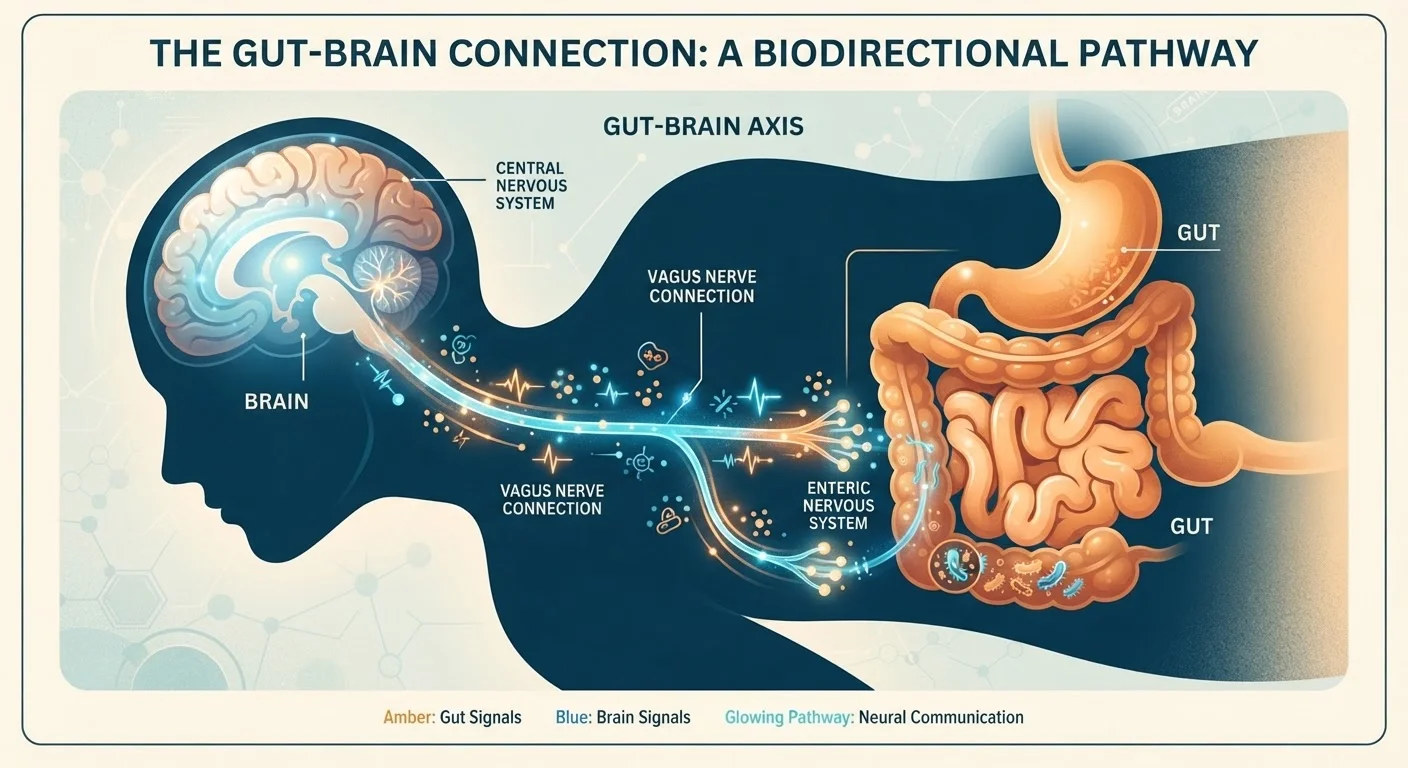
The gut-brain axis is the two-way communication network linking your digestive system and your brain. It operates through the vagus nerve, immune signals, hormones, and chemicals produced by gut microbes. This means the state of your gut can directly influence your mood, stress response, and cognitive clarity — and vice versa.
Researchers classify this system as the microbiota-gut-brain axis when emphasizing the role of intestinal microorganisms, which produce or regulate neurotransmitters such as serotonin, GABA, and dopamine precursors that influence central nervous system function.
What the Gut-Brain Axis Actually Is
Your gut does far more than digest food. It hosts a dense web of roughly 100 million neurons — collectively called the enteric nervous system — that operates with remarkable independence. Scientists sometimes call this the "second brain," not because it thinks consciously, but because it processes information and coordinates digestive function largely on its own.
The gut-brain axis is the bidirectional communication system connecting this enteric network to the central nervous system. It operates through several overlapping channels: the vagus nerve, the immune system, circulating hormones, and microbial metabolites produced by the trillions of bacteria, fungi, and other organisms living in your intestines. Signals travel in both directions — from brain to gut and from gut to brain — shaping digestion, immunity, mood, and stress response simultaneously.
Understanding this system helps explain why stress reliably upsets the stomach, why gut infections can cause fatigue and low mood, and why the science of mental health increasingly looks beyond the brain itself. For a deeper look at how gut health extends into immune function, see how the digestive system supports your defenses.
The Key Communication Pathways
Three main pathways carry messages between your gut and brain:
- The vagus nerve: This cranial nerve is the most direct structural link. Approximately 80–90% of its fibers carry signals from the gut to the brain, making it primarily a sensory highway. It relays information about gut environment, inflammation levels, and the presence of microbial metabolites.
- Neurotransmitters and their precursors: Roughly 90% of the body's serotonin — a neurotransmitter central to mood regulation — is produced in the gut. Gut bacteria also influence GABA, dopamine precursors, and other neuroactive compounds. Changes in microbial populations can shift the availability of these chemicals. Mood regulation involves multiple interacting biological systems, and the gut is one significant contributor.
- The immune system and inflammation: About 70% of immune cells reside in gut-associated tissue. When the gut microbiome is disrupted — a condition researchers call dysbiosis — it can promote low-grade inflammation that affects brain function. Systemic inflammation frequently originates in the gut, with consequences that extend well beyond digestion.
~90%
Of the body's serotonin produced in the gut
Research published in peer-reviewed gastroenterology literature consistently shows the vast majority of serotonin synthesis occurs in gut enterochromaffin cells, not the brain.
100 million
Neurons in the enteric nervous system
The enteric nervous system contains an estimated 100 million nerve cells lining the gastrointestinal tract, enabling semi-autonomous digestive function.
~70%
Of immune cells located in gut-associated tissue
A widely cited estimate in immunology research holds that roughly 70% of the body's immune cells are housed in the gut-associated lymphoid tissue (GALT).
How Lifestyle Choices Shape This Connection
The gut microbiome — and by extension, the gut-brain axis — is highly responsive to everyday behaviors. This creates a meaningful opportunity: the same habits that support general wellness also reinforce this critical communication network.
Diet has the most direct influence. Dietary fiber feeds beneficial gut bacteria, which produce short-chain fatty acids that support the intestinal lining and reduce inflammatory signaling. Fiber supports gut bacteria and intestinal integrity in ways that are relevant far beyond preventing constipation. Fermented foods supply live microorganisms; diverse plant-based foods build microbial variety.
Sleep quality also matters. The gut's microbial community follows circadian rhythms closely tied to sleep-wake cycles. Disrupted sleep is associated with reduced microbiome diversity, which can feed back into poorer mood and cognitive performance. Explore the intersection of sleep and mental clarity for related context.
Chronic stress suppresses vagal tone and alters gut motility, permeability, and microbial composition. Regular physical activity, in contrast, is consistently linked to greater microbiome diversity and more resilient gut-brain signaling. These connections also intersect with metabolism — gut microbiome diversity is linked to appetite and metabolic regulation as well.
Simple Habits That Support Both Gut and Brain
Eating a wide variety of fiber-rich vegetables, legumes, and whole grains provides fuel for beneficial gut bacteria. Pairing that with consistent sleep and regular movement creates compounding benefits for the gut-brain axis. These are not quick fixes, but consistent lifestyle patterns that research associates with microbiome diversity and more stable mood over time.
What This Means for Everyday Health Decisions
The gut-brain axis is not a single lever to pull — it's a dynamic system shaped by cumulative, daily inputs. There are no guaranteed outcomes, and individual variation in gut microbiome composition is substantial. What research does support is that a broadly healthy lifestyle — varied diet rich in fiber, consistent sleep, regular movement, and managed stress — creates conditions in which this bidirectional system functions more effectively.
If you experience persistent digestive symptoms alongside mood changes or brain fog, it is worth discussing both with a qualified healthcare provider rather than treating them as unrelated. Common symptoms are associated with gut dysbiosis, and knowing when to seek evaluation matters.
The science here is genuinely exciting, but it is still evolving. Specific probiotic interventions for mental health conditions, for example, remain under active investigation and are not yet standard clinical recommendations. Approach new claims in this space with thoughtful skepticism — and rely on a healthcare professional for personal medical guidance.
This article is for informational and educational purposes only and does not constitute medical advice. Always consult a qualified healthcare provider with questions about your health, symptoms, or any changes to your wellness routine.