
The Gut-Immune Connection: What Your Digestive System Actually Does for Your Defenses

Key Takeaways
- Approximately 70% of the body's immune cells are located in or around the gastrointestinal tract.
- Trillions of gut microbes help train and regulate immune responses throughout life.
- A disrupted gut microbiome — called dysbiosis — is associated with weakened immune function.
- Everyday habits like diet, sleep, and stress management meaningfully influence gut-immune health.
- Supporting gut health is a practical, evidence-informed way to support overall immune resilience.
Gut-Immune Connection
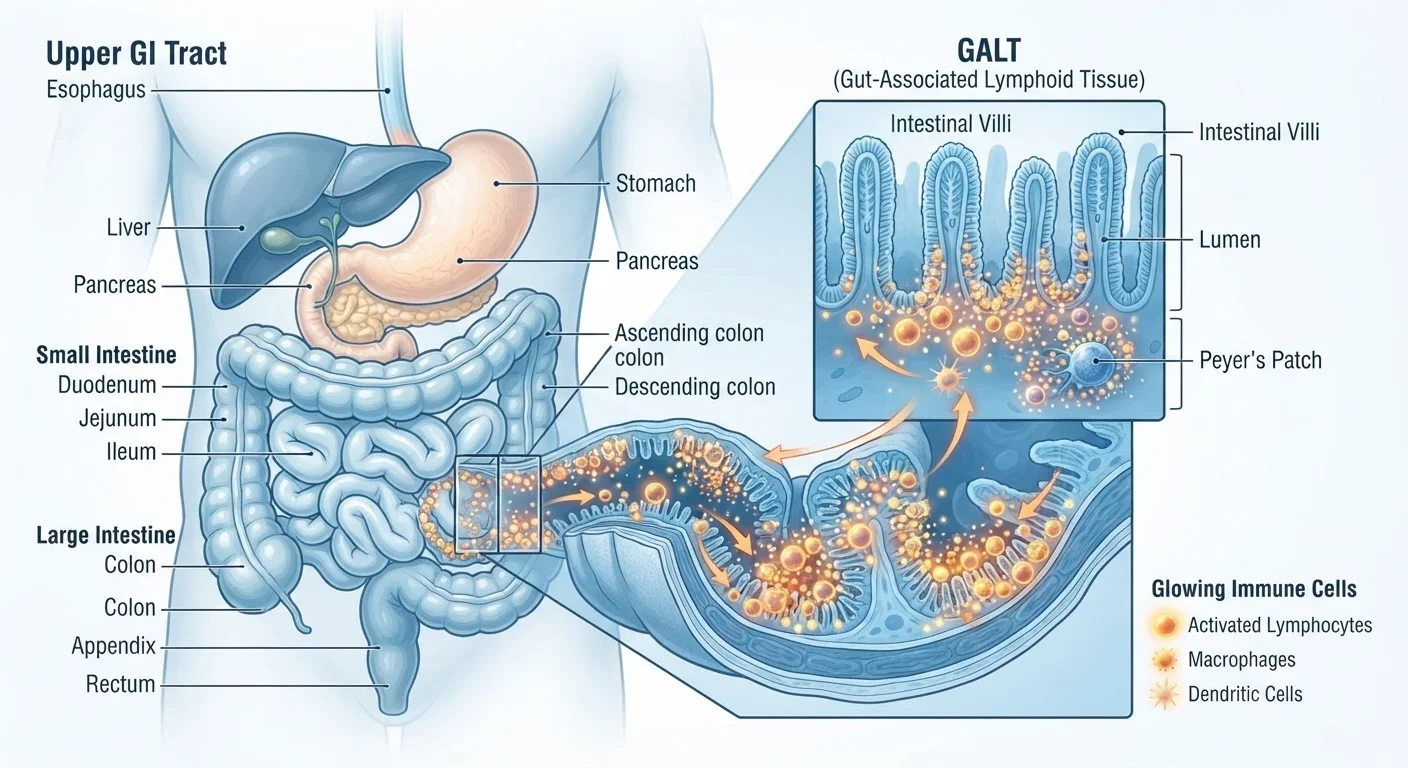
The gut-immune connection refers to the close, bidirectional relationship between your digestive system and your immune system. A large majority of your immune cells are located in gut-associated lymphoid tissue lining the intestines. This means the health of your digestive tract directly influences how effectively your body identifies and responds to threats.
The gut-associated lymphoid tissue (GALT) — including Peyer's patches and mesenteric lymph nodes — coordinates immune surveillance and tolerance, distinguishing between harmful pathogens and harmless food proteins.
The Gut as an Immune Organ
Most people think of the immune system as something that lives in lymph nodes, white blood cells, or the thymus. Fewer realize that the digestive tract itself is the largest immune organ in the body. The intestinal lining houses a vast network of immune tissue — collectively called gut-associated lymphoid tissue, or GALT — that is constantly sampling the internal environment and calibrating immune responses.
This arrangement makes biological sense. The gut processes everything you eat and drink, meaning it is perpetually exposed to foreign material — beneficial nutrients, harmless food proteins, and potentially harmful pathogens alike. Rather than triggering a full immune reaction to every bite, GALT helps the immune system learn what to tolerate and what to attack. That process of immune education begins at birth and continues throughout life.
To understand the broader picture of who lives in your gut and why it matters, see our plain-language guide to the microbiome.
How Gut Microbes Shape Your Immune Responses
The roughly 38 trillion microorganisms residing in your gastrointestinal tract — bacteria, fungi, and viruses — do far more than assist with digestion. They actively communicate with immune cells, influencing everything from inflammation thresholds to the production of protective antibodies.
Beneficial bacteria help maintain the integrity of the intestinal lining, a single-cell-thick barrier that separates gut contents from the bloodstream. When that barrier is intact, immune cells can monitor the gut environment without triggering unnecessary inflammation. Certain gut bacteria also produce short-chain fatty acids through fermentation — compounds that help regulate immune cell behavior and support a balanced inflammatory response.
~70%
Of immune cells located in the gut
Estimates from immunology research consistently place the majority of the body's immune cells within or adjacent to the gastrointestinal tract.
38 trillion
Microbial cells in the human gut
A widely cited estimate in cell biology literature puts the number of microbial cells in the gut at roughly equal to — or slightly exceeding — the number of human cells in the body.
1,000+
Bacterial species in a healthy gut
The Human Microbiome Project identified over 1,000 distinct bacterial species that may inhabit the human gastrointestinal tract across different individuals.
When the balance of gut microbes shifts — a state researchers call dysbiosis — immune regulation can become less precise. Emerging research connects dysbiosis to increased intestinal permeability and a heightened risk of inflammatory conditions. Learn more about how this unfolds in our article on chronic inflammation and the gut.
Everyday Habits That Support the Gut-Immune Axis
You don't need a dramatic dietary overhaul to support this system. Research consistently points to a few foundational habits that benefit both gut microbiome diversity and immune resilience:
- Eat a variety of plant foods. Dietary fiber feeds beneficial gut bacteria and supports the production of immune-regulating compounds. Fiber's role in gut and immune health goes well beyond preventing constipation.
- Prioritize sleep. Sleep deprivation is associated with altered gut microbiome composition and impaired immune function. Most adults need seven to nine hours per night.
- Manage chronic stress. The gut and brain are in constant communication via the gut-brain axis. Chronic psychological stress can reduce microbial diversity and increase intestinal permeability. Read more about this relationship in our overview of the gut-brain axis.
- Use antibiotics judiciously. Antibiotics are essential when medically necessary but can significantly disrupt gut microbial diversity. Always use them only as prescribed by a healthcare provider.
For practical guidance on shifting your eating patterns without feeling overwhelmed, building a gut-friendly eating pattern incrementally is a useful starting point.
This article is for informational purposes only and is not a substitute for professional medical advice, diagnosis, or treatment. Always consult a qualified healthcare provider with questions about your health.