

Key Takeaways
- Metabolism is not a speed dial - it is a complex system of chemical reactions that sustains every bodily function.
- Your basal metabolic rate (BMR) accounts for 60-70% of total daily calorie burn, even at complete rest.
- Genetics, body composition, age, and hormones all influence metabolic rate - but none make it fixed or unchangeable.
- Common claims about 'boosting' metabolism with specific foods or habits are largely overstated by the evidence.
- Weight changes are rarely explained by metabolism alone; energy intake, activity, sleep, and stress all play roles.
Metabolism
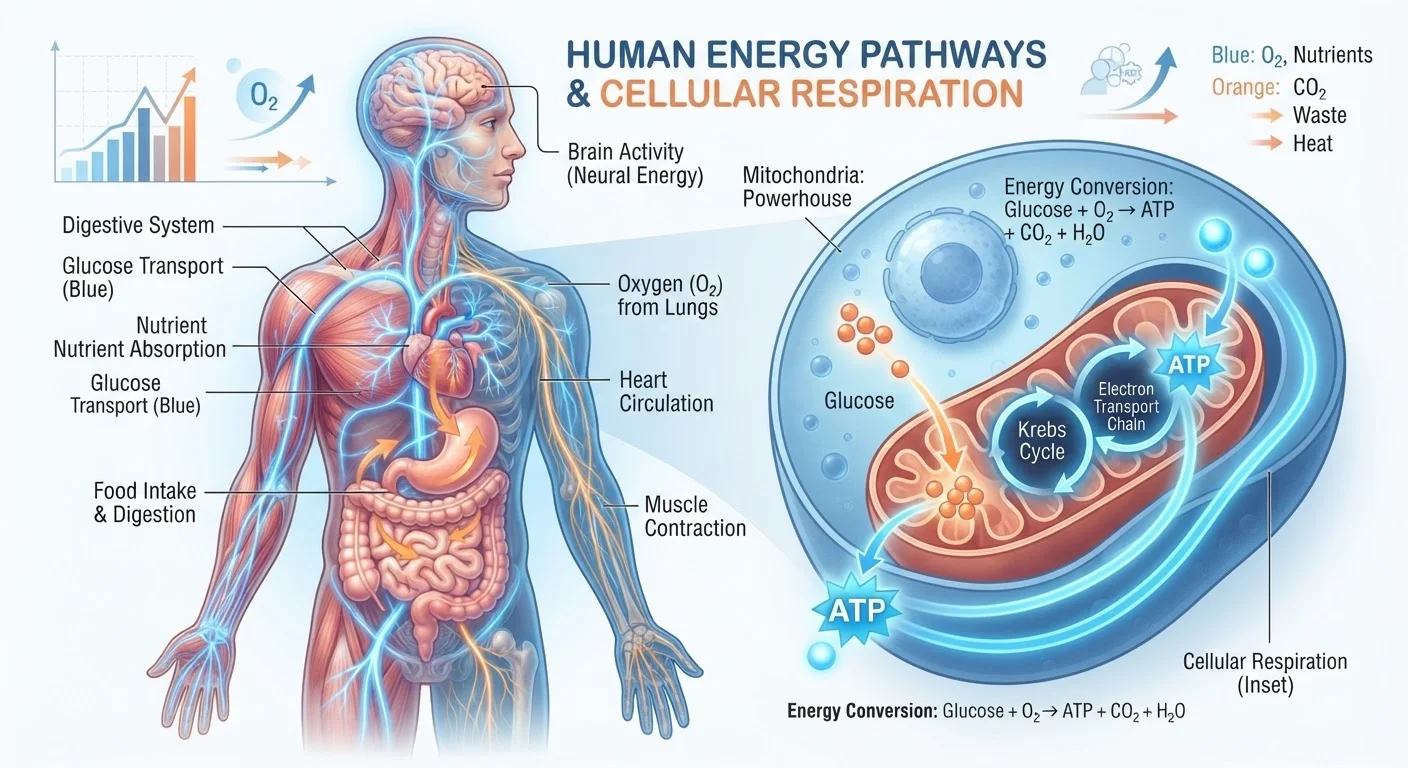
Metabolism refers to every chemical reaction your body uses to sustain life - converting food and oxygen into energy, building and repairing tissues, eliminating waste, and keeping your organs running. It is not a single process or a speed setting; it is an entire system operating continuously, even while you sleep. When most people say "my metabolism," they're usually referring to their metabolic rate - how many calories their body burns over time.
Metabolism encompasses two complementary processes: catabolism (breaking down molecules to release energy) and anabolism (using energy to build and repair molecules). Both are regulated by hormones, enzymes, and feedback loops throughout the body.
The Word Everyone Uses But Few Define
"Metabolism" appears constantly in wellness conversations - blamed for stubborn weight, credited for effortless leanness, and marketed against in the form of dozens of "boosting" products. But the word is almost always used imprecisely, and that imprecision leads to real confusion about how the body actually works.
At its core, metabolism is not a personality trait your body has. It's a vast, ongoing series of chemical reactions that convert the food you eat and the air you breathe into the energy and building materials your body needs every second of every day. These reactions power your heartbeat, fuel your brain, repair damaged cells, and regulate your temperature - all simultaneously, all automatically.
For a grounded overview of how these processes fit together, see this starter guide to metabolism, which walks through core concepts without the jargon.
Breaking Down What Metabolism Actually Does
Scientists organize metabolic activity into two complementary directions. Catabolism is the breaking-down side: your digestive system and cells dismantle food molecules - carbohydrates, fats, proteins - releasing energy stored in their chemical bonds. That energy is captured in a molecule called ATP (adenosine triphosphate), which acts as the body's universal energy currency.
Anabolism is the building-up side: that captured energy is then used to synthesize new proteins, build muscle tissue, produce hormones, and maintain every structure in the body. These two processes run in balance, and disrupting that balance - through illness, extreme dietary restriction, or hormonal dysregulation - can have wide-ranging effects on health.
When researchers measure someone's metabolism for practical purposes, they typically focus on metabolic rate - specifically the basal metabolic rate (BMR), which is the energy your body burns just to sustain basic functions at rest. BMR is the biggest slice of your daily energy expenditure, usually accounting for 60-70% of total calorie burn. Physical activity and the energy cost of digesting food make up most of the rest.
60-70%
Of daily calorie burn from basal metabolic rate
According to established exercise physiology research, BMR - the energy cost of sustaining basic organ function at rest - accounts for the largest share of daily energy expenditure.
~200 kcal
Typical BMR variation between similar individuals
Research in metabolic science suggests that resting metabolic rate differences between healthy adults of comparable size and composition are often within a few hundred calories per day - less dramatic than popular belief suggests.
36.5 ATP
Energy molecules produced per glucose molecule
Cellular respiration - the core metabolic process - extracts up to 36-38 ATP molecules from a single glucose molecule, illustrating the biochemical precision involved in energy conversion.
What Shapes Your Metabolic Rate
Several well-established factors influence how many calories your body burns at rest and during activity:
- Body composition: Lean muscle tissue burns more calories at rest than fat tissue. People with more muscle mass generally have a higher BMR.
- Body size: Larger bodies - regardless of composition - require more energy to maintain. Taller and heavier individuals typically have higher BMRs.
- Age: Metabolic rate does tend to decline over a lifetime, though emerging research suggests this change is more gradual than previously assumed and is partly tied to shifts in muscle mass rather than aging alone.
- Sex: On average, males tend to have higher BMRs than females, primarily due to differences in muscle mass and body size.
- Hormones: Thyroid hormones are the primary regulators of metabolic rate. Conditions like hypothyroidism (underactive thyroid) can meaningfully slow metabolism, while hyperthyroidism accelerates it. Other hormones - including insulin, cortisol, and leptin - also play supporting roles.
Genetics contribute to individual variation, but the differences between healthy individuals are often smaller than assumed. The idea that some people are simply "born with" a dramatically fast or slow metabolism is addressed in more depth in our article on fast vs. slow metabolism.
What Metabolism Isn't
Understanding what metabolism is requires equal attention to what it isn't. It is not a simple dial that you can reliably crank up or down with a meal, a supplement, or a habit. Many popular claims - that eating small, frequent meals keeps metabolism elevated, that spicy foods meaningfully increase calorie burn, or that certain superfoods "activate" fat burning - are either unsupported or vastly overstated when examined against clinical evidence. Our companion piece on persistent metabolism myths covers these in detail.
Metabolism is also not the whole story of body weight. Attributing weight changes entirely to a fast or slow metabolism oversimplifies a system influenced by sleep, stress, hormonal health, eating patterns, physical activity, and more. If you find yourself consistently blaming metabolism for changes you don't understand, it's worth considering what else might be at play - a question explored in this look at metabolism misreadings.
“The word 'metabolism' has become a kind of cultural shorthand for something people feel but can't quite explain about their bodies. The science is more precise - and ultimately more empowering - than the mythology.”
— Herman Pontzer, Evolutionary anthropologist and metabolism researcher, Duke University
This article is for informational purposes only and is not a substitute for professional medical advice. Consult a qualified healthcare provider for guidance on any health concerns or before making changes to your diet or exercise routine.