

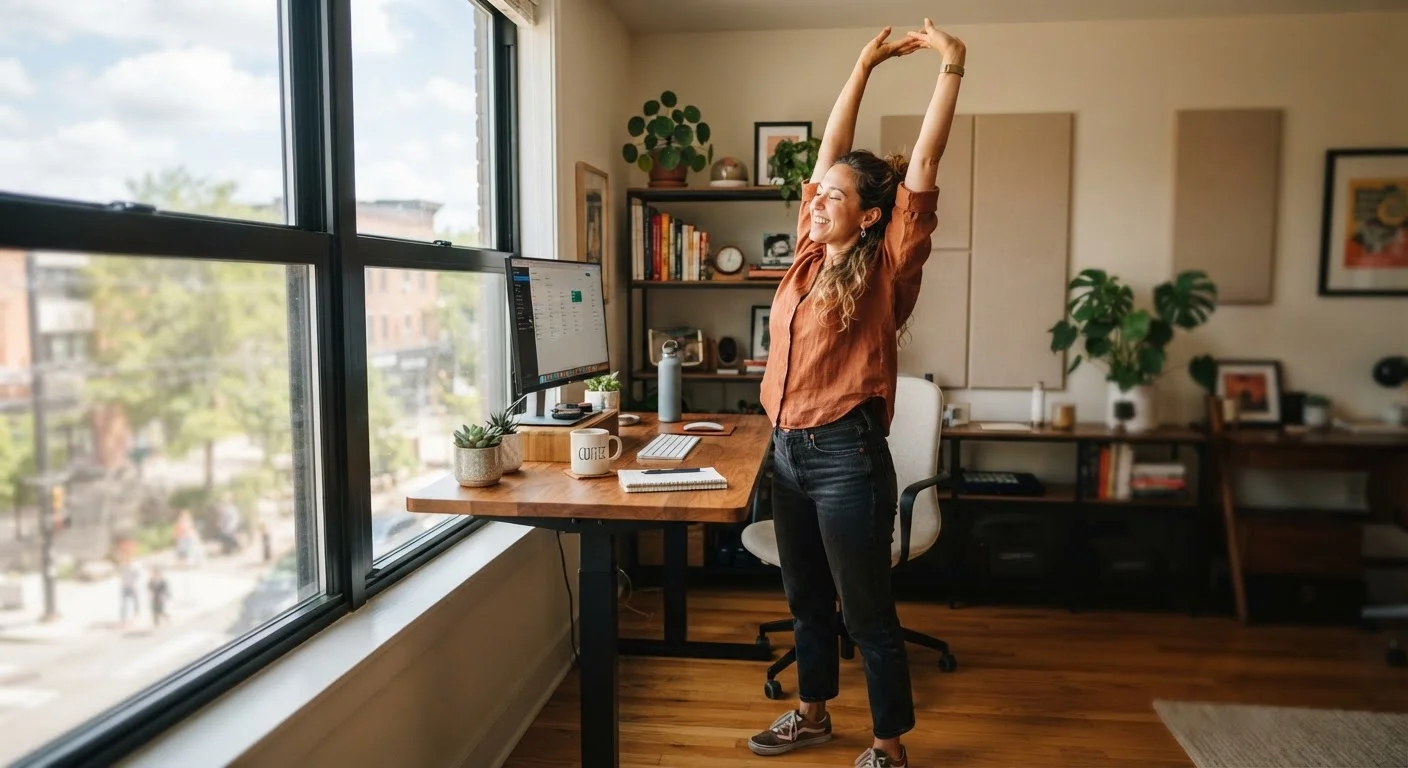
Key Takeaways
- Movement snacks are brief, 1-5 minute activity bursts distributed across the day.
- Research suggests interrupting sitting regularly can improve blood sugar and circulation.
- You do not need a gym or workout gear to benefit from movement snacks.
- Consistency over time matters more than the intensity of any single session.
- Movement snacks complement - but do not fully replace - structured exercise.
Movement Snacks
Movement snacks are short, intentional bouts of physical activity - typically lasting one to five minutes - scattered throughout the day rather than concentrated into a single workout. The idea is that these mini-sessions of movement accumulate over time and contribute meaningfully to overall health. They require no equipment, no gym, and no change of clothes.
In exercise science, movement snacks are sometimes categorized under "incidental physical activity" or "exercise snacking" - a pattern studied for its effects on cardiometabolic health, blood glucose regulation, and sedentary behavior interruption.
The Basic Concept: Snacking on Movement
The term "movement snack" borrows from the language of eating - just as a snack bridges the gap between meals, a movement snack bridges the gap between longer periods of activity. Instead of waiting for a dedicated workout window, you take small bites of movement throughout the day: a two-minute walk to get water, a set of squats before a meeting, a few minutes of stretching between tasks.
This approach directly addresses one of the most common barriers to staying active - the belief that exercise only counts when it lasts 30 minutes or more. Movement snacks reframe activity as something that fits into real life, not something that requires a cleared schedule.
For a broader look at how non-gym movement fits into a healthy lifestyle, see Everyday Movement: A Complete Guide to Staying Active Without a Gym.
The Science Behind Why They Work
The human body was not designed to remain still for hours at a time. Prolonged sitting is associated with reduced insulin sensitivity, slower circulation, and increased muscle inactivity - effects that can occur even in people who exercise regularly. Movement snacks work by directly interrupting these periods of stillness.
Studies on "exercise snacking" - a term used in peer-reviewed literature - have found that short bouts of activity spread throughout the day can improve postmeal blood glucose levels, support cardiovascular function, and help maintain muscle activation. A commonly cited mechanism is that movement prompts muscular contractions that help glucose uptake independent of insulin, which is particularly relevant after eating.
6-8 hrs
Average daily sitting time for U.S. adults
Research from the CDC and national survey data consistently shows most American adults spend the majority of waking hours sedentary.
~30%
Reduction in postmeal blood glucose spikes
Some studies have found that short activity breaks after meals can meaningfully reduce blood glucose responses compared to uninterrupted sitting.
Every 30-60 min
Recommended sitting break frequency
Major health organizations suggest interrupting prolonged sitting at least once per hour to reduce metabolic and musculoskeletal strain.
It is worth noting that movement snacks are not the same as a structured workout. For a nuanced look at how incidental activity compares to dedicated exercise, Small Movement Breaks vs. Dedicated Workouts breaks down what the research actually shows.
This article is for informational purposes only and is not a substitute for personalized medical or fitness advice. Consult a qualified healthcare professional before starting any new exercise routine, especially if you have an existing health condition.
How Movement Snacks Compound Over Time
The power of movement snacks lies in accumulation. Five one-minute movement breaks across a workday equal five minutes of activity - not dramatic on its own, but repeated daily across a week, month, and year, those minutes build into thousands of movement reps your body would otherwise miss.
This compounding effect is especially meaningful for people in sedentary jobs. If you sit for eight or more hours daily, even a modest increase in total movement can shift your body out of a largely static state. Over time, consistent movement snacking may support better posture habits, improved baseline energy, and reduced stiffness.
If you want to understand where your movement gaps actually are, Your Daily Movement Audit offers a practical checklist to map your day honestly.
Practical Ways to Build Movement Snacks Into Your Day
Getting started with movement snacks does not require planning a new routine from scratch - it means attaching small activity moments to things you already do.
- Transition triggers: Stand and stretch every time you finish a video call or switch tasks.
- Waiting windows: Do calf raises while the coffee brews or march in place during a phone call.
- Stair opportunities: Default to stairs over elevators when possible.
- Desk resets: Set a recurring reminder to stand, roll your shoulders, and walk to a distant restroom or water source.
The goal is to make movement the path of least resistance, not an interruption. For people working at desks specifically, Small Movements, Real Results: Building Activity Into a Desk Job offers detailed strategies for weaving micro-habits into a sedentary workday.
Start with two or three intentional movement snacks per day. Once those feel automatic, layer in more. Consistency is what makes the habit stick - not perfection.