

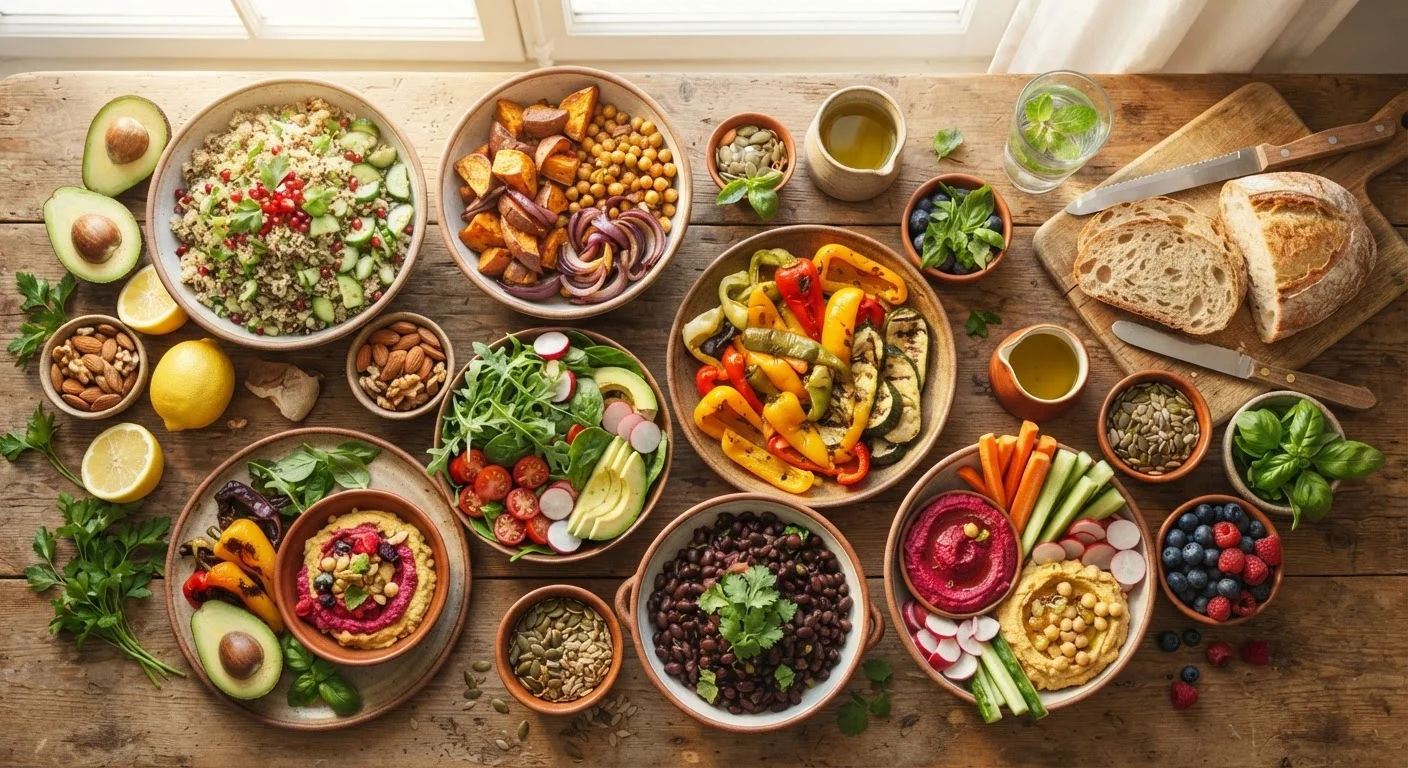
Key Takeaways
- No single definition of 'clean eating' exists in nutrition science — it's a popular concept, not a clinical one.
- Labeling foods as 'clean' or 'dirty' can promote unhealthy relationships with eating rather than better health outcomes.
- Processing is a spectrum — many minimally processed foods retain strong nutritional value.
- Rigid clean-eating rules rarely outperform flexible, balanced dietary patterns in long-term research.
- Whole, nutrient-dense foods matter, but context, variety, and sustainability matter just as much.
What 'Clean Eating' Actually Means — and Doesn't Mean
The phrase "clean eating" is everywhere — on social media, in grocery store marketing, and in everyday conversation about health. But despite its popularity, the term has no standardized definition in nutrition science or clinical dietetics. Depending on who's talking, it might mean avoiding processed foods, eating only organic produce, eliminating sugar, or following a specific elimination diet.
This ambiguity matters. When a concept is vague, it becomes easy for myths to take root. Research published in nutrition and public health journals has consistently noted that rigid, morality-laden food rules — the kind that categorize eating as "clean" or "dirty" — can lead to stress, social isolation around mealtimes, and patterns that resemble disordered eating in some individuals.
For a clearer picture of what evidence-based healthy eating actually looks like, see what healthy eating actually means according to nutrition science. Below, we examine the most persistent myths attached to the clean-eating label and contrast them with what nutrition research actually supports.
Myth
All processed foods are harmful and should be completely eliminated from a healthy diet.
Fact
Processing exists on a broad spectrum, and many processed foods retain excellent nutritional value.
The word "processed" technically describes any food that has been altered from its natural state — which includes frozen vegetables, canned legumes, plain yogurt, and rolled oats. Nutrition researchers use tiered classifications, such as the NOVA system, to distinguish minimally processed foods from ultra-processed products high in added sugars, sodium, and refined fats. The evidence links diets high in ultra-processed foods to poorer health outcomes — but that is not the same as saying all processing is harmful. Frozen spinach and bagged salad greens are processed; they also retain their nutritional profile and support a healthy diet. Blanket avoidance of "processed" food discards a useful and affordable category of nutritious options.
Myth
Eating 'clean' requires buying exclusively organic produce to avoid harmful chemicals.
Fact
Conventional produce is safe to eat and nutritionally comparable to organic for most people.
Regulatory agencies including the U.S. Environmental Protection Agency and the USDA set tolerance limits for pesticide residues on conventionally grown food, and multiple studies have found that residue levels on produce sold in the U.S. are generally well below levels considered a health risk. While some consumers prefer organic for environmental or personal reasons, large-scale reviews have found no consistent evidence that organic produce is meaningfully more nutritious than conventional. More importantly, the research is clear that eating more fruits and vegetables — regardless of how they were grown — is one of the most reliably beneficial dietary habits available. Cost barriers that discourage vegetable consumption in favor of "purity" can be counterproductive.
Myth
Natural or whole-food sweeteners like honey and maple syrup are fundamentally healthier than refined sugar.
Fact
From a metabolic standpoint, the body processes natural sweeteners very similarly to refined sugar.
Honey, maple syrup, agave, and coconut sugar contain trace amounts of minerals and antioxidants, but in the quantities typically consumed, these micronutrients are nutritionally insignificant. All of these sweeteners are primarily composed of sugars — glucose, fructose, or sucrose — and are metabolized through the same pathways as table sugar. The USDA Dietary Guidelines and major nutrition organizations recommend limiting all added sugars regardless of source, not swapping one type for another. Substituting honey for sugar because it sounds "cleaner" does not meaningfully change the physiological response.
Myth
Carbohydrates are inherently 'unclean' and should be minimized for better health.
Fact
Carbohydrates are a primary fuel source for the body, and whole-food carbs are associated with positive health outcomes.
Clean-eating communities frequently frame carbohydrates — especially grains — as problematic. But decades of nutritional epidemiology show that populations eating diets high in minimally processed carbohydrates, including legumes, whole grains, fruits, and vegetables, tend to have lower rates of chronic disease. The quality and source of carbohydrates matters far more than the macronutrient itself. For a detailed look at how these misconceptions develop, see common misconceptions about carbohydrates sorted by the evidence. The evidence does not support eliminating carbohydrates as a category from a health-promoting diet.
Myth
Following a clean-eating plan means your gut health will automatically improve.
Fact
Gut health is complex and isn't reliably transformed by food purity labels alone.
A diet rich in fiber, fermented foods, and diverse plant matter does support a healthy gut microbiome — but that outcome is not exclusive to "clean eating" as typically defined. Research on the gut microbiome emphasizes dietary diversity and fiber intake as key drivers of microbial health, not the avoidance of specific "unclean" ingredients. Clean-eating plans that severely restrict food groups can actually reduce dietary diversity, which may be counterproductive for gut health. For a more evidence-grounded look at this topic, common gut health myths that persist despite the evidence is worth reading alongside this article.
Why Flexibility Beats Rigidity in Sustainable Eating
One of the clearest findings in behavioral nutrition is that dietary flexibility predicts long-term adherence better than strict rule-following. Studies examining dietary patterns consistently find that people who allow for occasional foods they enjoy — without guilt — tend to maintain healthier overall diets over months and years than those following highly restrictive frameworks.
This connects directly to how the clean-eating framework can backfire. When a food is labeled "off-limits," it often becomes more psychologically compelling, a well-documented phenomenon in eating behavior research. The practical implication is that aiming for a predominantly whole-food, nutrient-rich diet — without declaring any single food morally forbidden — is both more sustainable and better supported by evidence.
Extreme Elimination Diets Carry Real Risks
Clean-eating plans that cut out entire food groups — such as all grains, all dairy, or all legumes — without medical justification can lead to nutrient gaps over time. Calcium, B vitamins, iron, and fiber are common casualties of overly restrictive eating patterns. Before making significant changes to your diet, especially if you have an existing health condition, consult a registered dietitian or your healthcare provider.
Clean eating's core instinct — prioritizing vegetables, legumes, whole grains, and minimally processed proteins — is nutritionally sound. What the evidence doesn't support is the all-or-nothing thinking, the fear of "contaminated" foods, or the belief that perfect compliance is necessary for good health. For related perspective on how nutritional myths extend beyond food choices, the metabolism myths that won't die offers a useful companion read.
This article is for general informational and educational purposes only and does not constitute medical or dietary advice. Consult a registered dietitian or qualified healthcare provider for personalized guidance on your eating habits and health goals.