

Key Takeaways
- Healthy eating is defined by overall dietary patterns, not individual foods or single meals.
- Vegetables, fruits, whole grains, lean proteins, and healthy fats form the consistent core of evidence-based guidance.
- Minimizing ultra-processed foods, added sugars, refined grains, and excess sodium is broadly supported by research.
- No single diet plan is universally optimal — sustainable habits matter more than strict adherence to any one approach.
- Consulting a registered dietitian can help tailor general principles to individual health needs and goals.
Healthy Eating
Healthy eating refers to a consistent pattern of food choices that provides the nutrients your body needs while reducing the risk of chronic disease. It emphasizes whole, minimally processed foods — vegetables, fruits, whole grains, lean proteins, and healthy fats — in balanced proportions. There is no single "perfect" diet; rather, healthy eating is a flexible framework that accommodates cultural preferences, individual health needs, and practical realities of daily life.
Nutrition science evaluates dietary patterns rather than isolated foods or nutrients, which is why major guidance — including the Dietary Guidelines for Americans — focuses on overall eating patterns rather than specific superfoods or macronutrient ratios.
What Nutrition Science Actually Agrees On
Despite a constant churn of dietary trends and conflicting headlines, researchers and major health organizations converge on a surprisingly consistent set of principles. The Dietary Guidelines for Americans, the World Health Organization, and large bodies of peer-reviewed research all point to the same foundational ideas.
At the core is an emphasis on dietary patterns rather than individual nutrients. Studies of long-lived, low-disease populations — such as those following Mediterranean or traditional Japanese diets — reveal that it's the combination of foods eaten regularly that drives health outcomes, not any single ingredient.
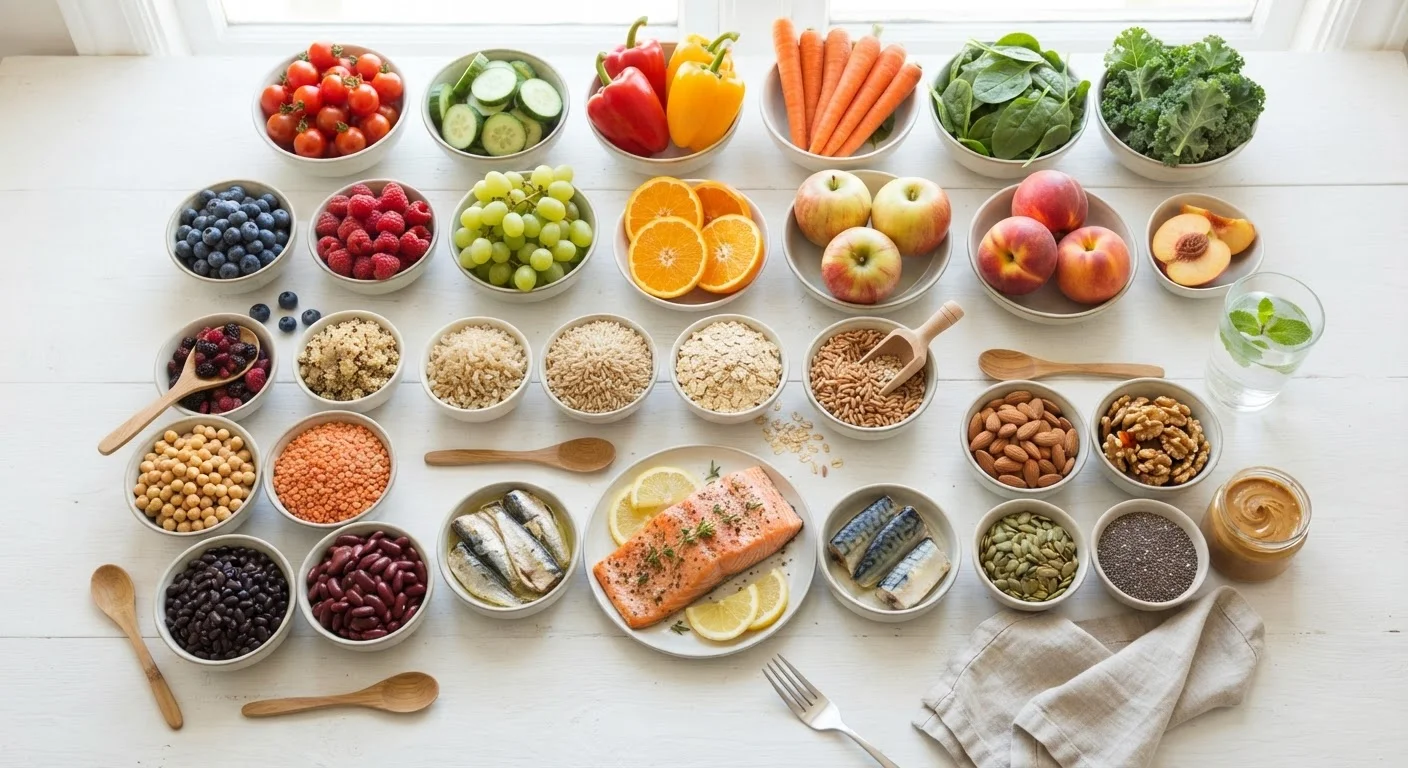
The evidence-backed consensus centers on:
- Vegetables and fruits in abundance, aiming for variety and color
- Whole grains over refined grains (e.g., brown rice, oats, whole-wheat bread)
- Lean and plant-based proteins such as legumes, fish, poultry, nuts, and seeds
- Healthy unsaturated fats from sources like olive oil, avocados, and fatty fish
- Low-fat or fat-free dairy or fortified alternatives, depending on individual needs
Equally important is what to limit: added sugars, sodium, saturated fats, and especially ultra-processed foods — a category linked in multiple large studies to increased risk of cardiovascular disease, type 2 diabetes, and other chronic conditions.
“The best diet is one that is built around whole, minimally processed foods, is varied enough to provide full nutritional coverage, and is one you can actually sustain over the long term.”
— Walter Willett, Professor of Epidemiology and Nutrition, Harvard T.H. Chan School of Public Health
Why 'Eating Clean' Isn't the Same Thing
"Clean eating" is a popular concept, but it's not a defined scientific term and often carries assumptions that nutrition research doesn't fully support. The idea that foods can be divided neatly into "clean" and "toxic" categories oversimplifies a complex field and can foster unnecessarily restrictive attitudes toward food.
Evidence-based healthy eating is more flexible. It allows for a wide variety of foods, including culturally meaningful dishes, occasional treats, and practical convenience foods — without labeling any of them as morally superior or inferior. For a closer look at where popular clean-eating ideas align with or diverge from the research, see our article on common myths about clean eating.
What matters most is the overall pattern over time — not whether every ingredient in every meal clears some arbitrary purity standard.
Practical Patterns That Translate Science Into Daily Life
Knowing the principles is one thing; applying them consistently is another. Research in behavioral nutrition shows that sustainable eating habits tend to share a few common features:
- Regularity over perfection. Eating nutritious foods most of the time produces better long-term outcomes than cycling between strict rules and total abandonment of them.
- Variety as a tool. A diverse diet naturally reduces overreliance on any one food and increases the range of micronutrients you consume.
- Cooking at home more often. Home-prepared meals tend to contain less sodium, fewer added sugars, and smaller portion sizes than restaurant or packaged alternatives.
- Mindful label reading. Understanding what's in packaged foods helps you make more informed choices. Reading nutrition labels effectively is a practical skill that supports better everyday decisions.
- Building habits gradually. Small, consistent changes are more durable than dramatic overhauls. Our introduction to building healthier eating habits walks through realistic strategies for lasting change.
Healthy eating also fits within a broader picture of daily wellness. How you sleep, move, and manage stress all interact with your nutritional choices — a point explored in depth in our look at what a healthy daily routine actually means.
This article is for general informational and educational purposes only and does not constitute medical or dietary advice. For guidance tailored to your individual health needs, consult a qualified healthcare professional or registered dietitian.