

Key Takeaways
- Dietary fat is an essential macronutrient required for hormone production, brain function, and vitamin absorption.
- Research does not support the idea that eating fat directly causes heart disease or weight gain.
- The type of fat consumed matters more than total fat intake for long-term health outcomes.
- Replacing dietary fat with refined carbohydrates — a common low-fat strategy — can worsen metabolic health.
- Unsaturated fats, particularly omega-3s, are associated with reduced cardiovascular risk.
Why the 'Fat Is Bad' Belief Took Hold
Beginning in the 1960s and accelerating through the 1980s, public health messaging broadly framed dietary fat as the primary driver of heart disease and obesity. This view shaped national dietary guidelines and transformed the food industry, spawning decades of low-fat and fat-free product lines. While some of this guidance was grounded in early epidemiological data, the science has grown considerably more nuanced since then. Researchers now recognize that the original evidence often conflated different types of fat, oversimplified the relationship between diet and cardiovascular risk, and underestimated the metabolic consequences of replacing fat with refined carbohydrates.
Understanding what fat actually does in the body — and what distinguishes one type from another — is the foundation for making better everyday food decisions. This article addresses the most persistent myths about dietary fat using current, evidence-based science.
Common Myths About Dietary Fat — Corrected
The misconceptions below are among the most widespread in popular nutrition culture. Each one has influenced how millions of Americans shop, cook, and eat — often in ways that don't align with what research actually shows.
Myth
Eating fat makes you fat. Since fat is calorie-dense, cutting it out is the fastest way to lose weight.
Fact
Weight gain is driven by overall calorie surplus, not by dietary fat alone. Fat's effect on satiety can actually support appetite regulation.
Fat contains 9 calories per gram — more than carbohydrates or protein — which led to the assumption that eating less fat automatically means consuming fewer calories and losing weight. However, dietary fat slows gastric emptying and promotes satiety hormones like peptide YY, which can reduce total calorie intake over the course of a day. Large clinical trials, including the Women's Health Initiative, found that low-fat diets did not produce meaningful long-term weight loss compared to standard diets. Body weight is governed by total energy balance, dietary quality, and individual metabolic factors — not fat intake in isolation.
Myth
All dietary fat is bad for your heart. A heart-healthy diet means cutting fat as much as possible.
Fact
Monounsaturated and polyunsaturated fats are associated with improved cardiovascular markers, not increased risk.
The idea that fat is uniformly harmful to the heart emerged from early observational research that did not distinguish between fat types. Subsequent evidence — including studies on Mediterranean-style diets rich in olive oil and nuts — consistently links unsaturated fats to lower LDL cholesterol and reduced cardiovascular risk. The American Heart Association distinguishes clearly between fat types in its dietary guidance. Understanding the differences between saturated, unsaturated, and trans fats is key to making heart-smart food choices rather than blanket fat avoidance.
Myth
Low-fat and fat-free products are automatically healthier choices.
Fact
Many reduced-fat products compensate for lost flavor with added sugars or refined starches, which can be metabolically disadvantageous.
When food manufacturers remove fat, the product often becomes less palatable. To restore texture and flavor, added sugars, refined flours, or artificial additives are commonly introduced. Research has linked high consumption of refined carbohydrates — not dietary fat — to elevated triglycerides, poor glycemic control, and increased cardiovascular risk in some populations. Reading ingredient labels carefully is more informative than relying on front-of-package claims like "fat-free" or "reduced fat." Whole foods that naturally contain fat — such as nuts, seeds, and fish — provide nutrients and fiber absent in many processed low-fat alternatives.
Myth
Fat has no essential biological purpose beyond storing energy.
Fact
Dietary fat is indispensable for hormone synthesis, brain structure, fat-soluble vitamin absorption, and cell membrane integrity.
Every cell membrane in the human body contains phospholipids — compounds built from fatty acids. The brain is approximately 60% fat by dry weight, and myelin (the protective sheath around nerve fibers) requires fatty acids to form and function. Fat-soluble vitamins A, D, E, and K cannot be absorbed without dietary fat present in a meal. Steroid hormones — including estrogen, testosterone, and cortisol — are synthesized from cholesterol, which the body produces in part using dietary fat as a substrate. These are not optional processes; they underpin immune regulation, reproduction, and neurological health.
Myth
Saturated fat and trans fat are the same thing and equally harmful.
Fact
Saturated fat and trans fat are chemically distinct, and their evidence profiles differ substantially.
Trans fats — primarily industrially produced partially hydrogenated oils — raise LDL ("bad") cholesterol while simultaneously lowering HDL ("good") cholesterol, and have been strongly linked to cardiovascular disease. This evidence led the FDA to phase out artificial trans fats from the U.S. food supply. Saturated fat, found in animal products and some plant oils, does raise LDL, but the relationship between saturated fat and cardiovascular outcomes is more nuanced and remains an active area of research. The two are often grouped together, but treating them as identical oversimplifies the science and can lead to misplaced dietary restrictions.
For a deeper look at how omega-3 and omega-6 fatty acids specifically affect inflammation and cardiovascular health, see our guide on fatty acid balance.
Putting Fat in Context: Practical Guidance
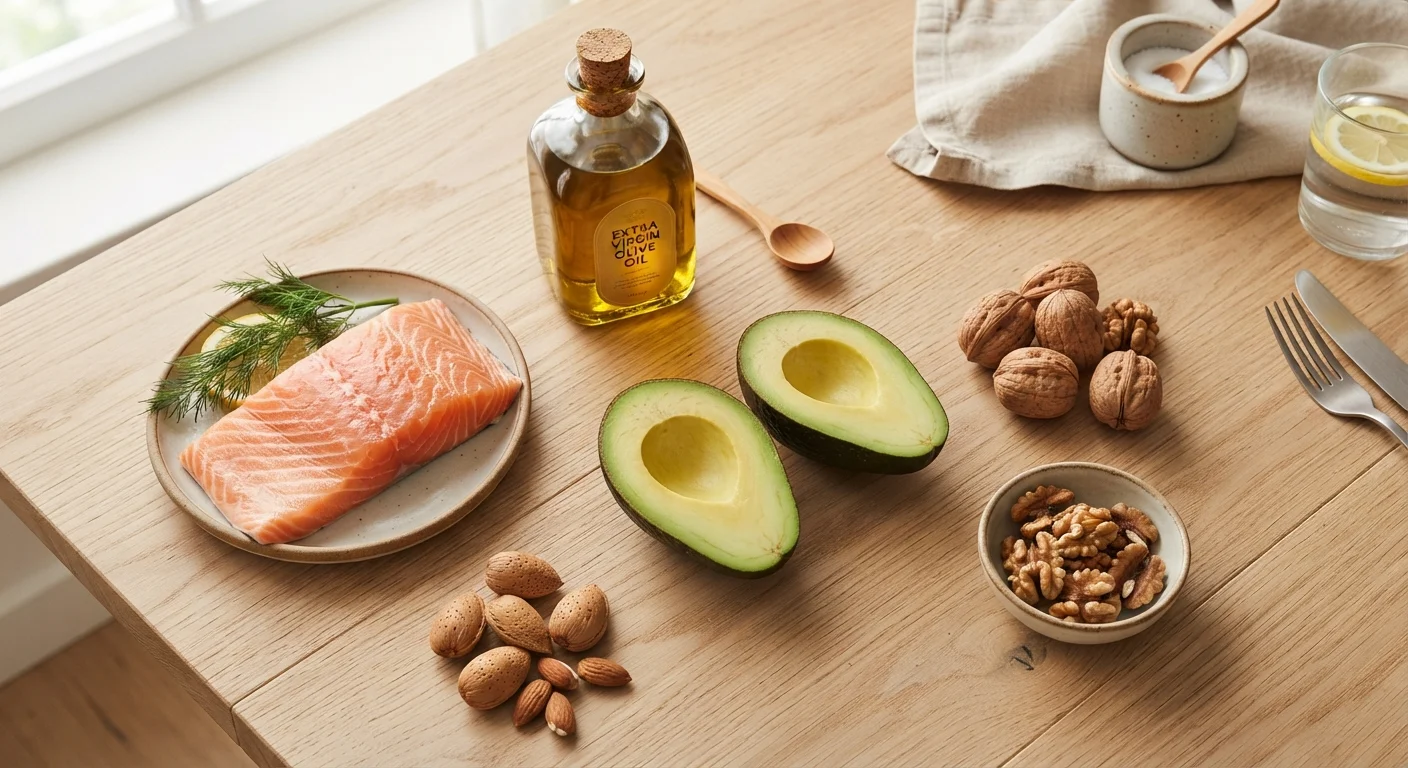
Current dietary science supports a balanced approach: prioritizing unsaturated fats from whole food sources (fatty fish, nuts, seeds, avocado, and olive oil), moderating — but not eliminating — saturated fat, and avoiding industrially produced trans fats. Total fat intake as a percentage of calories is less meaningful than the quality of fat consumed.
~60%
Brain dry weight composed of fat
Fatty acids are structural components of brain tissue, underscoring fat's role beyond energy storage.
4
Fat-soluble vitamins requiring dietary fat for absorption
Vitamins A, D, E, and K all require fat present in a meal to be properly absorbed in the digestive tract.
30–35%
Recommended daily calories from fat (USDA Dietary Guidelines)
The USDA Dietary Guidelines for Americans suggest this range for most healthy adults, with emphasis on unsaturated fat sources.
It's also worth noting that dietary fat does not exist in isolation from the rest of the diet. How fat interacts with overall eating patterns, physical activity, and individual metabolic factors shapes health outcomes far more than any single nutrient. Those managing specific conditions such as cardiovascular disease, diabetes, or elevated cholesterol should consult a qualified healthcare provider or registered dietitian before making significant changes to their dietary fat intake.
Body composition — how much muscle and fat tissue you carry — also influences how the body processes dietary fat. Learn how muscle and fat tissue differ metabolically and why that ratio matters for long-term health. Similarly, many beliefs about weight management mirror the fat myths debunked here — explore other weight management myths the evidence has already addressed.
This article is for general informational and educational purposes only and does not constitute medical or nutritional advice. Consult a qualified healthcare professional for guidance specific to your health situation.