

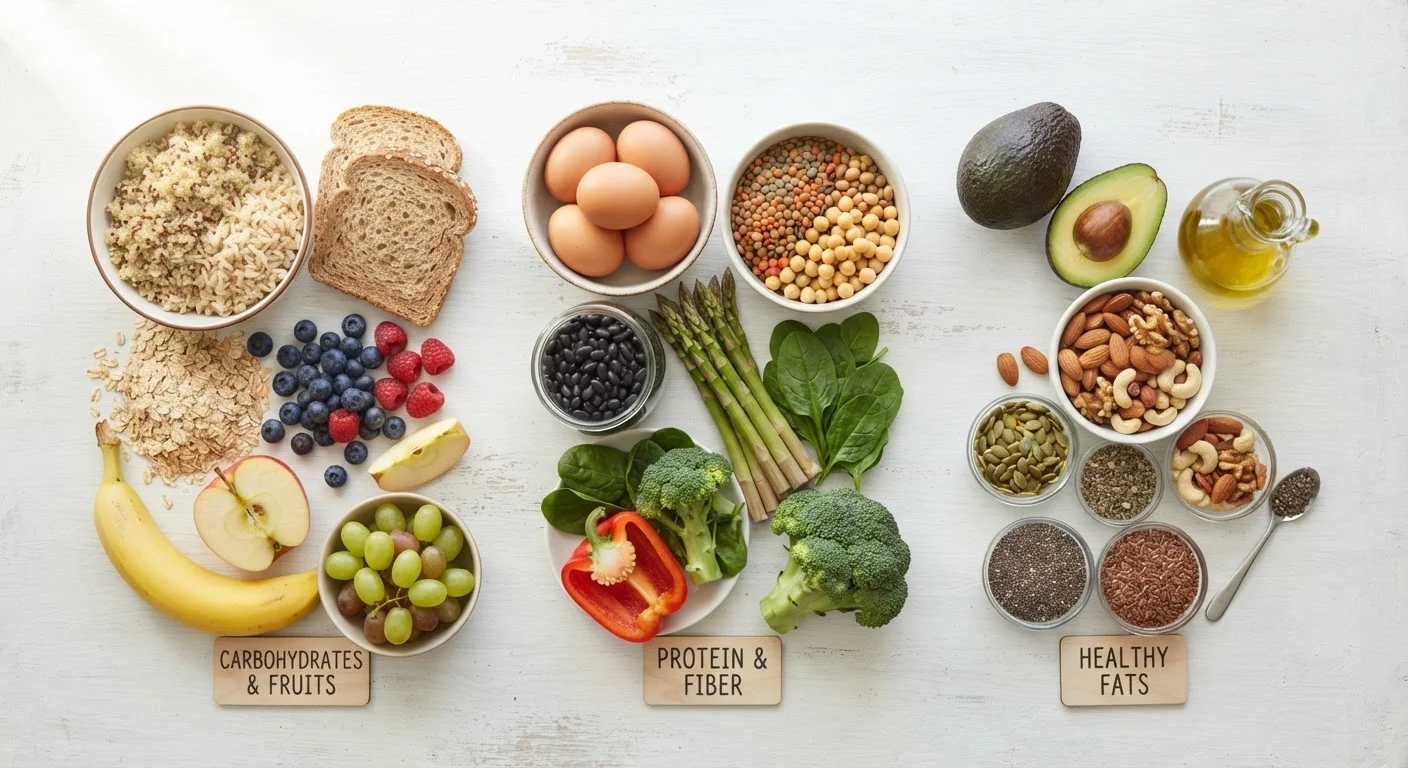
Key Takeaways
- Carbohydrates are the body's primary energy source, especially for the brain and muscles during activity.
- Proteins supply the amino acids needed to build and repair tissues and regulate essential body processes.
- Dietary fats support hormone production, vitamin absorption, and long-term energy reserves.
- All three macronutrients work together — eliminating any one of them disrupts multiple body systems.
- Food quality within each macronutrient category matters as much as quantity.
Start here
What Are Macronutrients?
Next
Carbohydrates: Your Body's Preferred Fuel
Then
Protein: Builder, Repairer, Regulator
Continue
Fats: More Than Just Energy Storage
Bring it together
How the Three Macronutrients Work Together
What Are Macronutrients?
Macronutrients are the three categories of nutrients — carbohydrates, proteins, and fats — that supply energy and serve as the raw materials for virtually every process your body carries out. The prefix 'macro' signals that these are needed in gram-level quantities daily, unlike vitamins and minerals, which are required in much smaller amounts.
Energy from food is measured in calories. Carbohydrates and proteins each yield 4 calories per gram; fats yield 9 calories per gram. But macronutrients are far more than fuel — they regulate hormones, build tissue, carry nutrients, and govern digestion. Understanding what each one does is the starting point for making sense of any nutrition guidance.
Macronutrient
A nutrient the body needs in large quantities daily. Carbohydrates, proteins, and fats are the three macronutrients, and all three provide energy measured in calories.
Glucose
A simple sugar that is the body's main immediate energy currency. Most carbohydrates are eventually broken down into glucose before cells can use them.
Glycogen
The stored form of glucose held in the liver and muscles. The body draws on glycogen reserves between meals or during physical activity when immediate glucose runs low.
Amino acids
The individual building blocks that link together to form proteins. Of the 20 amino acids, nine are 'essential,' meaning the body cannot make them and must obtain them from food.
Dietary fiber
A type of carbohydrate that the body cannot fully digest. It supports digestive regularity, contributes to fullness, and helps moderate blood sugar responses after meals.
Complete protein
A protein source that contains all nine essential amino acids in adequate amounts. Most animal foods are complete proteins; plant foods can be combined to achieve the same effect.
Unsaturated fat
A type of dietary fat found in plants and fish that is liquid at room temperature. Research generally associates higher unsaturated fat intake with favorable cardiovascular health markers.
Carbohydrates: Your Body's Preferred Fuel
Carbohydrates are the body's first-choice energy source, particularly for the brain and for muscles during moderate to intense physical activity. When you eat carbs, your digestive system breaks them down into glucose — a simple sugar that cells use directly for fuel or store in the liver and muscles as glycogen for later use.
Not all carbohydrates behave the same way. Simple carbohydrates (such as table sugar and refined grains) digest quickly and can cause rapid rises in blood glucose. Complex carbohydrates (found in whole grains, legumes, and vegetables) digest more slowly, providing steadier energy and valuable dietary fiber. Fiber supports digestive health, helps maintain comfortable blood sugar levels, and contributes to feelings of fullness.
The Dietary Guidelines for Americans recommend that carbohydrates make up the majority of daily calorie intake, with an emphasis on fiber-rich, minimally processed sources. For a deeper look at how different eating patterns distribute carbs, see how dietary patterns divide the plate.
Protein: Builder, Repairer, Regulator
Proteins are made from chains of smaller units called amino acids. Your body can synthesize some amino acids on its own, but nine — known as essential amino acids — must come from food. Dietary protein provides these building blocks for muscle tissue, enzymes, immune proteins, hormones, and cellular structures throughout the body.
Beyond structure, protein plays a regulatory role. Enzymes (which are proteins) drive chemical reactions in digestion and metabolism. Protein also contributes to satiety — it tends to be more filling per calorie than carbohydrates or fats, which can support consistent energy levels across the day.
Animal foods like meat, poultry, fish, eggs, and dairy contain all nine essential amino acids and are called complete proteins. Many plant foods are lower in one or more essential amino acids, but a varied plant-based diet can meet protein needs by combining complementary sources. If you want to understand how these numbers appear on food packaging, reading a nutrition label explains how grams of protein are calculated and reported.
Spread Protein Across Your Meals
Research suggests that muscle protein synthesis is better supported when protein intake is distributed across meals rather than concentrated in one sitting. Aiming to include a meaningful protein source at breakfast, lunch, and dinner is a simple, practical habit. Eggs, Greek yogurt, legumes, tofu, and lean meats are all versatile options.
Fats: More Than Just Energy Storage
Dietary fat has long carried an undeserved reputation as something to minimize. In reality, fat is essential. It enables the absorption of fat-soluble vitamins (A, D, E, and K), supports cell membrane integrity, cushions vital organs, and serves as the primary substrate for producing many hormones, including sex hormones.
Fats are broadly classified by their chemical structure. Unsaturated fats — found in olive oil, nuts, seeds, and fatty fish — are associated with favorable effects on cardiovascular markers in research literature. Saturated fats, found mainly in animal products and some tropical oils, are a subject of ongoing scientific discussion around cardiovascular effects. Trans fats, largely eliminated from the US food supply through regulatory action, are widely considered harmful. For a concise breakdown of these distinctions, our plain-language fat reference is a useful companion read.
How the Three Macronutrients Work Together
No macronutrient works in isolation. A meal that includes carbohydrates, protein, and fat together tends to slow overall digestion, producing a more gradual energy release than any single macronutrient eaten alone. Fat slows gastric emptying; protein blunts glucose spikes; carbohydrates spare protein from being used as fuel, allowing it to do its structural work.
This interdependence is one reason that eliminating an entire macronutrient category — whether carbs or fat — can create downstream imbalances. The body adapts, but adaptation comes with trade-offs. Why cutting an entire macronutrient group rarely works long-term explores those trade-offs in detail.
Rather than focusing on restriction, a useful frame is quality within each category: whole-grain carbohydrates over refined ones, a variety of protein sources, and a fat intake weighted toward unsaturated options. For practical strategies to put this into practice, building a balanced plate offers straightforward, evidence-informed guidance.
This article provides general nutrition information and education. It is not medical or dietary advice. Consult a qualified healthcare professional or registered dietitian for guidance tailored to your individual health needs.