

Key Takeaways
- There are eight distinct B vitamins, each with a specific physiological role beyond simply producing energy.
- No single food supplies every B vitamin in meaningful amounts — dietary variety is essential.
- Vitamin B12 is found almost exclusively in animal-sourced foods, making it the top concern for plant-based eaters.
- Older adults, pregnant individuals, heavy drinkers, and people with certain GI conditions face higher deficiency risk.
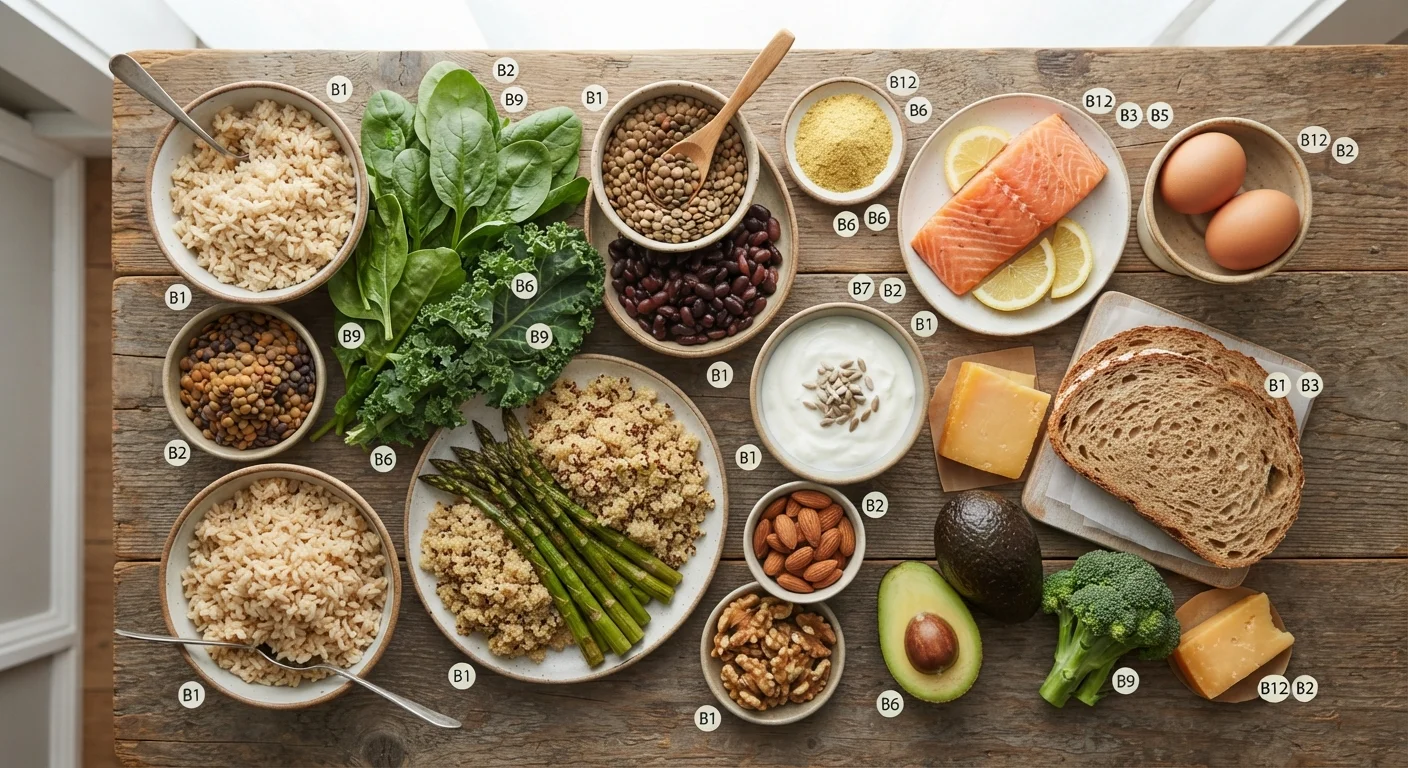
- Whole grains, legumes, eggs, and dark leafy greens collectively cover most of the B complex.
What the B Complex Actually Is
The term B complex refers to a family of eight water-soluble vitamins that share some functional overlap but are chemically distinct molecules. Because they are water-soluble, the body does not store large reserves of most of them — excess amounts are generally excreted in urine, which means a consistent dietary supply matters. For a broader look at how B vitamins fit alongside every other essential micronutrient, see our plain-language micronutrient guide.
Historically, researchers numbered the B vitamins as they were discovered, which is why the sequence skips numbers — B4, B8, B10, and others were later reclassified as non-essential or found to be duplicates. What remains are B1, B2, B3, B5, B6, B7, B9, and B12.
The Eight B Vitamins and What Each One Does
Each B vitamin plays a distinct biochemical role rather than being interchangeable:
- B1 (Thiamine): Converts carbohydrates into usable energy; critical for nerve and muscle function.
- B2 (Riboflavin): Supports cellular energy metabolism and acts as a precursor for key coenzymes (FAD and FMN).
- B3 (Niacin): Participates in hundreds of enzymatic reactions; involved in DNA repair and cell signaling.
- B5 (Pantothenic Acid): A component of coenzyme A, which is central to fatty acid synthesis and energy release.
- B6 (Pyridoxine): Required for amino acid metabolism, neurotransmitter production, and immune function.
- B7 (Biotin): Serves as a cofactor for enzymes that metabolize fats, carbohydrates, and proteins; also involved in gene expression.
- B9 (Folate): Essential for DNA synthesis and cell division; critically important before and during early pregnancy for neural tube development.
- B12 (Cobalamin): Needed for healthy nerve function, red blood cell formation, and DNA synthesis; works closely with folate.
When choosing breakfast cereals, look for ones that list individual B vitamins on the nutrition facts panel — fortification levels vary significantly between brands and can meaningfully close gaps for B1, B2, B3, and B9.
Fortified grain foods are a top contributor to B-vitamin intake in the US diet according to national nutrition surveys, making label literacy a practical skill.
Don't discard the liquid after cooking lentils or chickpeas — it retains water-soluble B vitamins like folate and thiamine that leached during cooking, and it can be used as a base for soups or sauces.
Because B vitamins dissolve easily in water, repurposing cooking liquid is one of the simplest ways to recover nutrients that would otherwise be lost.
Best Food Sources Across the Group
Meeting the full B complex through food requires variety — no single item checks every box. The table below maps the strongest dietary sources to each vitamin:
| B Vitamin | Strong Food Sources |
|---|---|
| B1 (Thiamine) | Whole grains, pork, legumes, fortified cereals |
| B2 (Riboflavin) | Dairy products, eggs, beef liver, almonds |
| B3 (Niacin) | Chicken, tuna, beef, peanuts, fortified grains |
| B5 (Pantothenic Acid) | Chicken, sunflower seeds, avocado, sweet potato |
| B6 (Pyridoxine) | Salmon, chicken, potatoes, bananas, chickpeas |
| B7 (Biotin) | Eggs (cooked), salmon, nuts, sweet potato |
| B9 (Folate) | Dark leafy greens, lentils, black-eyed peas, fortified bread |
| B12 (Cobalamin) | Beef, clams, dairy, eggs, nutritional yeast (fortified) |
A pattern built around whole grains, legumes, eggs, and a variety of vegetables provides a solid foundation. Animal proteins — particularly organ meats, fish, and dairy — add concentrated amounts of B2, B12, and B3 that are harder to match from plant sources alone.
~6%
US adults estimated B12 deficient
Research published in the American Journal of Clinical Nutrition estimates roughly 6% of adults under 60 in the US and UK are B12 deficient, rising to nearly 20% in those over 60.
400 mcg
Daily folate recommended for adults
The USDA Dietary Guidelines and NIH recommend 400 mcg of dietary folate equivalents per day for non-pregnant adults, increasing to 600 mcg during pregnancy.
~30%
Americans not meeting B1 through food alone
NHANES data indicate a meaningful share of Americans fall below estimated average requirements for thiamine, particularly among lower-income households with less dietary variety.
Who Is Most at Risk of Falling Short
Certain groups face meaningfully higher risk of B-vitamin deficiency due to diet, physiology, or health conditions:
- Plant-based and vegan eaters: B12 is found almost exclusively in animal-derived foods. People who avoid all animal products require reliable fortified foods or a supplement. Our article on micronutrient planning for plant-based diets covers this in depth.
- Older adults: Gastric acid production tends to decline with age, impairing the absorption of B12 from food. The National Institutes of Health notes this makes supplemental or fortified forms more reliably absorbed for many older adults.
- Pregnant and breastfeeding individuals: Folate (B9) needs increase substantially during pregnancy. Inadequate folate in the periconceptional period is associated with neural tube defects. Always consult a healthcare provider about supplementation needs during pregnancy.
- People with certain GI conditions: Conditions affecting the small intestine — such as Crohn's disease or celiac disease — can reduce absorption of multiple B vitamins.
- Heavy alcohol consumers: Alcohol interferes with the absorption and metabolism of thiamine (B1), folate (B9), and B6.
If you suspect a B-vitamin deficiency or fall into one of the categories above, consult a qualified healthcare professional for evaluation and personalized guidance.
Building a B-Vitamin-Rich Eating Pattern
Rather than tracking each B vitamin individually, focus on a consistent eating pattern that naturally covers the group:
- Choose whole or minimally processed grains over refined ones. Refining strips away much of the thiamine, riboflavin, niacin, and folate naturally present in grain kernels. Fortification adds some back, but whole grains supply additional fiber and nutrients.
- Eat legumes regularly. Lentils, black beans, and chickpeas are outstanding sources of folate, B6, and thiamine — and they are among the most affordable protein-rich foods available.
- Include eggs and dairy if you eat them. Eggs are a concentrated source of biotin, riboflavin, and B12. Dairy delivers riboflavin and B12 efficiently even in modest portions.
- Work in dark leafy greens several times a week. Spinach, kale, and romaine are among the richest folate sources in the plant kingdom.
- For plant-based eaters, treat B12 as non-negotiable. Fortified plant milks, nutritional yeast, and fortified cereals can help, but consistent B12 intake typically requires a supplement — discuss options with your provider.
Cooking method matters modestly: B vitamins are heat-sensitive and water-soluble, so boiling vegetables can leach some into the cooking liquid. Steaming, roasting, or using cooking water in soups helps retain more.
This article is for general informational and educational purposes only and is not a substitute for professional medical or dietitian advice.