

| Vitamin C — Top Food Source | Red bell pepper (~150 mg per medium pepper) (USDA FoodData Central) |
| Vitamin D — Top Food Source | Cooked salmon (~570–800 IU per 3 oz serving) (NIH Office of Dietary Supplements) |
| Zinc — Top Food Source | Oysters (~74 mg per 3 oz serving, cooked) (USDA FoodData Central) |
| Selenium — Top Food Source | Brazil nuts (~68–91 mcg per nut) (NIH Office of Dietary Supplements) |
| Immune Tissue in the Gut | ~70% of immune cells located in or near gut lining (Widely cited estimate in immunology literature) |
| Vitamin A — Dual Sources | Preformed (animal foods) and provitamin A (plant foods) (NIH Office of Dietary Supplements) |
Why Specific Nutrients Matter for Immunity
The immune system doesn't run on a single vitamin — it relies on a coordinated network of micronutrients that support barrier defenses, white blood cell production, inflammation regulation, and antioxidant activity. Deficiencies in even one key nutrient can blunt immune responses, yet most Americans can meet their needs through food rather than supplements.
This reference guide covers the nutrients with the strongest evidence for immune relevance, where to find them in everyday foods, and what the research generally says about their roles. It is general health information, not a substitute for personalized guidance from a qualified healthcare professional.
For a broader look at everyday habits that reinforce immune resilience beyond diet, see lifestyle habits that support a resilient immune system year-round.
| Vitamin C — Top Food Source | Red bell pepper (~150 mg per medium pepper) (USDA FoodData Central) |
| Vitamin D — Top Food Source | Cooked salmon (~570–800 IU per 3 oz serving) (NIH Office of Dietary Supplements) |
| Zinc — Top Food Source | Oysters (~74 mg per 3 oz serving, cooked) (USDA FoodData Central) |
| Selenium — Top Food Source | Brazil nuts (~68–91 mcg per nut) (NIH Office of Dietary Supplements) |
| Immune Tissue in the Gut | ~70% of immune cells located in or near gut lining (Widely cited estimate in immunology literature) |
| Vitamin A — Dual Sources | Preformed (animal foods) and provitamin A (plant foods) (NIH Office of Dietary Supplements) |
Key Immune-Supporting Nutrients and Their Food Sources
The following nutrients have well-documented roles in immune function according to established nutritional science. Food amounts below are general reference values, not personal prescriptions.
Vitamin C
An antioxidant that supports the skin's barrier function and stimulates the production and activity of white blood cells. Top food sources include bell peppers (especially red and yellow), kiwi, strawberries, broccoli, Brussels sprouts, and citrus fruits such as oranges and grapefruit. Many people are surprised to learn that a single medium red bell pepper delivers more vitamin C than a typical orange.
Vitamin D
Receptors for vitamin D appear on nearly every immune cell type, and adequate levels are associated with appropriate inflammatory responses. Because very few foods contain meaningful amounts, fatty fish (salmon, sardines, mackerel), egg yolks, and fortified foods such as dairy milk and some plant-based milks are the primary dietary sources. Sensible sun exposure also contributes, though this varies widely by latitude and skin tone.
Zinc
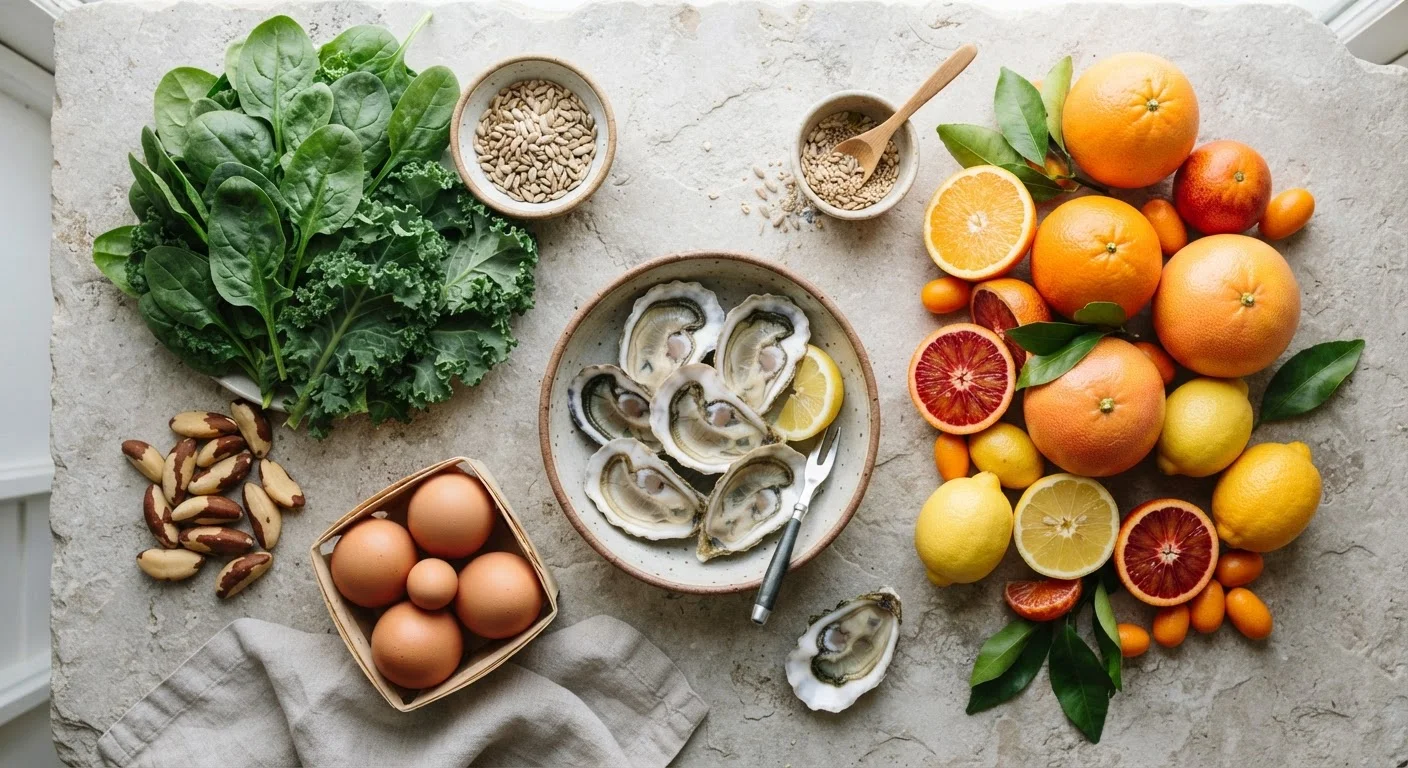
Zinc is essential for the development and communication of immune cells and plays a role in inflammatory response. Oysters are the most concentrated food source by far. Other reliable sources include red meat, poultry, pumpkin seeds, hemp seeds, legumes such as chickpeas and lentils, and fortified cereals. Zinc and other trace minerals are needed only in small quantities, but their absence creates measurable gaps in immune defense.
Selenium
This trace mineral supports antioxidant enzyme systems and helps regulate inflammation. Brazil nuts are exceptionally rich — just one or two provide a full day's reference intake. Seafood (tuna, shrimp, halibut), eggs, and whole grains are more moderate but consistent sources.
Vitamin A
Vitamin A maintains the integrity of mucosal surfaces — the first-line physical barriers in the respiratory and digestive tracts. It exists in two dietary forms: preformed vitamin A (retinol) found in liver, dairy, and eggs; and provitamin A carotenoids such as beta-carotene found in orange and yellow vegetables (sweet potato, carrots, butternut squash) and dark leafy greens.
Folate and Vitamin B6
Both B vitamins are required for the production of new immune cells. Folate is plentiful in leafy greens, legumes, and fortified grains. Vitamin B6 is found in poultry, fish, potatoes, bananas, and chickpeas. A well-varied diet rarely leaves either in short supply. See the full micronutrient map for details on every major vitamin and mineral.
Putting It Into Practice
Immune-supporting nutrition doesn't require a complex regimen. A diet rich in colorful vegetables and fruits, legumes, nuts, seeds, whole grains, and quality protein sources provides most of the nutrients above in their naturally occurring, food-matrix form — which research consistently associates with better absorption and health outcomes than isolated supplements.
If you're working on improving dietary patterns incrementally, building a gut-friendly eating pattern without overhauling your diet offers practical, evidence-informed strategies. Gut health and immune health are closely linked — approximately 70% of immune tissue resides in or near the gut lining.
Certain groups — including older adults, pregnant individuals, people with malabsorption conditions, and those following highly restrictive diets — may have elevated needs or absorption challenges that a food-first approach alone cannot fully address. Those individuals should consult a registered dietitian or physician before making significant changes.
This article is for informational purposes only and is not a substitute for professional medical or nutritional advice. Always consult a qualified healthcare provider for guidance specific to your health situation.