

Key Takeaways
- Increased intestinal permeability is a measurable biological phenomenon recognized by mainstream medicine.
- "Leaky gut syndrome" as a stand-alone clinical diagnosis is not universally accepted by gastroenterologists.
- Diet, stress, alcohol, and certain medications are known to influence gut barrier function.
- No single supplement or protocol has been proven to reliably 'heal' a leaky gut.
- If you have persistent digestive symptoms, a qualified healthcare provider is the right starting point.
Intestinal permeability is scientifically measurable
Researchers use validated tools such as the lactulose-mannitol ratio test to quantify how permeable the gut barrier is. This gives the concept a legitimate empirical foundation, unlike many wellness-industry claims.
Linked to recognized, diagnosable GI conditions
Increased permeability is consistently documented in people with Crohn's disease, celiac disease, and IBS — conditions with established diagnostic criteria and treatment pathways.
Diet quality demonstrably affects gut lining health
Research supports that dietary fiber, fermented foods, and reduced ultra-processed food intake are associated with a healthier gut microbiome and improved mucosal barrier markers.
Growing body of serious academic research
Gastroenterology and immunology journals publish peer-reviewed studies on tight junction proteins and barrier function regularly, signaling that this is a legitimate frontier of medical science.
Reducing alcohol intake benefits gut barrier measurably
Clinical studies have shown that reducing or eliminating alcohol consumption is associated with improvements in intestinal permeability markers, offering a practical, evidence-backed intervention.
"Leaky gut syndrome" lacks a universal clinical definition
Most major medical organizations and gastroenterology bodies do not recognize "leaky gut syndrome" as a stand-alone diagnosis. Without a standardized definition, it becomes difficult to study, diagnose, or treat consistently.
Causality is often unclear or reversed
Increased permeability is frequently observed alongside other conditions, but it is often uncertain whether permeability is a cause, a consequence, or simply a co-occurring feature — a critical distinction for treatment.
Supplement claims far exceed available evidence
Products marketed to "seal" or "heal" the gut — including certain collagen powders, glutamine supplements, and herbal blends — generally lack robust, randomized clinical trial evidence supporting those specific claims.
Attribution of diverse symptoms is speculative
Fatigue, brain fog, skin conditions, and mood disorders are frequently attributed to leaky gut in wellness communities, but the evidence connecting gut permeability to these outcomes in otherwise healthy individuals is preliminary at best.
Risk of delaying appropriate medical evaluation
Framing a wide array of symptoms as "leaky gut" may lead some individuals to self-treat rather than seek evaluation for conditions — such as thyroid disorders, celiac disease, or IBD — that require proper diagnosis and treatment.
Our Verdict
Intestinal permeability is a legitimate area of active scientific inquiry with real implications for digestive and immune health. However, "leaky gut syndrome" used as a broad explanation for wide-ranging symptoms goes beyond what current evidence firmly supports. Lifestyle factors such as diet quality, stress management, and limiting alcohol do appear to benefit gut barrier health and are reasonable preventive steps.
This article is most useful for readers experiencing unexplained digestive symptoms who want a grounded, evidence-based overview before speaking with a gastroenterologist or primary care provider.
What Is Intestinal Permeability?
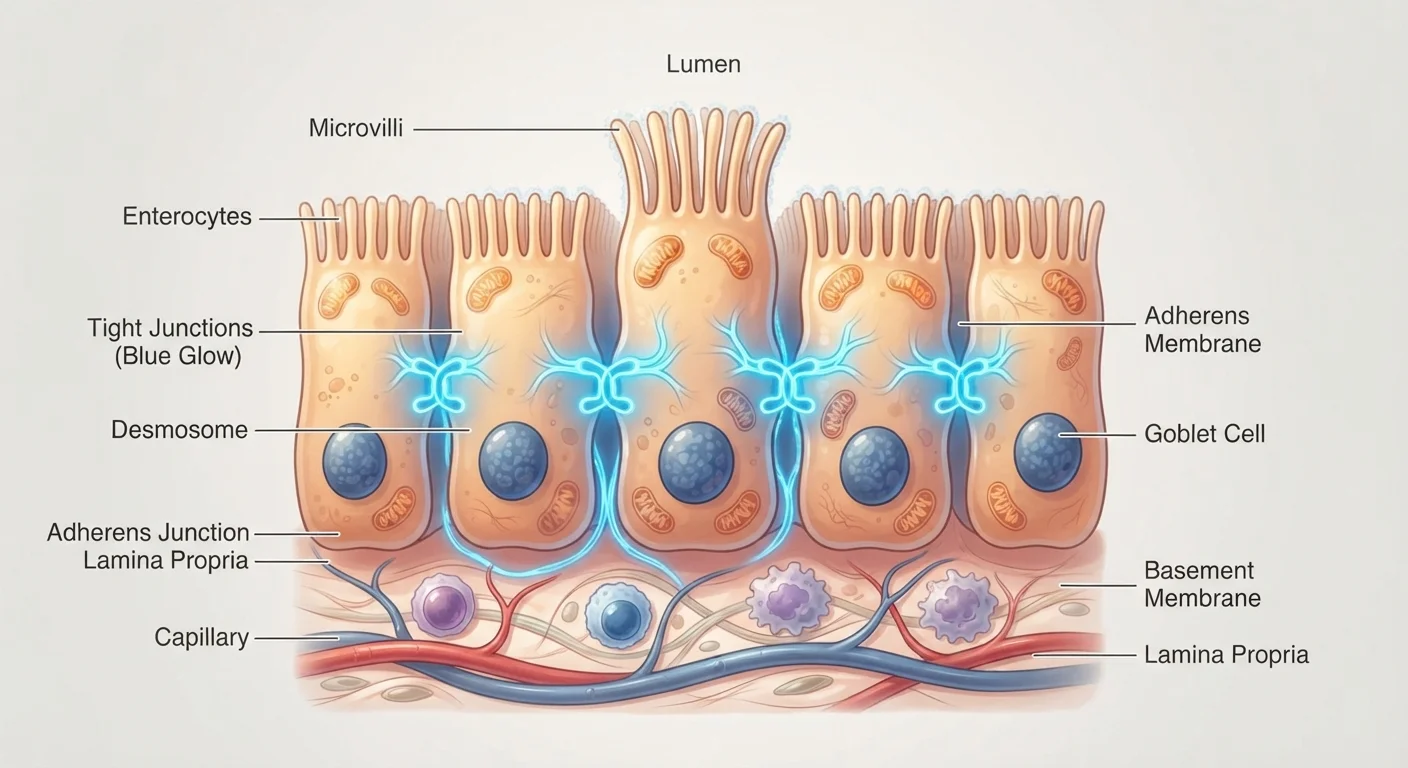
The lining of your small intestine is a sophisticated barrier — just one cell layer thick — held together by proteins called tight junctions. These junctions regulate what passes from the gut into the bloodstream, allowing nutrients through while keeping larger molecules, bacteria, and toxins out.
When this barrier becomes more permeable than normal, substances that shouldn't cross it readily may do so. Researchers call this increased intestinal permeability, and it is a measurable, reproducible phenomenon studied in peer-reviewed gastroenterology research. It is associated with several well-defined conditions, including Crohn's disease, celiac disease, and irritable bowel syndrome (IBS).
The popular term "leaky gut syndrome" borrows from this science but applies it far more broadly — often as an explanation for fatigue, skin problems, brain fog, and autoimmune conditions. That broader application is where the scientific community is significantly less aligned. For a deeper look at how gut barrier disruption connects to whole-body inflammation, see why chronic inflammation often starts in the gut.
Pros: What the Evidence Does Support
There are genuinely well-supported reasons to pay attention to gut barrier health, even if the broader "syndrome" framing remains contested.
Intestinal permeability is scientifically measurable
Researchers use validated tools such as the lactulose-mannitol ratio test to quantify how permeable the gut barrier is. This gives the concept a legitimate empirical foundation, unlike many wellness-industry claims.
Linked to recognized, diagnosable GI conditions
Increased permeability is consistently documented in people with Crohn's disease, celiac disease, and IBS — conditions with established diagnostic criteria and treatment pathways.
Diet quality demonstrably affects gut lining health
Research supports that dietary fiber, fermented foods, and reduced ultra-processed food intake are associated with a healthier gut microbiome and improved mucosal barrier markers.
Growing body of serious academic research
Gastroenterology and immunology journals publish peer-reviewed studies on tight junction proteins and barrier function regularly, signaling that this is a legitimate frontier of medical science.
Reducing alcohol intake benefits gut barrier measurably
Clinical studies have shown that reducing or eliminating alcohol consumption is associated with improvements in intestinal permeability markers, offering a practical, evidence-backed intervention.
Importantly, many of the lifestyle habits that appear to support gut barrier integrity — eating fiber-rich foods, limiting alcohol, managing chronic stress — carry independent health benefits regardless of their effect on intestinal permeability specifically.
Cons: Where the Evidence Falls Short
Despite real science underlying intestinal permeability, several claims associated with "leaky gut syndrome" outpace what research currently demonstrates.
"Leaky gut syndrome" lacks a universal clinical definition
Most major medical organizations and gastroenterology bodies do not recognize "leaky gut syndrome" as a stand-alone diagnosis. Without a standardized definition, it becomes difficult to study, diagnose, or treat consistently.
Causality is often unclear or reversed
Increased permeability is frequently observed alongside other conditions, but it is often uncertain whether permeability is a cause, a consequence, or simply a co-occurring feature — a critical distinction for treatment.
Supplement claims far exceed available evidence
Products marketed to "seal" or "heal" the gut — including certain collagen powders, glutamine supplements, and herbal blends — generally lack robust, randomized clinical trial evidence supporting those specific claims.
Attribution of diverse symptoms is speculative
Fatigue, brain fog, skin conditions, and mood disorders are frequently attributed to leaky gut in wellness communities, but the evidence connecting gut permeability to these outcomes in otherwise healthy individuals is preliminary at best.
Risk of delaying appropriate medical evaluation
Framing a wide array of symptoms as "leaky gut" may lead some individuals to self-treat rather than seek evaluation for conditions — such as thyroid disorders, celiac disease, or IBD — that require proper diagnosis and treatment.
Emerging Research vs. Established Consensus
Intestinal permeability research is active and genuinely interesting, but much of it is conducted in animal models or small human trials. Results from early-stage research do not automatically translate into proven clinical treatments. When evaluating claims about leaky gut — especially those tied to products — check whether the supporting evidence comes from peer-reviewed human clinical trials rather than animal studies, test-tube experiments, or anecdotal reports.
It is worth distinguishing between emerging research and established medical consensus. Increased intestinal permeability is studied seriously in academic medicine, but many supplement and wellness-industry claims about diagnosing or curing "leaky gut" are not supported by that same research base. For a broader look at where gut health myths diverge from evidence, see common gut health myths that persist despite the evidence.
What Lifestyle Factors Actually Influence Gut Barrier Function?
Research does identify several modifiable factors that influence the integrity of the intestinal barrier:
- Diet: High intake of ultra-processed foods and emulsifiers has been associated in some studies with disrupted tight junction function. Conversely, dietary fiber supports the mucus layer that protects the gut lining.
- Alcohol: Even moderate-to-heavy alcohol consumption is linked to measurable increases in gut permeability in human studies.
- NSAIDs: Non-steroidal anti-inflammatory drugs like ibuprofen are well-documented to irritate the gut lining with regular use.
- Chronic stress: Psychological stress affects gut motility and may influence barrier function through the gut-brain axis.
- Sleep: Emerging research suggests poor sleep quality may negatively affect gut microbiome composition, which in turn can influence the barrier.
~20%
Adults with IBS in the U.S.
The American College of Gastroenterology estimates roughly 10–20% of American adults experience IBS symptoms, a condition in which altered gut permeability has been documented in research settings.
3x
Increased permeability risk with heavy alcohol use
Research published in gastroenterology literature indicates that chronic heavy alcohol consumption is associated with significantly elevated intestinal permeability markers compared to non-drinkers.
None of these factors warrants self-diagnosis or self-prescribed supplement regimens. Speak with a healthcare provider if you have concerns about your digestive health.
This article is for general informational and educational purposes only and does not constitute medical advice. Always consult a qualified healthcare professional about any symptoms, health conditions, or questions regarding your individual care.