

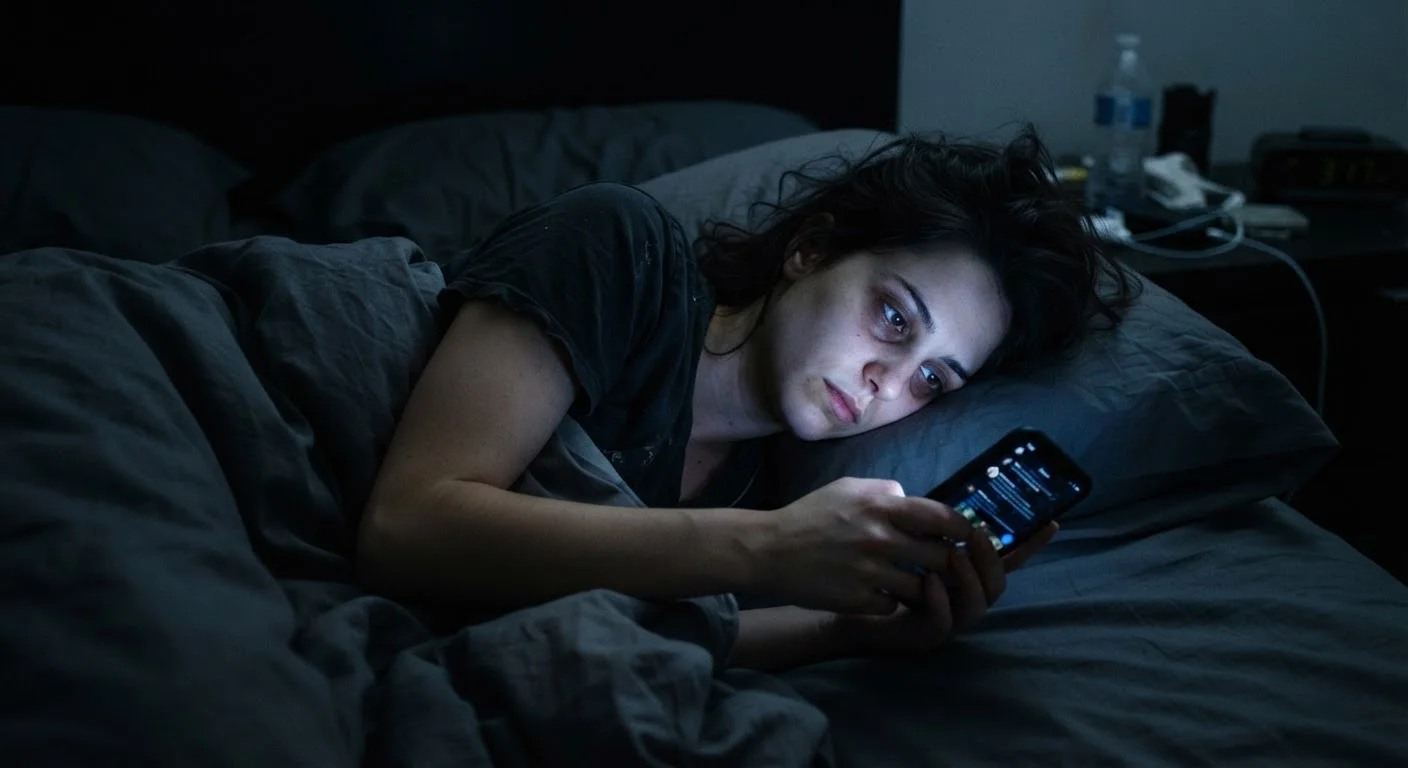
Key Takeaways
- Blue light suppresses melatonin, but mental stimulation from content is an equally significant sleep disruptor.
- Scrolling through emotionally charged content near bedtime elevates alertness and can delay sleep onset.
- Simple, consistent habit changes — like a screen-free wind-down window — can measurably improve sleep quality.
- Not all evening screen use carries equal risk; the type of content and device settings both matter.
More Than Blue Light: The Full Picture of Screen-Driven Sleep Disruption
Blue light has become the poster child for screen-related sleep problems, and the science behind it is real. Specialized retinal cells called intrinsically photosensitive retinal ganglion cells (ipRGCs) are especially sensitive to short-wavelength blue light emitted by phones, tablets, and monitors. When these cells detect blue light in the evening, they signal the brain's suprachiasmatic nucleus — the master circadian clock — to suppress melatonin production, the hormone that cues the body to prepare for sleep. For a deeper look at how this pathway works, see how your eyes signal the brain to wind down.
However, blue light is only one layer of the problem. Research increasingly points to cognitive and emotional arousal as equally disruptive forces. Engaging content — social media feeds, news cycles, fast-paced video — activates the brain's reward and stress circuits, elevating cortisol and keeping the nervous system in a state of readiness that is incompatible with sleep. This is a distinction worth understanding before defaulting solely to blue light filters as a fix.
Common Mistakes That Amplify the Problem
Even readers who are broadly aware of screen-sleep connections tend to make specific, avoidable errors that compound the disruption. The following mistakes are among the most common — and the most consequential.
Using screens in bed until the moment of sleep — or falling asleep with a device still on.
Why it happens: Bed has become a default leisure space for many people, and the habit of unwinding with a phone or tablet feels natural and harmless.
Relying exclusively on blue light filters ("night mode") as a complete solution.
Why it happens: Blue light is widely discussed, so readers reasonably assume that filtering it resolves the problem entirely.
Checking news, social media, or work email in the final hour before bed.
Why it happens: Anxiety about missing information or falling behind at work drives compulsive checking, particularly as notifications accumulate throughout the evening.
Keeping the bedroom TV on as ambient background noise to fall asleep.
Why it happens: Many people find sound and light comforting, and television feels like a passive, low-effort choice compared to active scrolling.
Ignoring the role of content type and treating all screen time as equivalent.
Why it happens: The conversation about screens and sleep focuses heavily on duration, making it easy to overlook that emotionally intense or interactive content is far more disruptive than calm, passive material.
For a balanced assessment of which risks are genuinely evidence-backed versus overstated, sorting the real risks from the overstated ones provides useful context.
Building Sustainable Habits for a Screen-Friendly Wind-Down
Behavioral change tends to stick when it is specific, realistic, and anchored to existing routines. Rather than prescribing an all-or-nothing digital detox, the goal is a structured wind-down window — typically 30 to 60 minutes before your target bedtime — during which screen engagement shifts in both intensity and content.
~90 min
Melatonin onset delay from evening blue light
Research published in sleep science literature suggests bright screen light in the evening can delay melatonin onset by roughly 90 minutes compared to dim-light conditions.
71%
Adults who use a device in the hour before bed
According to National Sleep Foundation survey data, a large majority of American adults report using an electronic device within the hour before they try to fall asleep.
Practical strategies supported by sleep science include:
- Enable night mode and reduce screen brightness after sunset — this attenuates blue light exposure without requiring device abstinence.
- Choose passive, low-stimulation content if screens are used near bedtime: calm documentary footage or slow-paced reading apps produce less cognitive arousal than social feeds or competitive gaming.
- Charge devices outside the bedroom to remove the temptation of late-night checking and reduce light intrusion during sleep.
- Prioritize daytime light exposure — robust morning light helps anchor your circadian rhythm, making it more resilient to evening light disruption. How daytime light exposure shapes nighttime sleep explains the mechanism in detail.
Consistency matters more than perfection. A reliable wind-down routine signals to the brain that sleep is approaching, reinforcing the natural drop in core body temperature and alertness that precedes healthy sleep onset.
This article is for general informational and educational purposes only and does not constitute medical advice. If you have persistent sleep difficulties or concerns about a sleep disorder, please consult a qualified healthcare professional.