
Sleep Chronotypes: What Being a Morning Person or Night Owl Actually Means Biologically

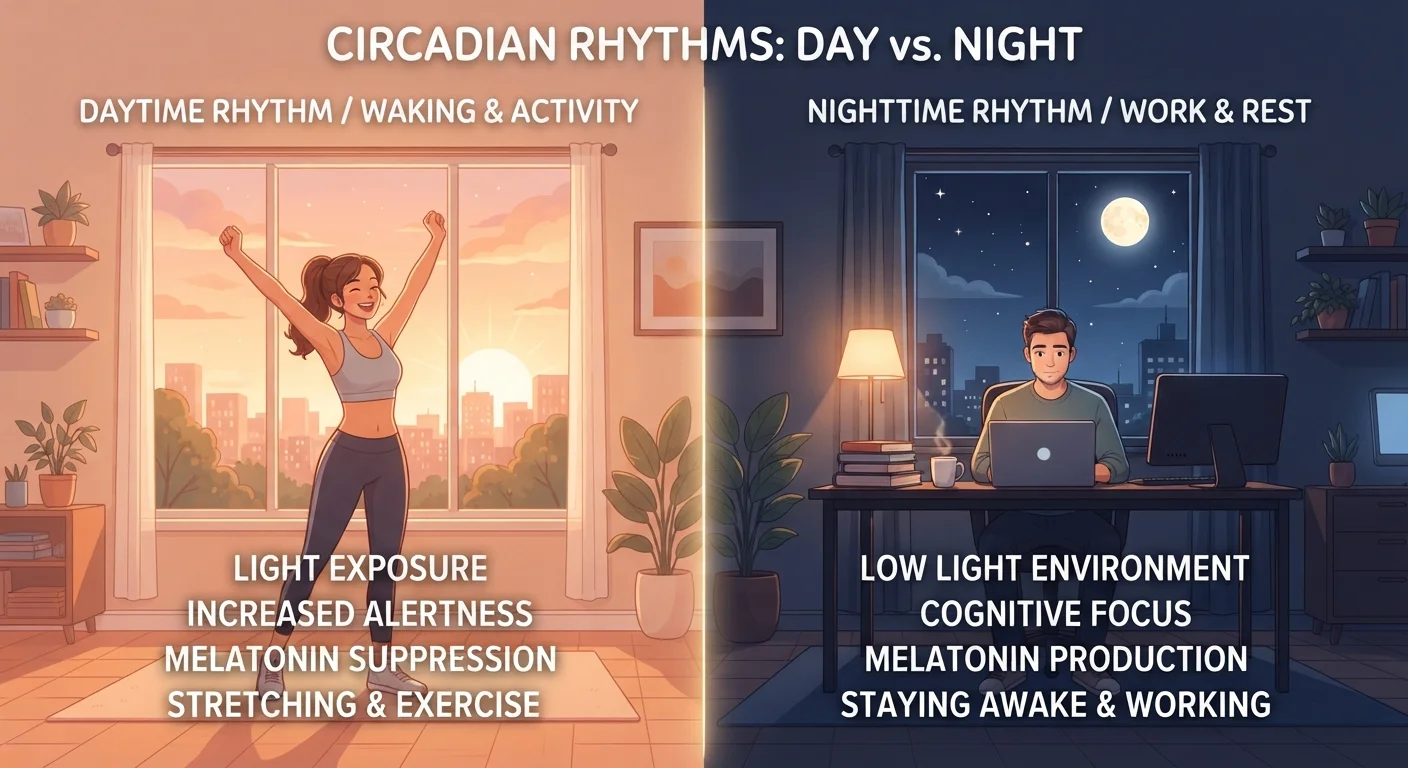
Key Takeaways
- Chronotypes are biologically determined, not purely a matter of discipline or personal preference.
- Genetics account for a meaningful portion of your chronotype, though environment and age also play significant roles.
- Most people fall somewhere on a spectrum between extreme morning and extreme evening types.
- Chronotype shifts across a lifetime — adolescents tend toward evening types, while older adults trend earlier.
- Forcing yourself to consistently work against your chronotype can have measurable effects on health and performance.
Sleep Chronotype
A sleep chronotype is your body's natural, biologically driven preference for when you sleep and wake. It determines whether you feel most alert and energetic in the morning, the evening, or somewhere in between. Chronotypes aren't simply habits or lifestyle choices — they reflect genuine differences in how your internal body clock is timed.
Chronotypes are partly determined by variations in clock genes such as PER3 and CLOCK, which influence the timing of your circadian rhythm — the roughly 24-hour biological cycle regulating sleep, hormone release, and core body temperature.
The Biology Behind Your Sleep Preference
If you've ever wondered why some people leap out of bed at 5 a.m. feeling genuinely refreshed while others hit their stride after 10 p.m., the answer lies in your circadian biology — not your work ethic. Understanding how circadian rhythms work is the foundation for understanding chronotypes.
At the core of your chronotype is the suprachiasmatic nucleus (SCN), a small region in the hypothalamus that acts as the brain's master clock. The SCN coordinates biological processes — including the release of melatonin, fluctuations in core body temperature, and cortisol peaks — across a roughly 24-hour cycle. What differs between a morning lark and a night owl is when within that 24-hour cycle these events are timed.
In evening types, melatonin rises later in the evening, body temperature drops later, and the drive to sleep is delayed compared to morning types. These aren't imaginary differences — they're measurable in the lab, and they explain why forcing an evening type to perform at 7 a.m. is physiologically comparable to asking a morning type to perform at 3 a.m.
351
Genetic loci linked to morning preference
A 2019 genome-wide association study published in Nature Communications identified 351 genetic loci associated with being a morning person, underscoring how polygenic chronotype is.
~50%
Chronotype variance explained by genetics
Twin study research estimates that roughly half of individual differences in chronotype are attributable to genetic factors, with environment accounting for the remainder.
2 hours
Typical social jetlag gap in evening types
Research by chronobiologist Till Roenneberg found that evening chronotypes commonly experience a discrepancy of around two hours between their biological and social sleep schedules.
The Genetic and Environmental Roots of Chronotype
Twin studies suggest that genetics account for roughly 50% of the variance in chronotype. Researchers have identified variants in circadian clock genes — including PER1, PER2, PER3, and CLOCK — that correlate with morning or evening preference. A landmark genome-wide association study published in Nature Communications in 2019 identified 351 genetic loci associated with morning-preference, demonstrating just how polygenic (influenced by many genes) chronotype truly is.
Yet biology isn't destiny. Environmental factors — particularly light exposure — play a powerful modifying role. Natural light in the morning advances the circadian clock (nudging you earlier), while artificial light in the evening delays it. Geographic latitude, seasonal changes in daylight, and even altitude can influence when your clock runs. Social schedules, work hours, and meal timing add another layer of pressure on top of your biological baseline.
This is why chronotype is best understood as a trait with a strong biological foundation that is further shaped — but rarely fully overridden — by the environment you live in.
How Chronotype Shifts Across Your Life
One of the most well-documented features of chronotype is its systematic change across the lifespan. Young children are typically morning-oriented. During puberty, the circadian clock undergoes a marked shift toward eveningness — a biological reality that has informed growing calls among sleep researchers for later school start times. Evening preference typically peaks in the late teens to early twenties before gradually shifting earlier through adulthood.
By middle age, many people have migrated back toward intermediate or even morning preferences. In older adults, strong morning chronotypes are common, partly because circadian amplitude (the strength of the daily rhythm) tends to decrease with age, making the clock more sensitive to morning light cues. Recognizing these shifts matters practically: what felt like a natural schedule at 20 may genuinely conflict with your biology at 60.
For a deeper look at how morning schedule alignment plays out in practice, see early riser vs. natural wake time and what the evidence says about forcing early rises against your chronotype.
Social Jetlag: When Your Clock and Your Calendar Clash
Most working Americans operate on schedules set by social and economic demands, not their biology. When those demands systematically conflict with a person's chronotype — particularly for evening types who must be functional early — the result is a phenomenon researchers call social jetlag. The term, coined by chronobiologist Till Roenneberg, describes the discrepancy between your biological sleep timing on free days versus work days.
The effects of chronic social jetlag extend beyond tiredness. Research has linked it to elevated markers of metabolic risk, higher rates of depressive symptoms, and impaired cognitive performance. Importantly, the problem is not the evening chronotype itself — it's the persistent mismatch between that chronotype and external demands.
What chronotypes mean for your overall health is an important complement to this foundational science, covering how chronotype interacts with daily performance across mood, cognition, and physical wellness. And if you're curious about the emotional dimension, research on chronotypes and mental health explores what is known — and still uncertain — about evening preference and mood.
This article is for informational purposes only and does not constitute medical advice. If you have concerns about your sleep patterns or health, please consult a qualified healthcare professional.