

Key Takeaways
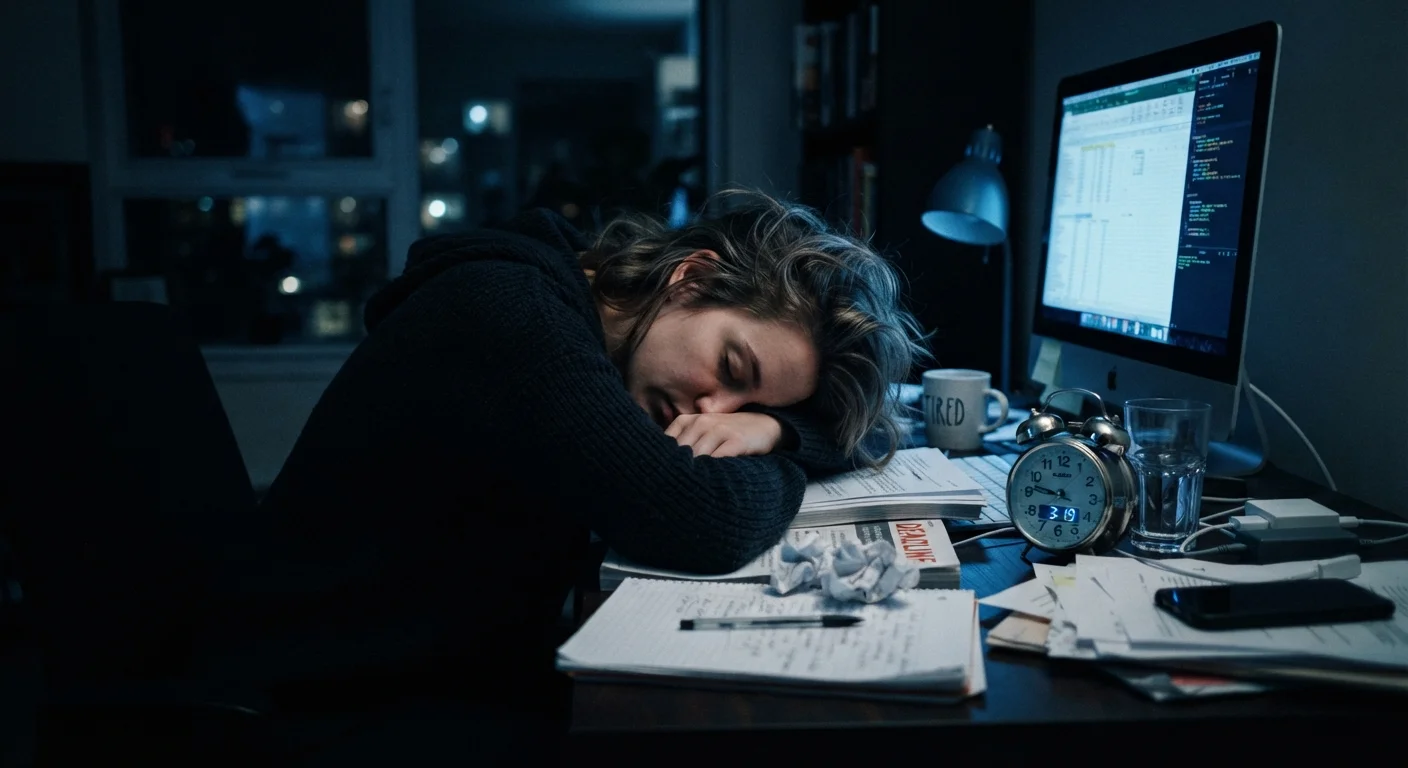
- Sleep debt accumulates when you consistently sleep less than your individual biological need.
- Short-term sleep debt can be partially recovered, but chronic deprivation has longer-lasting consequences.
- You cannot fully compensate for weeks of poor sleep with a single weekend of extra rest.
- Feeling less tired after sleep restriction does not mean your brain is performing normally.
- Consistent nightly sleep is more protective than periodic recovery sleep.
What Sleep Debt Actually Means
Sleep debt refers to the cumulative shortfall between the amount of sleep your body requires and the amount you actually get. If your biological need is eight hours and you routinely sleep six, you accrue a two-hour deficit each night — compounding over days and weeks into a measurable burden on your brain and body.
The concept is grounded in real physiology. Sleep pressure — driven by the buildup of adenosine, a chemical byproduct of neural activity — increases the longer you stay awake. When sleep debt accumulates, this pressure isn't fully discharged, and the consequences show up in reduced attention, slower reaction time, impaired memory consolidation, and altered mood regulation. For a deeper look at how missed sleep compounds over time, see how sleep debt accumulates and whether you can pay it back.
Understanding sleep debt also means understanding individual variation. Most adults need between seven and nine hours per night, but that range isn't universal. Genetics, age, activity level, and health status all shape your personal sleep requirement — which means comparing your hours to a neighbor's isn't a reliable benchmark.
Common Myths About Sleep Debt — Corrected
Despite how widespread the term has become, sleep debt is frequently misunderstood. Several persistent myths lead people to underestimate the harm of chronic short sleep or overestimate their ability to recover from it. The myth-fact pairs below address the most consequential misconceptions, drawing on current sleep science research.
Myth
Your body adapts to sleeping less, so you eventually stop feeling the effects.
Fact
People adapt to feeling less sleepy, but their cognitive performance continues to decline with chronic short sleep.
Research using controlled sleep restriction protocols shows that after several days of sleeping six hours or fewer, participants rated their sleepiness as manageable — yet their performance on sustained attention tasks kept deteriorating. The brain becomes accustomed to operating in a degraded state and loses the ability to accurately gauge its own impairment. This is sometimes called sleepiness blindness, and it's a core reason chronic sleep restriction is so hazardous.
Myth
You can fully repay weeks of sleep debt by sleeping in over a single weekend.
Fact
A weekend of extended sleep reduces acute sleepiness but does not fully restore cognitive function lost to chronic deprivation.
Some recovery does occur with extended sleep opportunity, and it is genuinely beneficial. However, neuroimaging and performance studies suggest that the damage to sustained attention, working memory, and emotional regulation from weeks of insufficient sleep is not reversed in 48 hours. One study published in Current Biology found that metabolic disruptions associated with chronic short sleep persisted even after recovery sleep, indicating deeper systemic effects beyond simple fatigue. For more on weekend sleep catch-up myths, the evidence is worth reviewing carefully.
Myth
Only extreme sleep deprivation — like pulling an all-nighter — causes real harm.
Fact
Mild but chronic sleep restriction, such as consistently getting six hours instead of eight, accumulates significant cognitive and health costs.
Dramatic total sleep deprivation is easier to recognize and take seriously. But research from the University of Pennsylvania's sleep laboratory demonstrated that subjects sleeping six hours per night for two weeks performed as poorly on cognitive tasks as subjects kept awake for 24 hours straight — while feeling only mildly sleepy. The gradual nature of mild restriction makes it more insidious because the impairment builds without triggering the obvious warning signals that a single all-nighter would. Short sleep research outcomes consistently point in the same direction.
Myth
If you don't feel tired, you don't have sleep debt.
Fact
Subjective sleepiness is an unreliable measure of actual cognitive impairment caused by sleep debt.
The relationship between how tired you feel and how impaired your brain actually is becomes increasingly decoupled as sleep debt grows. People who are chronically sleep-deprived often report near-normal alertness while objective measures — reaction time, error rates, memory recall — show marked deficits. Relying on perceived energy as your only gauge of sufficient rest is one of the most common and consequential errors in everyday sleep management. Sleep tracking tools may help identify patterns you wouldn't notice subjectively, though they have their own limitations.
Myth
Napping can fully compensate for lost nighttime sleep.
Fact
Naps can reduce acute sleepiness and improve short-term alertness, but they do not replicate the restorative architecture of full nighttime sleep.
A well-timed nap — typically 10 to 20 minutes, or a longer 90-minute cycle — offers real benefits: improved alertness, better mood, and modest cognitive gains. However, nighttime sleep cycles through slow-wave and REM stages in patterns that a brief nap cannot reproduce. Slow-wave sleep in particular is critical for physical restoration and memory consolidation. Naps are a useful tool, not a substitute, and they work best as a supplement to — not a replacement for — consistent overnight sleep. Individuals with certain conditions, including chronic insomnia, may find that daytime napping worsens their ability to fall asleep at night; consulting a healthcare provider is advisable in those situations.
For a broader review of sleep misconceptions that affect everyday Americans, see sleep myths that keep Americans up at night.
The Real Limits of Recovery Sleep
Recovery sleep — sleeping more after a period of deprivation — does produce measurable benefits. Subjective sleepiness decreases, some cognitive functions partially restore, and inflammatory markers can improve. But research consistently shows the recovery is incomplete, particularly after chronic deprivation lasting weeks or months.
Studies using neurobehavioral testing have found that after extended sleep restriction, participants who received recovery sleep reported feeling fully alert, yet their objective performance on attention and reaction-time tasks remained significantly below baseline. This disconnect between perceived and actual recovery is one of the most important findings in sleep science — and one of the most dangerous from a practical standpoint.
Feeling Recovered Isn't the Same as Being Recovered
One of the most clinically significant findings in sleep deprivation research is that subjective alertness often returns before objective performance does. After recovery sleep, people consistently feel ready to function at full capacity — but measurable deficits in attention, reaction time, and decision-making may persist for days. Do not use how you feel as your sole indicator of recovery, especially in high-stakes situations involving driving, operating machinery, or complex judgment.
Weekend catch-up sleep addresses the most acute symptoms but does not erase the accumulated deficit in full. What actually happens when you sleep in on weekends is more nuanced than most people expect. The stronger protective strategy, according to current evidence, is maintaining consistent nightly sleep rather than cycling between deprivation and recovery.
It is also worth distinguishing sleep debt from chronic insomnia — two distinct problems with different causes and different appropriate responses. If you struggle to sleep even when given the opportunity, that pattern warrants a different conversation with a healthcare professional. See sleep deprivation vs. chronic insomnia for guidance on telling them apart.
This article is for general informational and educational purposes only. It is not medical advice. If you have concerns about your sleep health, please consult a qualified healthcare professional.