
Sleep Deprivation vs. Chronic Insomnia: Two Distinct Problems That Need Different Approaches

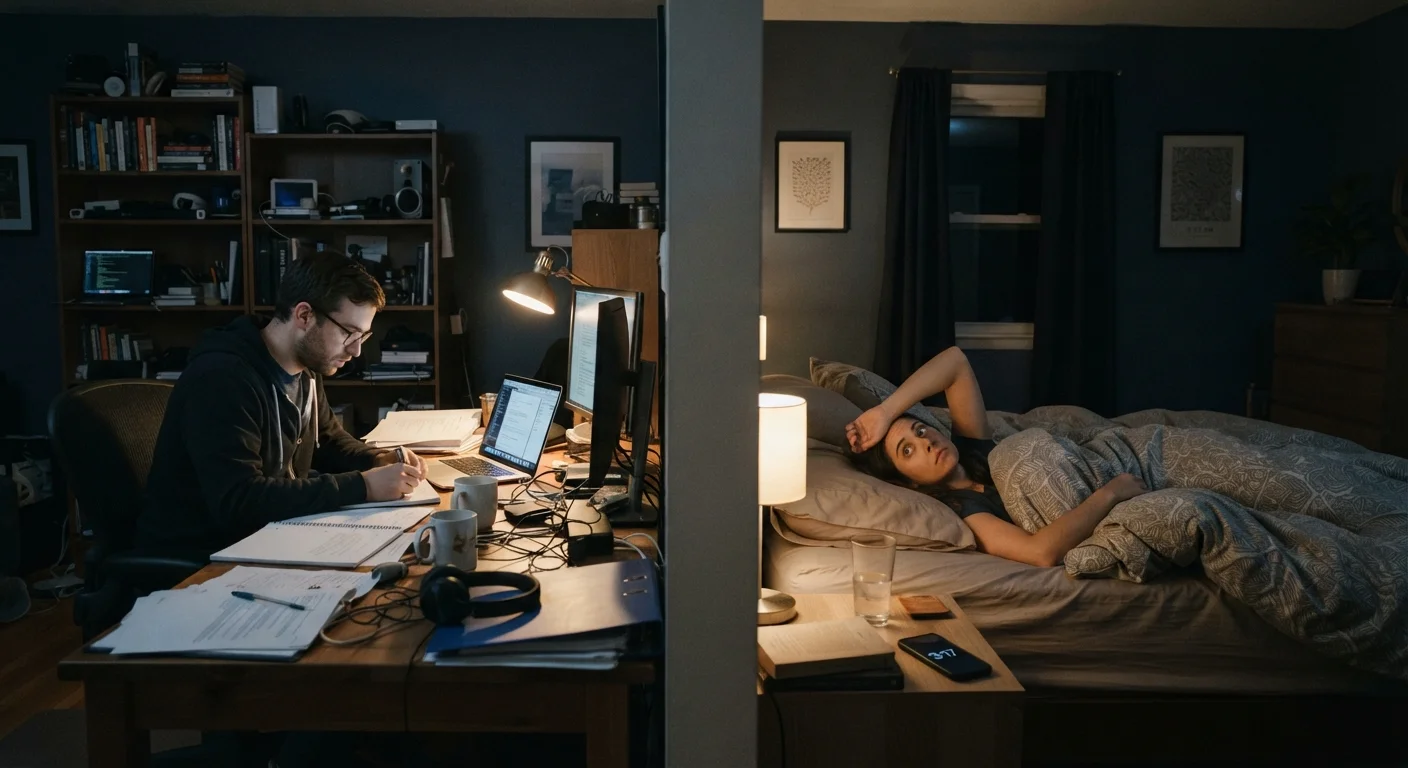
Key Takeaways
- Sleep deprivation results from not allowing enough time for sleep; insomnia means the body won't sleep even when given the chance.
- Chronic insomnia is clinically defined as difficulty at least three nights per week for three or more months.
- Addressing sleep deprivation often involves scheduling and habits; insomnia typically requires behavioral or clinical intervention.
- Both conditions carry real mental health consequences, including increased anxiety and mood disruption.
- Misidentifying which condition you have can lead to approaches that backfire — especially with insomnia.
Option A
Sleep Deprivation
Not getting enough sleep due to life circumstances.
Best for: Understanding when lifestyle changes — not clinical treatment — are the primary solution.
Option B
Chronic Insomnia
The inability to sleep despite having the opportunity.
Best for: Recognizing when professional evaluation and structured behavioral treatment are needed.
If you consistently sacrifice sleep for work, social life, or responsibilities
Sleep Deprivation (address via lifestyle changes)
The problem is opportunity, not biology. Protecting sleep time and improving sleep habits is usually the most effective path forward.
If you lie awake for hours despite being tired and having a full night available
Chronic Insomnia (consider professional evaluation)
When the body resists sleep despite adequate opportunity, behavioral therapies like CBT-I — not just better scheduling — are typically recommended.
If your sleep struggles have lasted more than three months and affect your daytime functioning
Chronic Insomnia (seek professional guidance)
Duration and functional impairment are key diagnostic indicators; a healthcare provider can help rule out underlying contributors.
If sleep improves when life slows down — during vacations or weekends
Sleep Deprivation (address via lifestyle changes)
The ability to sleep when given the opportunity strongly suggests deprivation rather than a clinical insomnia disorder.
Two Problems That Look Alike — But Aren't
Feeling exhausted, dragging through the afternoon, struggling to think clearly — these experiences are shared by people dealing with very different sleep problems. Sleep deprivation and chronic insomnia can look nearly identical from the outside, and even feel similar in the moment. But they have different causes, different mechanisms, and critically, different solutions.
Understanding which one you're dealing with isn't just academic. Applying the wrong approach — say, sleeping in to "catch up" when you have insomnia — can actually make things worse. This distinction is one of the most underappreciated ideas in everyday sleep health.
Sleep deprivation happens when a person doesn't spend enough time asleep, typically because of external demands: long work hours, caregiving responsibilities, social commitments, or simply staying up too late. The body can sleep — it just doesn't get the opportunity. Sleep debt accumulates steadily under these conditions.
Chronic insomnia, by contrast, is defined clinically as difficulty falling or staying asleep — or waking too early — at least three nights per week, for at least three months, even when adequate time for sleep is available. The opportunity is there; the sleep is not. It's a disorder, not just a deficit.
How They Differ in Practice
| Criterion | Sleep Deprivation | Chronic Insomnia |
|---|---|---|
| Core problem | Not enough time for sleep | Unable to sleep despite opportunity |
| Typical cause | External demands, lifestyle choices | Hyperarousal, learned patterns, or underlying conditions |
| Clinical definition | No formal diagnostic threshold | ≥3 nights/week for ≥3 months with daytime impairment |
| Falls asleep easily when given time? | Usually yes | Often no |
| Improves during vacation or rest periods? | Typically yes | Often persists regardless |
| Primary intervention | Lifestyle and scheduling changes | CBT-I; sometimes medication under supervision |
| Mental health overlap | Mood and regulation impacted by fatigue | Bidirectional link with anxiety and depression |
One useful self-check: does your sleep improve significantly when external pressures ease — on vacation, for instance, or during a slower week? If yes, deprivation is the more likely culprit. If you still lie awake even with nothing pressing, insomnia warrants closer attention.
Insomnia is also often characterized by hyperarousal — a state where the nervous system remains alert when it should be winding down. This can involve racing thoughts at bedtime, heightened sensitivity to noise, or waking at 3 a.m. and being unable to return to sleep. Sleep deprivation rarely produces this pattern; exhausted people usually fall asleep quickly when given the chance.
For a broader look at how sleep quantity and quality interact with daily function, see our comparison of sleep quality vs. duration.
Mental Wellness Consequences of Each
Both conditions carry meaningful emotional and psychological costs, though the pathways differ. Sleep deprivation tends to blunt emotional regulation — research consistently links insufficient sleep to increased irritability, reduced stress tolerance, and greater reactivity. The mental health toll accumulates alongside the physical fatigue.
Chronic insomnia has a particularly complex relationship with mental wellness. Anxiety and depression are both strongly associated with insomnia — and the relationship runs in both directions. Poor sleep can worsen mood disorders, and mood disorders can perpetuate poor sleep. This bidirectional link means insomnia is rarely just a sleep problem in isolation. Recognizing when sleep problems signal something more is an important step many people delay too long.
10–30%
Adults affected by chronic insomnia
Prevalence estimates from sleep research literature suggest roughly 10–30% of adults experience chronic insomnia at some point, with variation depending on diagnostic criteria used.
~35%
U.S. adults sleeping less than recommended
CDC surveillance data has consistently found that approximately one in three American adults reports sleeping fewer than the recommended seven hours on a regular basis.
2x
Increased depression risk with insomnia
Meta-analyses in sleep medicine have found insomnia roughly doubles the risk of developing depression, underscoring the importance of the sleep–mental health relationship.
It's worth noting that both insufficient and excessive sleep are associated with health concerns — the goal isn't simply maximizing hours, but supporting restorative, consistent rest.
Different Conditions, Different Approaches
For sleep deprivation, the solution framework is relatively straightforward — protect sleep time, reduce obligations where possible, and improve sleep habits like consistent schedules and a wind-down routine. There's no clinical disorder to treat; the biology is willing, it just needs the window.
Insomnia requires a different strategy. Cognitive Behavioral Therapy for Insomnia (CBT-I) is currently considered the first-line treatment recommended by sleep medicine guidelines. CBT-I addresses the thought patterns, behaviors, and arousal responses that perpetuate insomnia — rather than simply sedating the brain. It typically involves techniques like sleep restriction therapy, stimulus control, and cognitive restructuring. Medication may be considered in some cases, but always under medical supervision.
If you recognize yourself in the insomnia profile — especially if it's been going on for months — a conversation with a healthcare provider is a meaningful next step. This is general health information, not a diagnosis; only a qualified professional can evaluate your specific situation.
This article is for informational purposes only and does not constitute medical advice. Always consult a qualified healthcare professional regarding personal sleep or mental health concerns.