

| BMR definition | Minimum calories to sustain life functions at complete rest under lab conditions |
| RMR vs. BMR difference | RMR typically runs 10-20% higher than true BMR (General clinical range cited in exercise physiology literature) |
| TDEE components | RMR + thermic effect of food + exercise + NEAT |
| Most variable TDEE factor | NEAT (Non-Exercise Activity Thermogenesis) - can differ by hundreds of calories daily |
| Biggest driver of resting metabolism | Lean muscle mass (metabolically active tissue) |
| Which number calculators estimate | RMR - not true BMR |
Three Terms, Three Different Measurements
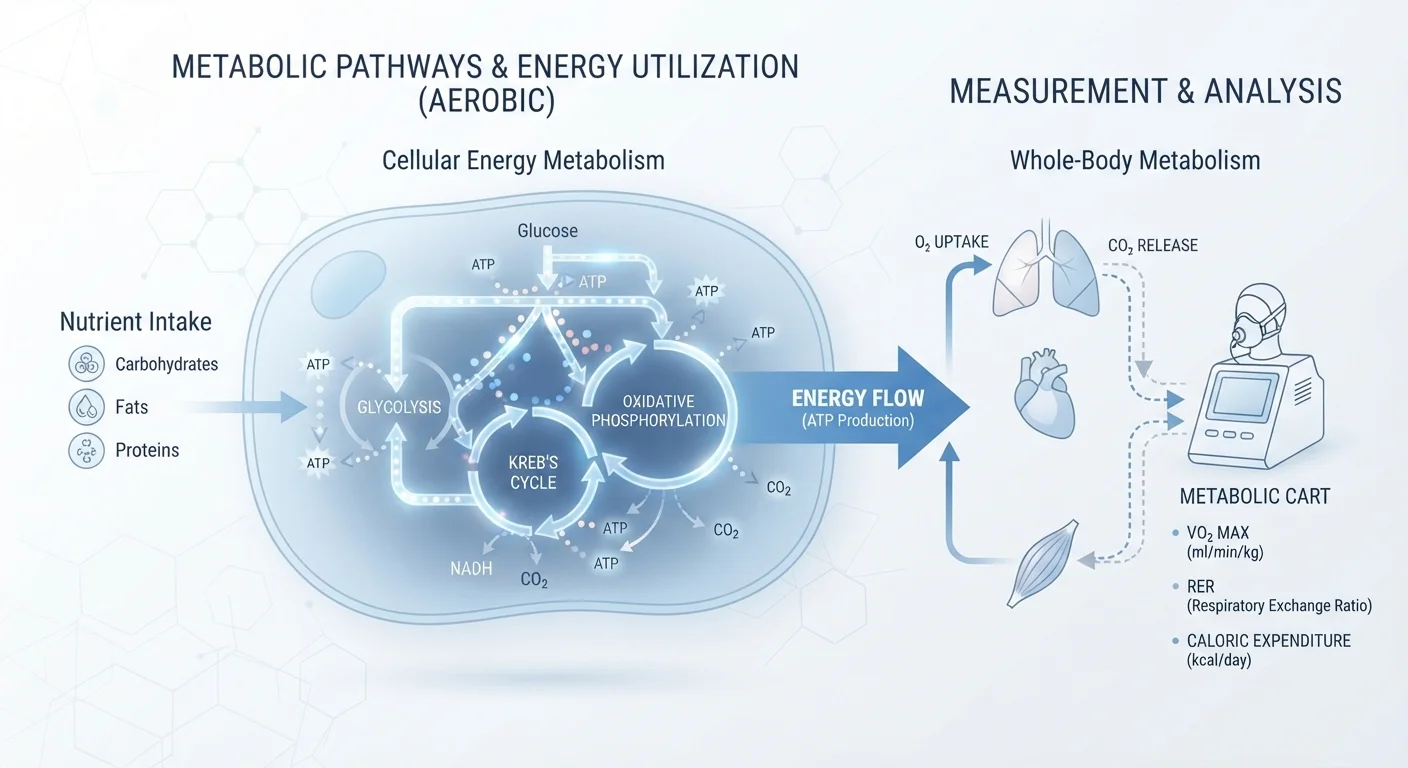
If you've ever tried to understand your calorie needs, you've almost certainly encountered the acronyms BMR, RMR, and TDEE - often used as if they mean the same thing. They don't. Each measures a distinct aspect of how your body uses energy, and mixing them up can lead to real miscalculations. To understand how metabolism actually works, it helps to start with what metabolism actually is - because it's far more than a simple speed dial.
| BMR definition | Minimum calories to sustain life functions at complete rest under lab conditions |
| RMR vs. BMR difference | RMR typically runs 10-20% higher than true BMR (General clinical range cited in exercise physiology literature) |
| TDEE components | RMR + thermic effect of food + exercise + NEAT |
| Most variable TDEE factor | NEAT (Non-Exercise Activity Thermogenesis) - can differ by hundreds of calories daily |
| Biggest driver of resting metabolism | Lean muscle mass (metabolically active tissue) |
| Which number calculators estimate | RMR - not true BMR |
Basal Metabolic Rate (BMR) is the most restrictive of the three. It represents the minimum calories your body needs to sustain core life functions - breathing, circulation, cell repair, temperature regulation - under highly controlled, completely resting conditions: no food for 12 hours, no physical activity, a thermoneutral environment. In practice, these conditions are almost impossible to replicate outside a laboratory, making BMR a theoretical baseline rather than a clinically measured number for most people.
Resting Metabolic Rate (RMR) is the figure most commonly produced by metabolic testing devices and online calculators. It's conceptually similar to BMR but measured under less strict conditions - typically after a period of rest but without requiring a full overnight fast or controlled temperature environment. RMR runs roughly 10-20% higher than true BMR, and it's this number that most nutrition professionals actually work with.
Total Daily Energy Expenditure (TDEE) is the broadest figure. It accounts for everything: your resting metabolism plus the calories burned through digestion (the thermic effect of food), structured exercise, and all the low-level movement woven through your day - walking, fidgeting, doing chores. That last category, known as NEAT (Non-Exercise Activity Thermogenesis), can vary dramatically between individuals and is explored in depth in NEAT: the hidden activity that shapes your calorie burn.
What Drives Each Number - and Why It Matters
BMR and RMR are not fixed. They shift in response to body composition, age, sex, hormonal status, and even chronic illness. Lean muscle mass raises resting metabolism because muscle tissue is metabolically active; adipose tissue is less so. This is why two people of identical weight can have meaningfully different resting energy needs.
Basal Metabolic Rate (BMR)
The minimum energy your body requires to maintain core physiological functions at complete rest, measured under strict laboratory conditions including a fasted state and thermoneutral environment.
Resting Metabolic Rate (RMR)
The calories your body burns at rest under relaxed, non-fasted conditions. It is slightly higher than BMR and is the standard used by most metabolic calculators and nutrition professionals.
Total Daily Energy Expenditure (TDEE)
The total calories your body uses in a given day, encompassing resting metabolism, digestion, deliberate exercise, and all incidental physical movement (NEAT).
NEAT
Non-Exercise Activity Thermogenesis - the energy expended through all movement that isn't structured exercise, such as walking, fidgeting, and daily chores. NEAT is highly variable and significantly influences TDEE.
Thermic Effect of Food (TEF)
The calories your body uses to digest, absorb, and metabolize food. TEF accounts for roughly 8-15% of TDEE and varies by macronutrient composition.
Activity Multiplier
A coefficient applied to estimated RMR in TDEE calculations to account for physical activity level. These multipliers are approximations and carry a meaningful margin of error.
TDEE is even more variable because the activity component fluctuates day to day. A sedentary office worker and a construction worker of similar builds may share nearly identical BMRs but have TDEEs that differ by 800 calories or more. Calculators typically apply an "activity multiplier" to an estimated RMR - a useful approximation, but one that carries real margin for error. For a deeper look at how movement shapes metabolic rate beyond simple calorie math, see how physical activity influences metabolic rate.
The distinction between these numbers matters most when you're trying to understand energy balance and weight change. Misidentifying your RMR as your TDEE - a common mistake - would mean underestimating your actual calorie needs significantly. That kind of error feeds the persistent myth that metabolism is simply "slow" or "fast" when the reality is far more nuanced, as covered in our starter guide to metabolism.
Understanding these numbers is also foundational to making sense of calorie deficits and their long-term effects on body weight - a relationship explored in calorie deficit vs. metabolic rate.
This article is for general informational purposes only and is not a substitute for personalized medical or nutritional advice. Consult a qualified healthcare provider before making changes to your diet or exercise routine based on metabolic estimates.