

Key Takeaways
- Thyroid hormones genuinely affect basal metabolic rate by regulating cellular energy use.
- Hypothyroidism can slow metabolism, but the weight effect is typically modest - often 5-10 lbs of fluid, not dramatic fat gain.
- A normally functioning thyroid is not the explanation for everyday weight fluctuations in most people.
- Thyroid disorders are diagnosed via blood tests, not symptoms alone - self-diagnosis is unreliable.
- Multiple factors shape metabolic rate; thyroid function is one piece of a larger picture.
Thyroid-Metabolism Connection
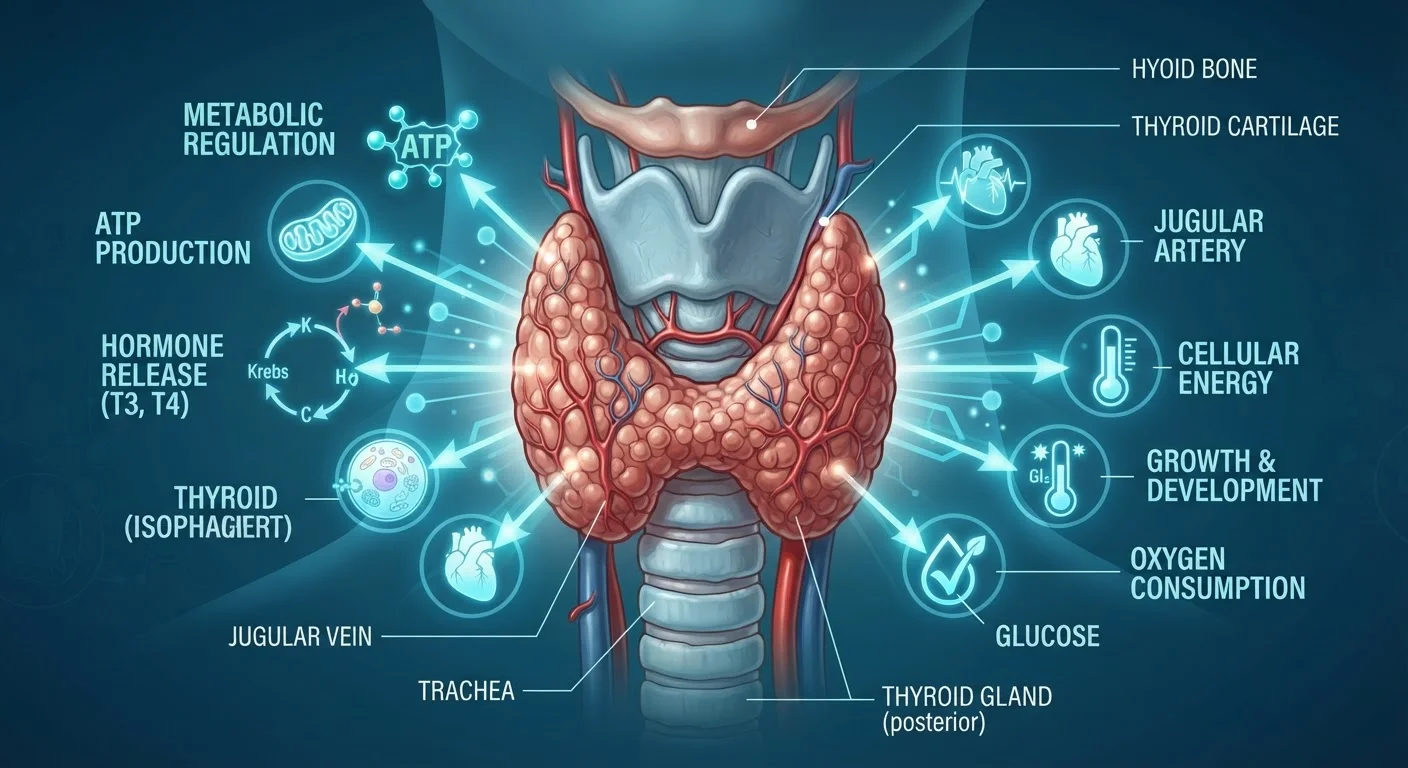
The thyroid gland, located at the base of your neck, produces hormones - primarily T3 (triiodothyronine) and T4 (thyroxine) - that regulate how quickly your cells use energy. This makes thyroid function a genuine contributor to your basal metabolic rate (BMR), the number of calories your body burns at rest. When thyroid output is too low (hypothyroidism) or too high (hyperthyroidism), it measurably shifts metabolic speed.
T4 is the more abundant thyroid hormone but is largely inactive until converted to T3 in peripheral tissues; T3 is the metabolically active form that directly influences cellular energy expenditure.
What the Thyroid Actually Does to Your Metabolism
Your thyroid doesn't control metabolism the way a thermostat controls a furnace - flipping it up or down at will. What it does is regulate the rate at which cells across virtually every organ system convert oxygen and fuel into usable energy. That process is called cellular respiration, and thyroid hormones (particularly T3) act as a key signal determining how aggressively it runs.
This influence shows up most clearly in your basal metabolic rate (BMR) - the energy your body burns simply to maintain basic functions at rest. Research consistently shows that clinically low thyroid hormone levels reduce BMR, while clinically elevated levels increase it. That much is well-established science. To understand where metabolism fits more broadly, see what metabolism actually is before diving into thyroid specifics.
TSH: The Key Diagnostic Marker
Thyroid-stimulating hormone (TSH) is produced by the pituitary gland and acts as a proxy for thyroid function. High TSH generally signals the pituitary is working harder to stimulate an underperforming thyroid (hypothyroidism), while low TSH can indicate overproduction (hyperthyroidism). It's the standard first-line test ordered by clinicians - not a direct measure of T3 or T4, but a sensitive indicator of whether the feedback system is functioning normally.
Where Popular Claims Go Too Far
The leap from "thyroid affects metabolism" to "my thyroid is why I can't lose weight" is where the science breaks down for most people. In individuals with normal thyroid function, thyroid hormone levels are tightly regulated by the pituitary gland through a feedback loop. There's little room for the gland to be subtly underperforming without it showing up on a standard TSH blood test.
When hypothyroidism is diagnosed and treated, the metabolic recovery is real - but the weight effect is usually modest. Most clinical studies suggest untreated hypothyroidism accounts for roughly 5 to 10 pounds of weight change, predominantly from fluid shifts rather than fat gain. This contrasts sharply with the narrative that a sluggish thyroid is a primary driver of substantial obesity.
For a fuller view of why people often attribute weight changes to metabolism when other factors are at play, metabolism misreadings is worth reading alongside this article.
Thyroid Disorders: What They Actually Look Like
Two distinct clinical conditions arise from thyroid dysfunction, and they push metabolism in opposite directions:
- Hypothyroidism (underactive thyroid): Insufficient T3/T4 production slows cellular energy use. Symptoms can include fatigue, cold sensitivity, constipation, dry skin, and modest weight gain. It is more common in women and becomes more prevalent with age.
- Hyperthyroidism (overactive thyroid): Excess thyroid hormone accelerates metabolism. Symptoms can include unintended weight loss, rapid heartbeat, heat intolerance, and anxiety. Graves' disease is the most common cause in the U.S.
Both conditions are diagnosed through blood work - primarily a TSH level - not through symptoms alone. Symptoms overlap heavily with other conditions, making self-diagnosis unreliable and potentially harmful if it delays appropriate care.
Thyroid Is One Factor Among Many
Even when thyroid function is optimally managed, metabolism remains shaped by a constellation of other variables. Muscle mass is a particularly powerful driver - lean tissue burns significantly more energy at rest than fat tissue does. Age-related muscle loss (sarcopenia), changes in physical activity, sleep quality, and even chronic stress all independently influence metabolic rate.
The evidence on what genuinely influences metabolic rate shows thyroid function matters - but it sits alongside body composition, genetics, and lifestyle factors rather than above them. Similarly, why metabolism slows with age illustrates how hormonal shifts interact with muscle loss and activity patterns in ways that go well beyond thyroid output alone.
If you're concerned about thyroid function, a conversation with your healthcare provider and a simple blood test is the appropriate starting point - not supplements marketed to support thyroid health, which lack robust clinical evidence in people with normal thyroid function.
This article is for general informational purposes only and does not constitute medical advice. If you have concerns about your thyroid or metabolic health, consult a qualified healthcare provider.