

Key Takeaways
- Standing desks can meaningfully reduce the total time you spend sitting each workday.
- They are not a substitute for regular physical activity or structured exercise.
- Prolonged standing carries its own health risks, including lower back and leg discomfort.
- The greatest benefit comes from alternating between sitting and standing throughout the day.
- Desk setup, posture, and anti-fatigue support all affect whether standing desks help or hurt.
Reduces total daily sitting time meaningfully
Studies show sit-stand desks can cut sedentary work time by one to two hours per day, which is linked to improved metabolic markers and reduced musculoskeletal complaints.
Supports postural muscle engagement during the workday
Standing activates core and lower-limb stabilizing muscles that remain mostly dormant during seated work, which can ease chronic postural tension over time.
May improve afternoon energy and focus
Many users report feeling more alert when they stand periodically; changing posture can help interrupt the physical and mental stagnation that builds during long unbroken sitting periods.
Encourages a habit of regular position changes
Having the equipment readily available lowers the barrier to alternating postures, which reinforces a broader micro-movement mindset throughout the workday.
Standing is not exercise and burns few extra calories
The caloric difference between sitting and standing is minimal - roughly 10 calories per hour - so a standing desk does not meaningfully contribute to fitness or weight management goals.
Prolonged standing causes its own physical strain
Extended standing without breaks can lead to lower back pain, leg fatigue, varicose vein aggravation, and joint discomfort, especially without proper footwear or anti-fatigue matting.
Effectiveness depends heavily on consistent, correct use
Many standing desks end up locked in one position after the initial novelty wears off; without intentional use habits, the ergonomic and health benefits quickly diminish.
Does not replace structured exercise or active breaks
Standing at a desk is still a largely static posture; the cardiovascular and strength benefits associated with physical activity require actual movement, not just a changed surface height.
Requires proper ergonomic setup to avoid new problems
Incorrect monitor height, keyboard position, or lack of foot support during standing can introduce wrist, neck, and shoulder strain that offsets any benefit from reduced sitting.
Our Verdict
Standing desks offer a practical way to interrupt prolonged sitting during the workday, which research links to meaningful metabolic and musculoskeletal benefits. However, they work best as one tool in a broader movement strategy - not as a standalone solution to sedentary work life. Used thoughtfully, with attention to posture and regular position changes, they support health; used carelessly, they can create new problems.
Best for desk workers who already understand their sedentary habits and want a structured, easy-to-use tool for breaking up long sitting periods - especially when combined with walking breaks and other micro-movement habits.
Why Standing Desks Have Become a Fixture in the Modern Office
As awareness of the health risks tied to prolonged sitting has grown, height-adjustable standing desks have moved from executive perk to mainstream workspace staple. The appeal is intuitive: if sitting too much is harmful, standing more should help. The reality is more nuanced than that, and understanding where the evidence is solid - and where it's overstated - helps you use this tool effectively.
Standing desks (also called sit-stand desks) allow users to raise or lower their work surface so they can alternate between sitting and standing throughout the day. This simple mechanical shift has been studied in workplace health trials, and the findings paint a mixed but generally encouraging picture.
What Standing Desks Actually Help With
Reduces total daily sitting time meaningfully
Studies show sit-stand desks can cut sedentary work time by one to two hours per day, which is linked to improved metabolic markers and reduced musculoskeletal complaints.
Supports postural muscle engagement during the workday
Standing activates core and lower-limb stabilizing muscles that remain mostly dormant during seated work, which can ease chronic postural tension over time.
May improve afternoon energy and focus
Many users report feeling more alert when they stand periodically; changing posture can help interrupt the physical and mental stagnation that builds during long unbroken sitting periods.
Encourages a habit of regular position changes
Having the equipment readily available lowers the barrier to alternating postures, which reinforces a broader micro-movement mindset throughout the workday.
The strongest evidence supports standing desks as a tool for reducing total sedentary time. Randomized controlled trials, including work published in occupational health journals, have found that sit-stand desks can reduce sitting time by one to two hours per workday when workers actively use them. That reduction matters because even small shifts between sitting and standing throughout the day affect blood sugar regulation, circulation, and postural muscle engagement.
Some users also report improved focus and reduced afternoon energy slumps when they vary their position during the workday. While the evidence here is more anecdotal, postural engagement during standing may support alertness in ways that passive, prolonged sitting does not.
Where Standing Desks Fall Short
Standing is not exercise and burns few extra calories
The caloric difference between sitting and standing is minimal - roughly 10 calories per hour - so a standing desk does not meaningfully contribute to fitness or weight management goals.
Prolonged standing causes its own physical strain
Extended standing without breaks can lead to lower back pain, leg fatigue, varicose vein aggravation, and joint discomfort, especially without proper footwear or anti-fatigue matting.
Effectiveness depends heavily on consistent, correct use
Many standing desks end up locked in one position after the initial novelty wears off; without intentional use habits, the ergonomic and health benefits quickly diminish.
Does not replace structured exercise or active breaks
Standing at a desk is still a largely static posture; the cardiovascular and strength benefits associated with physical activity require actual movement, not just a changed surface height.
Requires proper ergonomic setup to avoid new problems
Incorrect monitor height, keyboard position, or lack of foot support during standing can introduce wrist, neck, and shoulder strain that offsets any benefit from reduced sitting.
Standing desks are frequently marketed as a solution to sedentary work life, but the evidence doesn't support that framing. Standing is not exercise. Caloric expenditure while standing is only marginally higher than while sitting - roughly 10 additional calories per hour - meaning a standing desk does little to improve cardiovascular fitness or offset the health costs of an otherwise inactive lifestyle.
Building genuine movement into a desk job requires more than a raised surface - it involves intentional walking breaks, posture variation, and activity outside work hours. Treating a standing desk as a replacement for those habits is one of the most common mistakes workers make.
Using a Standing Desk Effectively
The 30-Minute Rule for Sit-Stand Balance
Occupational health researchers generally recommend alternating between sitting and standing every 30 to 60 minutes rather than committing to long stretches of either posture. This frequency keeps muscles engaged and circulation active without accumulating the strain that comes from prolonged standing. Setting a simple timer or using a desk reminder app can help build this habit until it becomes automatic.
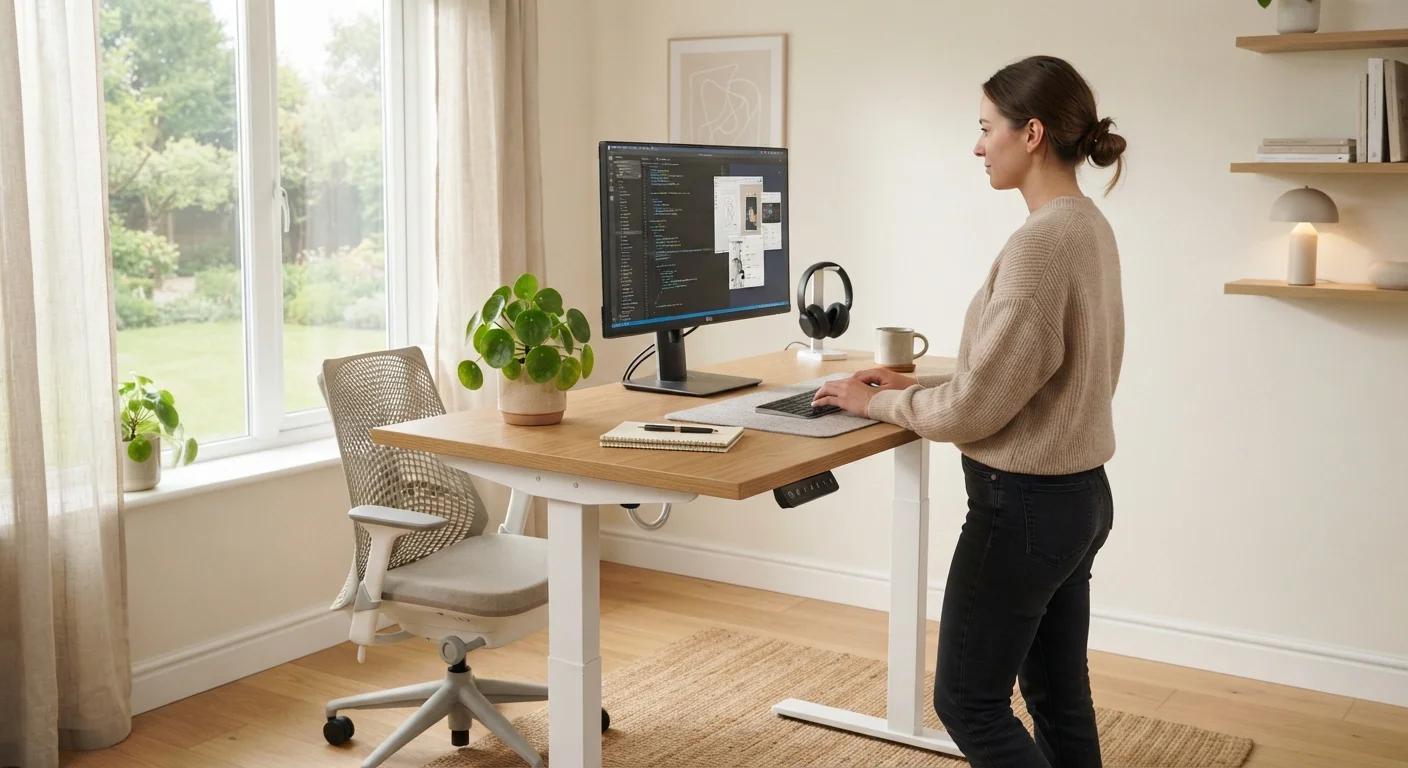
The general guidance from occupational health researchers is to alternate positions frequently rather than stand for long, unbroken stretches. A common starting framework is to move between sitting and standing roughly every 30 to 60 minutes. Anti-fatigue mats, supportive footwear, and proper monitor height all affect whether standing is comfortable enough to sustain. Your screen should sit at or just below eye level whether you're seated or standing, and your elbows should remain close to a 90-degree angle at the keyboard.
If you experience foot, knee, or lower back pain during extended standing, that's a signal to adjust your setup, reduce your standing duration, or consult a physical therapist before continuing. This is especially important for anyone managing existing joint conditions or circulatory issues - consulting a healthcare provider before making significant changes to your work setup is always a reasonable step.
This article is for general informational purposes only and is not a substitute for professional medical or ergonomic advice. If you have specific health concerns, please consult a qualified healthcare provider.