
Sleep Tracking Devices: What They Measure, What They Miss, and How to Use the Data

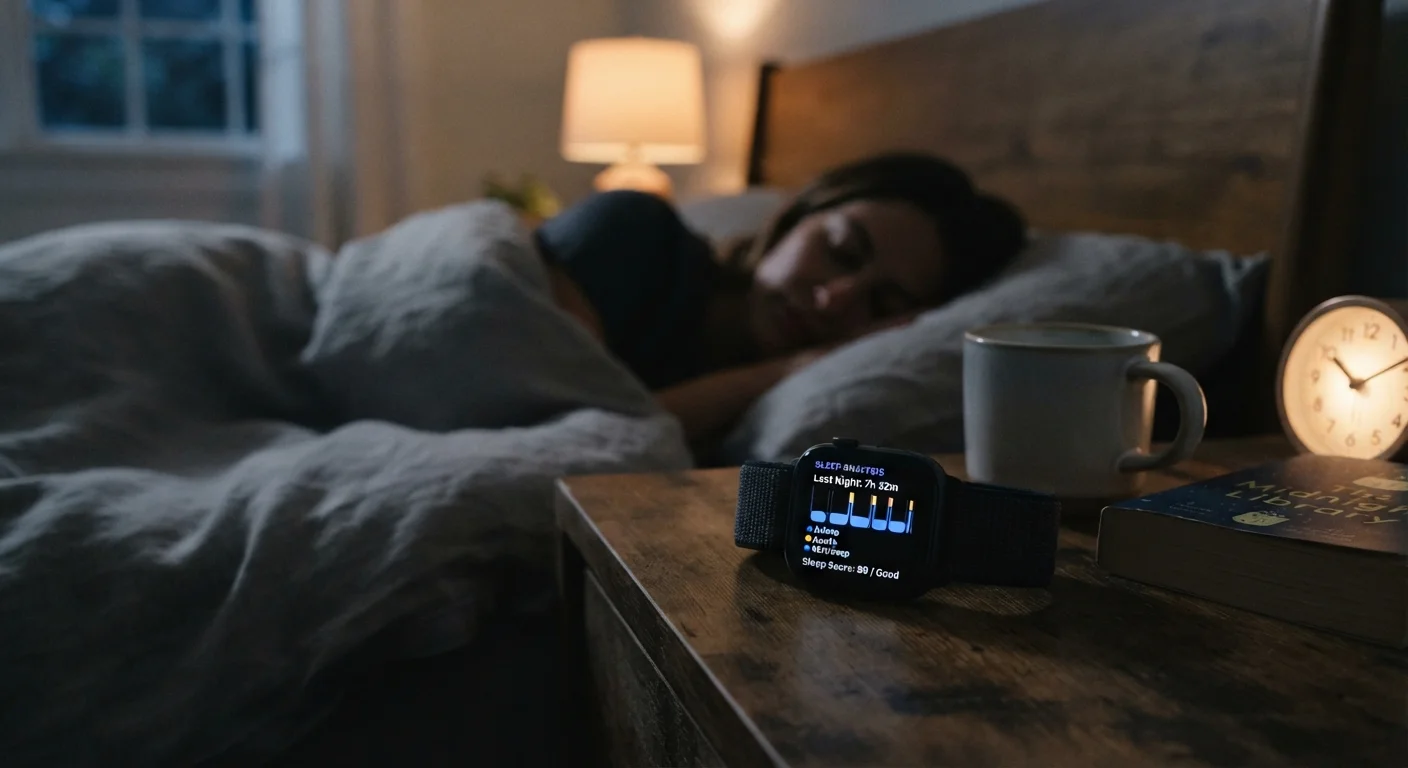
Key Takeaways
- Sleep trackers estimate sleep stages using movement and heart rate, not brain activity.
- They are most reliable for tracking total sleep time and broad nightly patterns over time.
- Stage-specific data like REM percentages can vary significantly from clinical measurements.
- Behavioral trends — not single-night scores — are where tracker data is most actionable.
- Tracker anxiety is real; obsessing over scores can itself disrupt sleep quality.
Tracks total sleep time objectively
Research suggests wrist-based trackers are reasonably accurate at estimating total sleep duration compared to lab-based measures, making them helpful for identifying chronically short sleep windows.
Reveals long-term behavioral patterns
Weeks of nightly data make it easier to see how lifestyle factors — alcohol, late caffeine, irregular schedules — affect your sleep, something difficult to notice night by night.
Encourages consistent sleep schedules
Having a record of your wake and sleep times creates accountability and can motivate the kind of schedule consistency that supports healthy circadian rhythms.
Flags potential issues worth discussing with a doctor
Repeated alerts around low blood oxygen or highly fragmented sleep can prompt users to seek clinical evaluation they might otherwise delay.
Low barrier to entry
Unlike clinical sleep studies, consumer trackers require no appointments, no wires, and no disruption to your normal sleep environment, making ongoing monitoring realistic.
Sleep stage estimates are often inaccurate
Multiple independent studies have found that consumer trackers frequently misclassify sleep stages — particularly overestimating REM or deep sleep — when compared against polysomnography.
Cannot detect sleep disorders reliably
Conditions like obstructive sleep apnea, restless leg syndrome, or periodic limb movement disorder require clinical testing; a tracker may miss or misread these entirely.
Orthosomnia: anxiety about sleep scores
A recognized concern among sleep researchers, orthosomnia describes when tracker data causes users to obsess over sleep metrics, which can itself worsen sleep quality through heightened arousal and anxiety.
Algorithm differences make cross-device comparisons unreliable
Each manufacturer uses proprietary algorithms, so stage breakdowns reported by one device may differ significantly from another's even on the same night.
Less accurate for people with irregular heart rhythms
Heart rate-based tracking can be less reliable for individuals with atrial fibrillation or other arrhythmias, potentially producing more errors in sleep stage classification.
Our Verdict
Consumer sleep trackers are genuinely useful for spotting broad patterns — like consistently short sleep windows or disrupted nights linked to stress or alcohol — but they should not be treated as medical-grade diagnostic tools. The data is most valuable when used to identify behavioral trends you can act on, not to obsess over nightly stage percentages.
Sleep trackers work best for curious, health-conscious adults who want objective feedback on their sleep habits and are prepared to use the data as a starting point for behavioral change rather than a clinical verdict.
What Consumer Sleep Trackers Actually Measure
Most wrist-worn sleep trackers — whether smartwatches or dedicated fitness bands — rely on two primary signals: accelerometry (motion detection) and photoplethysmography (optical heart rate sensing). Some higher-end devices also factor in heart rate variability (HRV), skin temperature, and blood oxygen levels.
From these inputs, algorithms estimate when you fell asleep, how long you slept, and which sleep stages you moved through — typically categorized as light sleep, deep sleep, and REM (rapid eye movement) sleep. A few devices incorporate respiratory rate or SpO2 readings to flag potential breathing irregularities.
The gold standard for measuring sleep stages remains polysomnography (PSG) — a clinical study in a sleep lab that directly records brain electrical activity via EEG, along with eye movements and muscle tone. Consumer devices cannot replicate this. They infer stage classifications from physiological proxies, which makes them useful estimators rather than precise recorders.
This article is for general informational purposes only and is not a substitute for professional medical advice.
The Pros: Where Sleep Trackers Deliver Real Value
Despite their limitations, sleep trackers offer meaningful benefits when used thoughtfully. Understanding what they do well helps you extract the most useful signal from the noise.
Tracks total sleep time objectively
Research suggests wrist-based trackers are reasonably accurate at estimating total sleep duration compared to lab-based measures, making them helpful for identifying chronically short sleep windows.
Reveals long-term behavioral patterns
Weeks of nightly data make it easier to see how lifestyle factors — alcohol, late caffeine, irregular schedules — affect your sleep, something difficult to notice night by night.
Encourages consistent sleep schedules
Having a record of your wake and sleep times creates accountability and can motivate the kind of schedule consistency that supports healthy circadian rhythms.
Flags potential issues worth discussing with a doctor
Repeated alerts around low blood oxygen or highly fragmented sleep can prompt users to seek clinical evaluation they might otherwise delay.
Low barrier to entry
Unlike clinical sleep studies, consumer trackers require no appointments, no wires, and no disruption to your normal sleep environment, making ongoing monitoring realistic.
For a broader look at how self-monitoring tools compare across health behaviors, see our balanced review of daily habit tracking.
The Cons: Where the Data Falls Short
Sleep tracking comes with genuine caveats that every user should understand before placing too much weight on nightly readouts.
Sleep stage estimates are often inaccurate
Multiple independent studies have found that consumer trackers frequently misclassify sleep stages — particularly overestimating REM or deep sleep — when compared against polysomnography.
Cannot detect sleep disorders reliably
Conditions like obstructive sleep apnea, restless leg syndrome, or periodic limb movement disorder require clinical testing; a tracker may miss or misread these entirely.
Orthosomnia: anxiety about sleep scores
A recognized concern among sleep researchers, orthosomnia describes when tracker data causes users to obsess over sleep metrics, which can itself worsen sleep quality through heightened arousal and anxiety.
Algorithm differences make cross-device comparisons unreliable
Each manufacturer uses proprietary algorithms, so stage breakdowns reported by one device may differ significantly from another's even on the same night.
Less accurate for people with irregular heart rhythms
Heart rate-based tracking can be less reliable for individuals with atrial fibrillation or other arrhythmias, potentially producing more errors in sleep stage classification.
This pattern of data misinterpretation mirrors challenges seen in other forms of health tracking. Our article on pitfalls that skew body composition results explores similar dynamics.
78%
Stage accuracy vs. polysomnography
A review published in the journal Sleep Medicine found consumer wearables correctly identified sleep stages approximately 78% of the time overall, but accuracy dropped sharply for individual stage classification.
7–9 hrs
Recommended adult sleep duration
The American Academy of Sleep Medicine and the Sleep Research Society recommend that adults aim for seven to nine hours of sleep per night for optimal health.
1 in 3
American adults not getting enough sleep
According to the CDC, roughly one in three American adults regularly gets less than the recommended amount of sleep, making duration tracking a genuinely useful population-level concern.
How to Use Sleep Tracker Data Constructively
The most effective approach treats your tracker as a behavioral feedback tool, not a clinical report card. Here's how to do that in practice:
- Focus on weekly averages, not nightly scores. A single bad night is rarely meaningful. Look for patterns across seven to fourteen days.
- Correlate data with behaviors. Note what you did before nights with notably better or worse sleep — alcohol, late meals, stress, screen time, exercise timing — and adjust accordingly.
- Use it to protect sleep duration first. Total sleep time is the metric trackers measure most reliably. Prioritize consistently hitting a full window before worrying about stage ratios.
- Set a consistent wake time. Trackers often reveal irregular wake times, which research links to disrupted circadian rhythms. Consistency here is one of the highest-leverage behavioral changes available.
- Know when to consult a professional. If your tracker repeatedly flags very low oxygen readings, highly fragmented sleep, or you feel unrefreshed despite adequate recorded sleep duration, raise this with a healthcare provider. Trackers can prompt the right conversations — but they cannot diagnose sleep disorders like sleep apnea.
When to Seek a Clinical Sleep Study
If you consistently feel exhausted despite your tracker showing seven or more hours of sleep, or if a bed partner notices that you stop breathing during the night, these are signals worth bringing to a physician. Consumer trackers are not designed to diagnose sleep disorders. A formal sleep study (polysomnography) remains the appropriate tool for clinical evaluation. Always consult a qualified healthcare provider before drawing medical conclusions from wearable data.
Understanding your accumulated sleep patterns over time can also help contextualize your tracker trends. Our article on how sleep debt works and whether it can be repaid provides useful background.