

Key Takeaways
- A pound of muscle and a pound of fat weigh the same - but muscle is significantly denser and takes up less space.
- Spot reduction of fat in specific body areas through targeted exercise is not supported by scientific evidence.
- Muscle does burn more calories at rest than fat, but the difference per pound is more modest than commonly claimed.
- Body weight alone is a poor proxy for body composition or overall health status.
- Fat is not simply inert storage - it plays active hormonal and metabolic roles in the body.
Why Body Composition Myths Persist
Body composition - the ratio of muscle, fat, bone, and water that makes up your body weight - is one of the most misunderstood topics in everyday health conversations. Misinformation spreads easily because it often contains a kernel of truth wrapped in oversimplification. The result: people make decisions based on beliefs that the evidence doesn't fully support.
This article addresses the most persistent misconceptions directly, using what exercise physiology and clinical nutrition research actually show. For a broader look at how these two tissue types function in the body, see our guide on how muscle and fat each affect your health.
Myth
Muscle weighs more than fat.
Fact
A pound of muscle and a pound of fat weigh exactly the same - one pound. Muscle is denser, meaning it occupies less volume per pound than fat does.
This myth likely persists because people notice they can look leaner and feel firmer without the scale budging much. That observation is real - but the explanation isn't that muscle is heavier. It's that muscle tissue is roughly 18% denser than fat tissue, so the same mass of muscle takes up considerably less space in your body. Two people can share an identical body weight while having very different physiques depending on their muscle-to-fat ratio.
Myth
You can target fat loss in specific body areas through focused exercise.
Fact
Spot reduction - the idea that working a specific muscle causes the overlying fat to shrink - is not supported by research. Fat loss occurs systemically, not locally.
When the body draws on fat for fuel, it mobilizes fatty acids from fat stores throughout the body via hormonal signals, not selectively from whichever muscle is working hardest. Multiple controlled studies have shown that targeted exercise does not preferentially reduce fat in adjacent regions. Abdominal exercises, for instance, can strengthen core muscles and improve endurance, but they do not selectively burn belly fat. Overall energy balance and genetics influence where fat is lost first. For more on this topic, see fitness myths that keep beginners stuck.
Myth
Muscle burns dramatically more calories than fat - enough to transform your metabolism.
Fact
Muscle does have a higher resting metabolic rate than fat, but the difference per pound is more modest than popular claims suggest.
Research estimates that a pound of muscle burns roughly 6-10 calories per day at rest, compared to approximately 2-3 calories for a pound of fat. The difference is real and meaningful over time, but it does not mean that adding a few pounds of muscle will dramatically overhaul your resting metabolism. The full picture of how this works - and why it still matters for long-term weight management - is covered in our article on muscle vs. fat calorie burn at rest.
Myth
If you stop exercising, your muscle turns into fat.
Fact
Muscle and fat are distinct tissue types - one cannot convert into the other. When exercise stops, muscle can atrophy (shrink) while fat stores may increase independently.
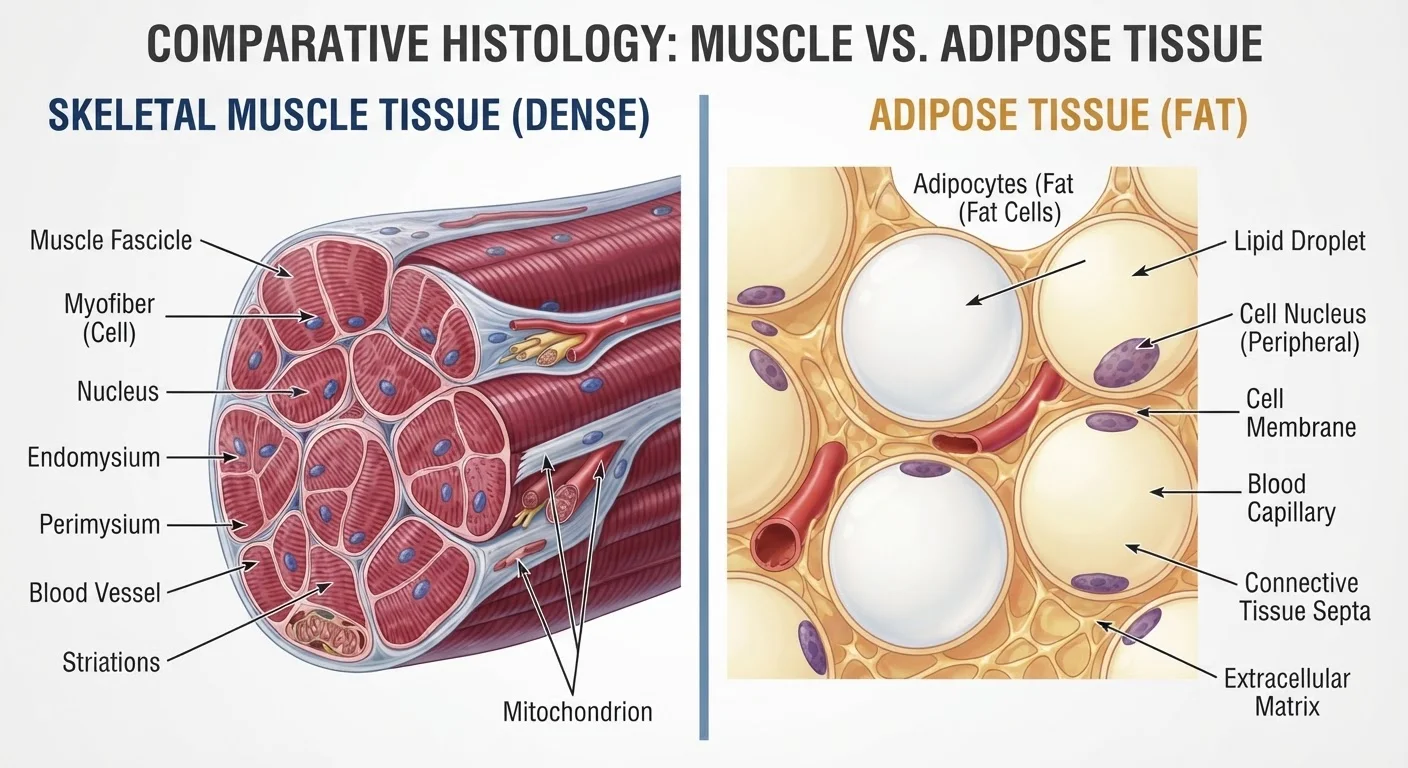
Muscle cells and fat cells are fundamentally different in structure and function. What actually happens when training ceases is that muscle fibers reduce in size due to decreased demand (a process called atrophy), while changes in energy intake or output may simultaneously cause fat cells to accumulate more lipid. These are two separate biological processes occurring at the same time, which can create the visual impression of transformation - but no actual tissue conversion is taking place.
Myth
Body fat is just passive, inert storage tissue.
Fact
Fat tissue, particularly visceral fat, is metabolically active and secretes hormones and signaling molecules that influence inflammation, insulin sensitivity, and appetite regulation.
Adipose (fat) tissue produces compounds called adipokines - including leptin, adiponectin, and resistin - that communicate with the brain, liver, and immune system. Excess visceral fat (stored around internal organs) is associated with elevated inflammatory markers and disrupted metabolic signaling, which helps explain its links to cardiovascular and metabolic conditions. Subcutaneous fat (stored under the skin) has a somewhat different, and in some cases more neutral, metabolic profile. Fat's active biological roles are a key reason that body composition matters for health beyond appearance.
What These Corrections Mean in Practice
Understanding the real relationship between muscle, fat, and body weight changes how you interpret progress. The scale can move in the wrong direction even when your body composition is improving - muscle gained while fat is lost can leave your weight flat or slightly higher while your health markers trend positively. That's why tracking metrics like waist circumference, strength improvements, or how clothing fits often tells a more complete story than weight alone. Our article on why the scale doesn't tell the whole story explores this further.
Exercise selection also matters. Resistance training has a meaningful impact on body composition over time - not because it melts fat from specific areas, but because it builds metabolically active tissue and supports overall energy balance. The evidence behind this is covered in depth in our piece on strength training and weight management.
~18%
Density difference between muscle and fat tissue
Muscle tissue is approximately 18% denser than fat tissue by volume, explaining why body composition shifts can change appearance without changing scale weight.
6-10 cal/lb/day
Resting calorie burn of muscle tissue
Exercise physiology research estimates each pound of muscle burns roughly 6-10 calories per day at rest, compared to approximately 2-3 calories for fat.
Finally, nutrition interacts with body composition in ways that go well beyond simplistic rules about fat or carbohydrates being inherently harmful. Both macronutrients serve essential physiological functions, and the quality, quantity, and context of eating matter far more than eliminating any single food group. For more on this, see our coverage of what research says about dietary fat and common misconceptions about carbohydrates.
This article is for general informational purposes only and is not a substitute for professional medical advice. Consult a qualified healthcare provider before making significant changes to your diet or exercise routine.