
Sleep Across the Lifespan: How Needs and Patterns Shift From Adolescence to Older Adulthood

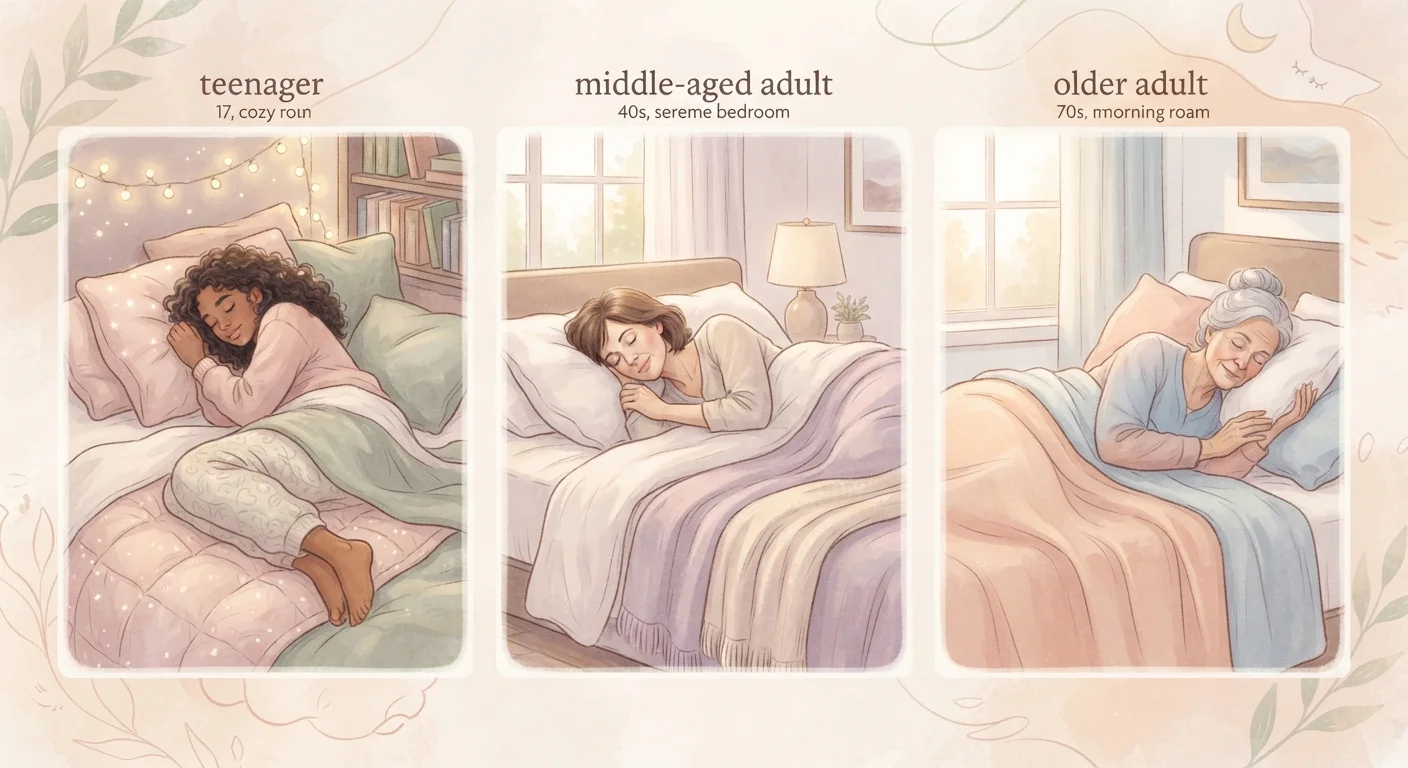
| Teen sleep recommendation (ages 13–18) | 8–10 hours per night (American Academy of Sleep Medicine) |
| Adult sleep recommendation (ages 18–64) | 7–9 hours per night (National Sleep Foundation) |
| Older adult sleep recommendation (65+) | 7–8 hours per night (National Sleep Foundation) |
| Adolescent circadian shift | Melatonin release delayed by 1–3 hours vs. childhood (Peer-reviewed circadian biology research) |
| Slow-wave sleep decline begins | Mid-to-late twenties (Sleep architecture research, general consensus) |
| Common older-adult sleep pattern | Earlier bedtime, earlier waking (advanced sleep phase) |
Why Sleep Doesn't Stay the Same Throughout Life
If you've ever noticed that a teenager can sleep until noon while an older parent wakes before dawn, you've witnessed one of biology's quieter truths: sleep is not a fixed constant. It shifts in duration, timing, and internal structure as we age — changes driven by hormones, brain development, circadian rhythm maturation, and the accumulation of life experience itself.
Understanding those shifts matters beyond curiosity. Sleep is deeply intertwined with emotional regulation, memory consolidation, and mental resilience. Poor sleep affects far more than your energy levels — it shapes how you process stress, regulate mood, and respond to everyday challenges. Recognizing what's normal at each life stage helps you distinguish natural change from a pattern worth addressing.
| Teen sleep recommendation (ages 13–18) | 8–10 hours per night (American Academy of Sleep Medicine) |
| Adult sleep recommendation (ages 18–64) | 7–9 hours per night (National Sleep Foundation) |
| Older adult sleep recommendation (65+) | 7–8 hours per night (National Sleep Foundation) |
| Adolescent circadian shift | Melatonin release delayed by 1–3 hours vs. childhood (Peer-reviewed circadian biology research) |
| Slow-wave sleep decline begins | Mid-to-late twenties (Sleep architecture research, general consensus) |
| Common older-adult sleep pattern | Earlier bedtime, earlier waking (advanced sleep phase) |
Adolescence: Biology, Delayed Timing, and the Sleep Debt Trap
During adolescence, a well-documented shift in circadian biology causes the internal clock to push later — a phenomenon researchers call sleep phase delay. Melatonin release shifts to later in the evening, making it genuinely difficult for most teens to fall asleep before 10 or 11 p.m. The American Academy of Sleep Medicine recommends that teenagers (ages 13–18) get 8–10 hours of sleep per night.
Yet early school start times create a collision between biology and schedule. Chronic sleep restriction during these years is associated with increased rates of depression, anxiety, impaired attention, and risk-taking behavior — not simply laziness or poor choices. Sleep patterns continue to evolve meaningfully into adulthood, but the habits formed in adolescence can set a lasting template.
For teens, protecting sleep means recognizing the biological reality rather than fighting it. Consistent bed and wake times, limiting screens before bed, and advocating for sleep-friendly schedules all support healthier outcomes.
Young and Middle Adulthood: Competing Demands and Structural Changes
Most adults aged 18–64 need 7–9 hours of sleep per night, according to guidelines from the National Sleep Foundation. During this broad life stage, biological sleep architecture is relatively stable — but life circumstances often aren't. Career pressure, caregiving, shift work, and parenting routinely compress sleep in ways that accumulate over time.
Internally, adults begin to experience gradual reductions in slow-wave sleep (the deepest, most physically restorative stage) starting in the mid-twenties and continuing through midlife. Understanding what actually happens in the brain during sleep helps clarify why even adequate sleep duration can sometimes feel less restorative with age.
Women navigating perimenopause and menopause often experience additional disruptions — hot flashes, hormonal fluctuations, and elevated anxiety can fragment sleep significantly. These are not signs of failure; they reflect real physiological change and are worth discussing with a healthcare provider.
Older Adulthood: Earlier Timing, Lighter Sleep, and What's Normal
Adults 65 and older typically need roughly 7–8 hours of sleep, but the architecture shifts considerably. Sleep becomes lighter overall, with less slow-wave sleep and more frequent nighttime awakenings. The circadian clock tends to advance — meaning earlier sleepiness in the evening and earlier natural waking — a pattern called advanced sleep phase.
These changes are biologically normal, but they're often misread as insomnia. True insomnia involves difficulty sleeping despite adequate opportunity, combined with daytime impairment. Simply waking earlier or sleeping more lightly does not automatically mean something is wrong. Sleep architecture changes across the full lifespan in ways that can be mapped and understood.
That said, older adults are at higher risk for sleep disorders including sleep apnea, restless legs syndrome, and medication-related disruptions. If sleep problems are affecting daytime functioning, mood, or cognitive sharpness, a conversation with a healthcare professional is genuinely worthwhile — not something to simply accept as inevitable aging.
This article is for general informational and educational purposes only and does not constitute medical advice. If you have concerns about your sleep or health, please consult a qualified healthcare professional.